Feeds:
Posts
Comments

Archive for the ‘Beta reading’ Category

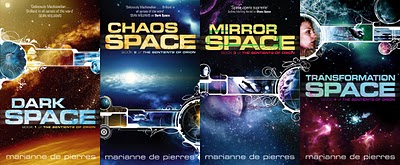
Marianne De Pierres has kindly agreed to be interviewed about her experience with beta readers. Marianne is also part of Writers on the Rise group ( a number of them have participated in this series of blog interviews). I’m a bit of a Marianne De Pierres fan, having known her now for over ten years. I loved her kick ass  Parrish Plessis series and also her space opera Sentients of Orion series. She is now also publishing a young adult series under the name of Marianne Delacort. The Tara Sharp series is a crime series. You can find more about Marianne here


1. How many beta readers do you have and how long have you used beta readers in your writing process?

For a long time my beta readers have been my personal writing group – six other people. I also have a two other readers who beta-read my teen novels because they are more the target audience. Of recent years I haven’t had a chance to use my beta readers as much with my novels going directly to the editor when they’re finished.

2. In what ways do beta readers assist you in developing your novel for publication?

 I doubt very much I would ever have been published without their critical feedback. In fact I’m sure I wouldn’t! They have been absolutely invaluable and I cherish them.

 3.    Do all your beta readers pick up the same points?

No, not at all. They read differently, some focussing on the world building, others on the plot or character or the tone or the style. I find this very useful.

4. Do you sometimes target your beta readers to particular areas based on the experience you had with them in the past? For example, one reader is good at plot holes, another reader is good at grammatical issues and another might be good at style. Or do you take what comes?

 Sometimes. Or I send it to all of them and say “please just focus” on this aspect. It can be interesting to say that to six different people. If five of them give the same response, you know they’re absolutely right.

 6.    How hard is it to find a good beta reader?

It can take a while. I think you need to suss out their ability to give critical feedback that you can assimilate. Listen to how they talk about the books they read and avoid people who have too much emotional investment in you. It can’t help but cloud their thought processes, no matter how hard they try to be objective. You’ll find that you and your readers grow together like any good partnership.

7.    Do you have any advice for readers who want to be beta readers or even editors in the long run? For example, what type of commentary to you prefer?

I’ve always found that if my editor and beta readers ask me questions, that works much better than any prescriptive kind of editing. I love an editorial report full of what does that mean? What happened here? Etc. I know immediately that I’m letting my reader down, and am inspired to “fix it”!

Thank you Marianne for taking time out of your busy writing and promotion schedule. It is very much appreciated.

Donna

Read Full Post »

David who is now writing under the name D.B. Jackson has been writing science fiction and fantasy for over 15 years. I met David when he and his family were living in a Australia a few years back. We’ve managed to catch up once at a Worldcon in Denver, which was very cool. Worldcons are good for that. (BTW next worldcon is in Chicago, called Chicon. Link is here.)

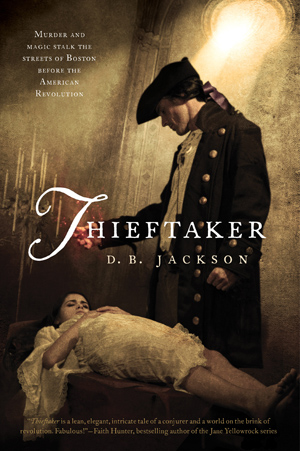
In very exciting news, David has a historical fantasy coming out with Tor in July. It’s called Thieftaker, which is set in Boston, August 26, 1765. Here is a link to David’s website.

Because I think the cover is very cool, I snaffled the image and put it here. I am hoping to get David back later for an interview about his new book.

1.       How many beta readers do you have and how long have you used beta readers in your writing process?

Beta readers come in various forms.  For the first few books of my career, my main Beta reader was my wife.  She would read my books one chapter at a time — I’d finish a chapter, and she would read it, give me feedback, and tell me to get back to work.  As I started my second series, she told me that she wanted to try reading one of my books the way my regular readers do:  All at once when it was finished.  She still gave me feedback as a Beta, but by that time, I was starting to turn to my agent as a first reader.  And for the longest time, my main Betas were my agent and my editor at Tor.

Recently, I have been writing more books and stories before they’re contracted — I’ve written four books in the last two years that were not already sold, and so I’ve started relying on Beta readers more heavily than ever.  I have a handful of people — all fellow writers — who I rely on for feedback.  There are maybe three or four in all.  I don’t like to share my work with too many people before it’s ready, and frankly I find that after a while feedback from too many people becomes counterproductive.

 2.       In what ways do beta readers assist you in developing your novel for publication?

Like my editor and agent, my Betas help me identify elements of my narrative, character work, and worldbuilding that don’t work.  This is why I tend to rely on professional writers as my readers, because they know nearly as well as my editor, what kinds of issues can hold a book back.  For books that are not yet contracted, this helps me polish so that my agent and I can make the sale.  For books that are already under contract, my Betas can help me anticipate issues that my editor might otherwise identify, thus compressing the revision process and, ideally, speeding up production.

3.       Do all your beta readers pick up the same points?

Definitely not.  Well, let me qualify that.  Sometimes my manuscripts might have problems that are so egregious, so obvious that everyone who reads the book notices.  But usually my readers will give me feedback on different things.  Just as every writer is unique, so too is every reader.  We all notice different things; we all respond well to certain aspects of a book and find fault with certain problems.  That’s one of the reasons why one Beta reader probably isn’t enough.

4.       Do you sometimes target your beta readers to particular areas based on the experience you had with them in the past? For example, one reader is good at plot holes, another reader is good at grammatical issues and another might be good at style. Or do you take what comes?

I tend to gravitate toward readers who are good at noticing certain issues.  I don’t necessarily choose one person for plotting and another for prose.  But at this point I’ve been doing this long enough and have written enough books that I have a pretty good idea of what I’m good at and on which aspects of my writing I need feedback.  So, for instance, I have a lot of confidence in my character work and in my voice.  But I am less confident in my plotting, and so I tend to send my work to writers who I know are very good at weaving together narratives.

5.       Do you always want the same thing from the beta reader for each novel? For example, when you have deadlines and only have time for high-level feedback?

What I want from a reader tends to vary more with the manuscript than with the reader.  In other words, I usually have some idea of what might be the weak points in a manuscript, and so I might tell a Beta reader “Hey, I think that the plotting flags a bit about two-thirds of the way through the book.  Let me know if you think so, too, and what I ought to do about it.”  Or something like that.

6.        How hard is it to find a good beta reader? 

I think it’s pretty hard.  Finding readers is easy.  Finding people with the qualities I value in a Beta reader — that’s much harder.  What qualities do I mean?  Well, I want my Betas to be writers themselves, to understand that writing process and be willing to bring that experience to bear on my work.  They also need to understand the market. They need to be able to articulate their criticisms clearly.  And finally, I want my readers to be good enough friends that I can trust them to be honest with me about my work, and also trust them to tell me when they don’t have the time to read something.  The last thing I want is to worry that I’m burdening a friend who has work of his or her own to do.

7.       Do you have any advice for readers who want to be beta readers or even editors in the long run? For example, what type of commentary to you prefer?

I think the best advice I can give is to remember that when you’re reading for a friend or colleague, you’re trying to make his or her book as good as it can be on its terms.  You’re not trying to turn his or her book into something resembling your own work.  Rather, you’re helping refine someone else’s book.  I’ve been very fortunate to work most of my career with the same editor.  He understands my work and finds ways to improve my work without changing my voice or my artistic vision.  That’s something that my Betas have managed to do, too.  And that’s what has made their feedback so valuable.

Thanks for that interview David. I find it interesting that like Glenda Larke you are relying more on beta readers further down your career. Mind you, you do seem to be writing a lot lately. Four books in two years, why that’s just prolific!

Donna

Read Full Post »

I met Gareth in Bristol in late 2010. He was there to attend the William Gibson talk and is part of the Bristol/Bath and surrounds’ spec fic scene. The fantastic Cheryl Morgan had organised tickets for us for this event, which happily coincided with our visit to that part of England. (William Gibson borrowed my pen!) Gareth was a friend of a mutual acquaintance, Colin Harvey, who passed away suddenly in August 2011. Since that meeting, Gareth has gone on to have his science fiction books published by Solaris Books. He had a collection out prior to that through Elastic Press.

You can find more about Gareth at his website (he is also on Twitter)  here.

Thank you Gareth for being interviewed.

1.    How many beta readers do you have and how long have you used beta readers in your writing process?

My main beta reader has always been my wife, Becky. She’s read and commented on the first drafts of nearly all my short stories, and I’d like to take this opportunity to thank her for her feedback and support. She makes a first class first reader, and I’m lucky to have her on my team.

In addition, my brother Huw and sister Rebecca (both novelists themselves) offered useful feedback on my latest novel, The Recollection (Solaris Books 2011), as did fellow writer Neil Beynon; and my wife and another friend, Duncan Harris, offered some feedback on my first short novel, Silversands (Pendragon Press 2010).

2.    In what ways do beta readers assist you in developing your novel for publication?

The main things I’m looking for when I ask someone to read a novel draft are: a) Does the plot make sense? b) Are the characters believable and relatable? c) Are there any dreadful typos or continuity issues that I’ve missed?

3.    Do all your beta readers pick up the same points?

Mostly, yes; although sometimes there will be disagreements. The original draft of Silversands contained a sexual relationship between two of the main characters. One reader approved of this development, and the other didn’t. And as that latter reader was my wife, I ended up agreeing with her and the sex scene got dropped. And to be honest, its omission made the relationship between the two characters deeper and less obvious than it might otherwise have been.

4.    Do you sometimes target your beta readers to particular areas based on the experience you had with them in the past? For example, one reader is good at plot holes, another reader is good at grammatical issues and another might be good at style. Or do you take what comes?

I pretty much take what comes. I’m just grateful that they take the time to read and comment.

 5.    How hard is it to find a good beta reader?

I’ve been extremely fortunate, in that I know so many intelligent and literary-minded people who have been willing to help; so, I haven’t had the need to go out searching for beta readers, as they’ve been there for the asking.

6.    Do you have any advice for readers who want to be beta readers or even editors in the long run? For example, what type of commentary to you prefer?

Allow me to refer you back to my answer to question 2, above. What I really want to know is whether the book works as a story, whether I’ve made any fundamental errors, and whether they enjoyed it as readers. Any other useful comments are gratefully received.

Thank you Gareth for doing the interview. 

Donna

Read Full Post »

Joanne Anderton is an exciting new writer. Her first novel Debris  (Angry Robot Books) was nominated for an Aurealis Award this year. She is also up for best new talent at the Ditmars and her novel Debris is up for a gong. You can find out more about Joanne here.

1. How many beta readers do you have and how long have you used beta readers in your writing process?

The number of beta readers I have can be a bit fluid – it depends on what I’m working on. Sometimes I’ll need more or different eyes on a short story or a book. As I meet new writers and get to know them, I’ll take the opportunity to read their work and perhaps have mine read in turn. It’s always good to bring fresh blood into the beta reading gene pool! But I have a solid core of two amazing beta readers who are tough on my words and generous with their time. These two amazing women have stuck with me for years — for instance, they’ve read ALL the Veiled World books, and some of them twice! I’ve used beta readers since I first joined the Online Writing Workshop for SFF, many years ago. This online community introduced me to critiquing, taught me how to give and take, and through them I met many wonderful writers who remain my friends and beta readers to this day.

2. In what ways do beta readers assist you in developing your novel for publication?

Beta reader feedback is invaluable. They see things that I do not — plot holes, boring parts, big picture stuff. They notice problems that I’ve been trying to ignore, and don’t let me get away until I fix them. They bring fresh ideas to a story, help me see paths or themes or twists and turns that I would never have seen on my own. They’re also encouraging. They support me through the bad times and celebrate with me through the good ones. A good beta reader is like a good personal trainer! They keep me honest, make me work to the best of my ability and then push me that little bit further.

3. Do all your beta readers pick up the same points?

Yes and no. Most of the time no — and that’s the joy of getting different opinions. Everyone comes to a story from their own perspective, everyone sees different things. But when they DO pick up on the same points, then that’s like a little alarm. These points need work, they need attention.

4. Do you sometimes target your beta readers to particular areas based on the experience you had with them in the past? For example, one reader is good at plot holes, another reader is good at grammatical issues and another might be good at style. Or do you take what comes? 

Mostly I take what comes. I am grateful for any and all reactions. I do take genre and content into account though. If I know one of my readers isn’t too keen on really gruesome horror, for example, I try not to inflict that on them too much!

5. Do you always want the same thing from the beta reader for each novel? For example, when you have deadlines and only have time for high-level feedback? 

I tend to send novels out at a particular stage — a couple of drafts in. I’ve already gone through it a few times. Tidied up the first draft mess and made my own changes to things I thought weren’t working, such as plot holes, character issues and structural problems. I want it to read as smoothly as possible — I haven’t used a fine tooth comb on it yet, but I don’t want to send them crap either! And then I just ask them to have at it. Do their worst! That’s always worked in the past, but I have been fortunate when it comes to deadlines and haven’t yet been in a position where I’ve had to do it differently.

6. How hard is it to find a good beta reader?

I haven’t found it difficult at all. Holding on to the people I met in the OWW has helped me a lot. It takes a little time, in my experience, to get into a good beta reading groove with someone. To understand where they and their feedback are coming from. But that’s a wonderful part of the process, and one that can teach you a lot about your writing and your own critiquing style.

7. Do you have any advice for readers who want to be beta readers or even editors in the long run? For example, what type of commentary to you prefer?

Listen to your feelings — if you’re reading and something niggles you, don’t just keep going. Stop and think. What’s niggling me, why is it niggling, how can I communicate that? Be specific. Give suggestions — I’ve found that even a passing remark from some of my readers can set off sparks of inspiration in my brain. Don’t just mention the things that don’t work, talk also about the parts that do. And, hopefully, enjoy the process!

Thank you Joanne. I’m so glad you could join the interview series. I like your take on holding onto beta readers and how you treasure them. I worry that repeated requests will tire them out (even though I do treasure them).

Donna

Read Full Post »

Maxine McArthur kindly agreed to be interviewed, mostly because she can’t escape from me as we see each other at work every week. She’s a Canberra-based author, who has won a couple of prestigious awards, including the George Turner Award for Time Future and the Aurealis Award for her future Japan set cyber detective novel, Less Than Human.

Here website is here. She’s on Facebook and I’m trying to lure her onto Twitter.

1. How many beta readers do you have and how long have you used beta readers in your writing process?

My main beta readers are the ROR writing group, which has been meeting kind of annually since… gosh, must be over a decade. Yes, I just checked the website <http://ripping-ozzie-reads.com/> and we have been meeting since 2001. This is a group of professional specfic writers who read each others’ novels and get together at a retreat to critique them. I trust the members’ opinions and instincts implicitly and I know that they won’t hold back if they see something wrong with a manuscript. I have shown the ROR group novels in various stages, from half of a first draft to what I thought (silly me!) was a close-to-final draft. I’ve always had brilliant feedback that covers all aspects of the work, from structure to marketing to grammar.
I also occasionally ask one or two good friends who are avid readers to read a final draft for me. This is less to find major problems as to gauge the readability factor; I want to know if they found it absorbing or not.

 2. In what ways do beta readers assist you in developing your novel for publication?

They save me from making a fool of myself when I submit a manuscript to a publisher, by picking up flaws ranging from structural (“this is really absorbing, but did you notice there’s not actually a plot line?” or “why is there no reason for the villain to do all these things?”) to copy editing (“you’ve started twenty sentences in this chapter with ‘And’–do you think that might bother an editor?”). Sometimes I’m too close to a novel to notice all the problems. Sometimes I know there’s a problem, but can’t work out what it is until someone points me in the right direction.
Without doubt, beta readers make it a better book. (pun intended)

3. Do all your beta readers pick up the same points?

No, but if they do, I know I really need to fix it! Different readers picking up different points is particularly noticeable in a group critique such as we do at ROR, because often there is debate about some aspect of a novel. However, when all the readers do agree that, for example, my point of view character is unbelievably stupid and rather unsympathetic, I take careful note and go away to sharpen him up. This is why it is important to a) have readers whose opinion you can trust and b) be prepared to change the work. If you aren’t prepared to change the work, at least think very carefully about why you can’t do it.
Sometimes one of my final draft readers will notice a quite important point that has escaped both me and the earlier readers. That’s when they get an extra bottle of champagne.

4. Do you sometimes target your beta readers to particular areas based on the experience you had with them in the past? For example, one reader is good at plot holes, another reader is good at grammatical issues and another might be good at style. Or do you take what comes?

I know that certain readers will tend to offer opinions on certain aspects of the novel. One person might usually begin by asking what my intended market is, while another won’t mention the market but will always pick up plot inconsistencies. I don’t target as such, although I will ask questions about, say, the market, if I know that person has in-depth knowledge in the area. However, when I send a novel to be read, I usually mention what I’m having trouble with and if I need advice on certain things.
The exception is with my non-professional, final draft readers–I usually just ask them to tell me whether they liked the book or not, and why.

5. Do you always want the same thing from the beta reader for each novel? For example, when you have deadlines and only have time for high-level feedback?

At present I’m writing a full draft before sending off an outline, so no deadline pressure. In the final stages, though, I will need to send it to a reader who knows the historical background, in which case I will be asking them to check my research only.

6. How hard is it to find a good beta reader?

You’ll probably find hen’s teeth first.
Look after them when you do find one who suits you and your work. I think a good beta reader these days does what editors used to do in the old days, which is to help the author improve their work.

 7. Do you have any advice for readers who want to be beta readers or even editors in the long run? For example, what type of commentary to you prefer?

Although an author may occasionally get good commentary from someone who is unfamiliar with the genre, I think that generally if you want to beta-read or edit speculative fiction, you need to have read works of this type. It’s good to practice with a published work–sit down and think what you would have said to the author if they had asked you for feedback on the novel. Most readers and editors have developed their own modus operandi. For example, I will keep a running page of comments so that when I’m reading I jot down any thoughts, then go back to that and structure the comments for the author. I don’t divide the feedback into ‘character’, ‘plot’ etc the same way with every book, because each novel has its own problems and has to be dealt with differently. But in the feedback I will usually give a summary of my impressions, what I liked, and the main issue that I found. Then I’ll go into detail, and finish with any constructive comments as to how the author might approach a solution.


Thank you,  Maxine. That’s excellent.  I know I have appreciated your comments on my manuscripts.

Donna

Read Full Post »

Richard Harland has kindly agreed to be interviewed for this series of blog posts. Although Richard had not heard the term ‘beta reader’ before. We discussed this and decided that ‘sample’ reader is a close approximation and also feedback from his peers. Richard is a member of RoR, the group of professional writers who critique each other’s work that Margo Lanagan belongs to.

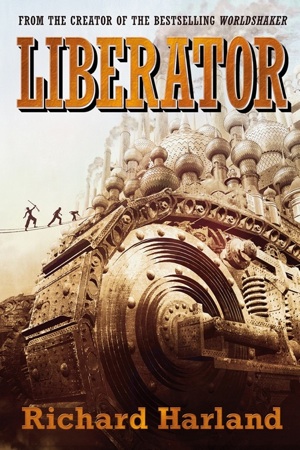
Richard is the author of  Worldshaker and Liberator, among other novels. He has heaps of writing advice up on his ‘writing tips’ page, reportedly some 145 pages of advice. Richard has been writing a long time so feel free to pop over and take advantage of his advice.  His website is here and the writing tips are here.
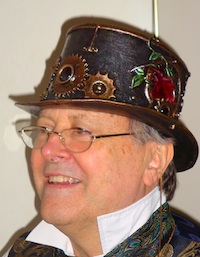
Richard Harland

1.       How many beta readers do you have and how long have you used beta readers in your writing process?

I use three kinds of readers. Sample readers are just ordinary readers – closest to the people who’ll eventually be reading my book. I reckon that ought to make them alpha readers, the most important of all in the end! Then there are author readers, who give a different kind of feedback in critique groups. Lastly, the professional editors, whose opinions you have to listen to – you can negotiate what to change or not change, but you can’t tell them to go jump. Or, you can, but you’ll only ever do it once!

I’ve had professional editors since I started getting published, and I’ve been in critique groups ever since my poetry-writing. Perhaps mostly as a social thing, because I wasn’t very good at listening to advice back than. (I was a poet – say no more!)

 2.       In what ways do beta readers assist you in developing your novel for publication?

I’ve said something about this in my guide to writing speculative fiction at www.writingtips.com.au. Authors in critique groups aren’t very reliable, because they’re always thinking of how they’d write the story themselves. But they’re the best for creative inspiration and opening up your mind to other possibilities. Even when you don’t take the particular path they suggest, it’s wonderfully liberating to see that there are other paths.

Professional editors also don’t read quite like ordinary readers; they read with half an eye on the market and how other people will react. But the best for articulating and explaining problems over what isn’t working; they can zoom in on, say, a lack of tension, and find the real causes behind it. They’re also the best for practical advice, over continuity, motivation – the basic thing it’s easy to lose track of when you’re caught up in the flow of the story.

Sample readers are the ultimate touchstone,the gold standard – only you have to work on them! You have to ignore praise, you have to dig beneath friendship or politeness – and most of all you have to prompt them. Like ordinary readers, they don’t think much about the whys and wherefores. Not enthralled with that chapter, that character – yes, but why? Check what one ordinary sample reader says against what others have said – and probe, probe, probe!

3.       Do all your beta readers pick up the same points?

You’re joking! No, even professional editors often contradict one another. I always reckon that, if one reader has a problem, maybe that’s just their problem – could be they have an individual prejudice, a blind spot, or maybe a momentary lapse in attention. But if more than one reader makes the same point, then I have a problem … And I have to consider doing something about it.

 4.       Do you sometimes target your beta readers to particular areas based on the experience you had with them in the past? For example, one reader is good at plot holes, another reader is good at grammatical issues and another might be good at style. Or do you take what comes?

I take what comes. But I’m not really approaching sample readers or critique group readers for advice on grammar or style. I should be able to do most of that myself – and what I can’t, my professional editors will help tidy up. (For example, when you do or don’t need a comma between side by side adjectives … I don’t really like commas there at all, but there are rules, incredibly arcane, fine-spun rules that I can’t get my mind around. But my current editor can, and I leave it up to her!)

What I want from sample readers and critique group readers are big picture responses on story and character. I think everyone’s opinions count on such things.

5.       Do you always want the same thing from the beta reader for each novel? For example, when you have deadlines and only have time for high-level feedback?

The worst thing in the world is to have worked through all the high-level stuff, and then what’s supposed to be low-level stuff starts unravelling the high-level stuff again! That’s happened to me a time or two with professional feedback, and it’s just so unfair! Unfortunately, life for a commercially published author isn’t fair … Shit happens.

I decide the timing for sample readers, so that’s never an issue. But it’s always liable to be an issue with our ROR critique group, because we meet to discuss whole novels about once every eighteen months – it’s great when I have a novel in just the right state for critiquing, but often it’s too far down the track, too fixed and finalized. So unless there’s some really big problem that’s been missed so far by everyone else, I’m looking for feedback on the stage I’m currently at.

 6.        How hard is it to find a good beta reader?

I’ve probably answered this already. Horses for courses. A good sample reader is good by being an ordinary, average reader. I don’t look for specialists. For example, my first sample reader, before I ever worry about target audience readers, is Aileen, my wife. She loves crime fiction, but doesn’t have any special affinity for fantasy. So I reckon that if the world I’ve created seems solid and plausible and interesting to her, then it’ll seem solid and plausible and interesting to anyone.

A reader who can give a reason for a response is more of a thinker. Authors and editors read on a sort of double level, on the one hand plunged into the experience of the novel but on the other hand sitting outside it. But the more you sit outside, the more chance of thinking your responses rather than just experiencing them. It’s a trade off. I’ve been very lucky with my editors – and the authors in the ROR group are pretty exceptional people too!

7.       Do you have any advice for readers who want to be beta readers or even editors in the long run? For example, what type of commentary to you prefer?

Ah, the ground has shifted under my feet! I’m most interested in sample readers – I believe every author and intending author ought to show their work to ordinary readers and get feedback. That’s my strongest recommendation – and something I’ve learned the hard way, after being for many years too proud to show my imperfect work to anyone!

For professional readers, such as editors and publisher’s readers, well, that’s a whole different ball game. I don’t know what training would help – I’d only say, please, never lose grip on simple delight in reading and getting carried away by a story. When I say I’ve been lucky with my editors, that’s exactly what I mean – they’ve none of them lost their freshness, their spontaneity as readers. I’m sure I’d soon be all staled out over the numbers of books they have to read! And I’m too much of an author to ever be an editor – I’d keep wanting to turn someone else’s book into my book. I’d be a total disaster!

Liberator by Richard Harland

Thank you very much Richard. Another interesting and different perspective. I like how you have sample readers, who are more likely to be similar to your audience.

Donna

Read Full Post »
Today’s interview is with Margo Lanagan, a multi-award winning author, who is just down right nice and fun. Her book Sea Hearts is out by Allen and Unwin. Her website is here. Margo is most active on Twitter @margolanagan.

I’d like to thank Margo for doing the interview.

1. How many beta readers do you have and how long have you used beta readers in your writing process?

I belong to a novel-critique group called ROR (wRiters On the Rise) which first met in 2001. We meet every 18 months to 2 years, when we all have a decent amount of work to bring to the group. There are 8 people in the group now, including me, but we don’t always have the full complement of members; other commitments or differently-deadlined novels sometimes keep people from attending.

2. In what ways do beta readers assist you in developing your novel for publication?

The main thing they do is get me unstuck. They’ll let me know where they thought things were going with the story, where they were surprised and how they adjusted their expectations, and how far I fulfilled them. They show me where I’ve overdone or underdone elements of the story; they throw ideas at me about where things might go; they ask me questions which may or may not be answerable, from the very straightforward (How old is this character?) to the impossibly complex (What is the basic point of this magic system?).

3. Do all your beta readers pick up the same points?

No, but often several of the critiques will chime with each other on several points, letting me know if something really is or really is not working – but then usually there’ll be someone who’ll come out quite strongly against any general tendency! As readers we all like different things, and get irritated by different things; the beauty of this group is the range of viewpoints I get on my work.

3. Do you sometimes target your beta readers to particular areas based on the experience you had with them in the past? For example, one reader is good at plot holes, another reader is good at grammatical issues and another might be good at style. Or do you take what comes?

I take what comes. Mostly I’m curious about anything that their fresh eyes will reveal to me about the work in progress. I want it all, from all of them!

4.Do you always want the same thing from the beta reader for each novel? For example, when you have deadlines and only have time for high-level feedback?

I might indicate when I send out the MS that there are certain things bothering me – plot knots that I can’t unravel, motivations that I haven’t nutted out yet – or I might ask for just the biggest, widest-view suggestions about structure and theme and plot possibilities, as I did at the most recent workshop in January.

I’ve never submitted a novel to ROR without having plenty of time afterwards to take on board any suggestions I needed to. I always get such a rich assortment of impressions, questions and suggestions that I like to feel that I’ve properly assessed every bit of input in my subsequent tackling of the work.

I’ve put in to ROR uncontracted work, contracted but not yet urgent work, and novels that were, um, years beyond deadline. Some ROR-ettes have had novels workshopped that are near submission date, and will hold off on acting on the critiques until they get editor feedback as well as ROR feedback, so they can make all their changes at once.

5. How hard is it to find a good beta reader?

I don’t really know. I was lucky, in that Marianne and Rowena approached me when they were putting ROR together. Before that, I would sometimes ask my editor/s at Allen & Unwin to look at something that I knew wasn’t really up for editing yet, just to get another pair of eyes on it.

Nowadays there are several people I might ask if they were available to beta read, as my writers’ network is a bit wider than it was ten and twenty years ago. I would tend to ask for help for a novel that I was finding frustrating in some way, or feeling lost about; my general rule outside of ROR is that I should try and be my own best editor, and dig the answers to my novel issues out of my subconscious somehow, using beta readers only as a last resort.

6. Do you have any advice for readers who want to be beta readers or even editors in the long run? For example, what type of commentary to you prefer?

I have a fairly thick hide now, so mainly I want a task list, things-to-fix in order of importance according to the reader’s lights. That said, when I’ve viewed the quantity of work waiting for me, it’s nice if there are a few supportive things to top and tail the critique, just to reassure me that this work is worth doing!

Apart from that, impressions as the reader went through are appreciated, then an overall assessment of the misshapenness or otherwise of the novel, and the kinds of ways I might resolve any issues – characters I might think about changing, ways I might get characters moving (people can sit around doing very little in early drafts of my novels), reordering of events, thematic threads that I might clarify or consider. It’s all good – I like to be peppered with questions that require to be answered in the next draft. Just the spectacle of the reader wondering about and worrying over my story is a heartening thing – drafting a novel is a long and lonely process, and it’s great to have some company before you lock yourself away again with the redraft.

Thank you, Margo, for your perspective. Another interesting view point to add to the series.

Donna

Read Full Post »

Trudi Canavan has very kindly taken time out of her busy schedule to answer some questions on her use of beta readers in her writing process. I’m happy to say I have beta read a number of manuscripts for Trudi over the years. My daughter is a big fan of Trudi’s and I’m always happy to tell her that I have read the next book before she can even get her hands on it at the book store. Trudi is now working on a new series and ,yes, I have seen a beta version of the final installment in The Traitor Spy Trilogy (she says smugly). Trudi’s website can be found here.

A big thank you to Trudi!

How many beta readers do you have and how long have you used beta readers in your writing process?

I’ve had at least four and maybe as many as ten at a time, for different books over the years. Less now than in the early days.

In what ways do beta readers assist you in developing your novel for publication?

Different readers at different stages help me in different ways. I have always had one or two people reading my books as I wrote them, and from them I learn what readers may think or need to know at different stages of the story, but they don’t bother with typos. Then there are early draft readers, who mainly look for plot points but not typos. Finally, late draft readers look for plot points and check for typos.

Do all your beta readers pick up the same points?

No. I’m always surprised at how one beta reader can pick up a whole different set of typos than another. Of course, if one reader has a particular expertise – say, horses – they will be more likely to see errors in that area. You also have to take personal taste into account. If I have two beta readers who have quite opposite views on something, that’s a good sign that it’s a matter of taste. Then it’s important to have a couple more to see if they favour one side or the other. In these situations my final decision will be whichever suits my taste, because I’m writing for people who have the same taste in books as me. After all, it would be crazy to write for people whose taste was opposite to mine!

Do you sometimes target your beta readers to particular areas based on the experience you had with them in the past? For example, one reader is good at plot holes, another reader is good at grammatical issues and another might be good at style. Or do you take what comes?

Sometimes. I learned early on that when you engage with a new beta reader it is as much a test of them as your book. I’ve had beta readers who weren’t particularly useful. Usually because they didn’t find much, whether because they hesitated to ‘be mean’ or simply didn’t spot the mistakes. Of course, if I have to chase someone too much to get their feedback, or they give me the impression the whole thing is a bit of a trial, I won’t use them again. Or if they are too busy to look at a book early in a series, I may not give them the next book because they won’t be familiar with the story – though it can be useful to see if a book holds up well when a reader hasn’t read the earlier ones

Do you always want the same thing from the beta reader for each novel? For example, when you have deadlines and only have time for high-level feedback?

See my comments on the different stages (question 2)

How hard is it to find a good beta reader?

Not overly hard. I have a lot of friends who are writers, and even more who are readers. I would never use a complete stranger. It’s too much of a risk. If I was that desperate I’d ask my publisher to find me beta readers they felt were trustworthy. That way I’m covered if the beta reader sells my book on eBay

Do you have any advice for readers who want to be beta readers or even editors in the long run? For example, what type of commentary to you prefer?

Don’t spare the author’s feelings. We need you to be mean. On the other hand, if you learn how to be mean in a nice way, it’s more likely you’ll get to be a beta reader again. And it doesn’t hurt to indicate where you think we’re being brilliant, too. It can be useful to know when we’re getting it right, too. All in all, useful comments are what we’re after. Saying ‘this is crap’ is not useful. Saying ‘I don’t think your one-legged character would make that ten metre jump between the rooftops because, well, he has one leg’ would be.

Another interesting insight to the usefulness of beta readers. Thank you again, Trudi. I will try to make sure I make lots of comments in future so you don’t cast me off! Lol!

Read Full Post »

I am putting up another beta reading interview to keep the ball rolling.

Glenda Larke is an awesome writer and I have beta read a lot for her in recent years. It has been a fascinating experience and I think I learned a lot, particularly when Glenda shares what her other beta readers thought about sections of her work. Also, sometimes she asks me particular questions like ‘is this beginning working?’

Glenda is Australian born but has lived in Malaysia and other parts of the world. She has a number of series out with HarperCollins Voyager here in Australia, the latest novel Stormlord’s Exile is nominated for an Aurealis Award. Here’s hoping she wins this time.

Her website can be found here.

Also, I should note that Jodi Cleghorn is doing a series of posts about being a beta reader here.

1.       How many beta readers do you have and how long have you used beta readers in your writing process?

I’ve had about 10 altogether, not all at once. My first 2 books (1999 and 2003) were published without the aid of any beta readers at all. In fact, I didn’t even know what a beta reader was back then. Both went to my agent without anyone else at all ever having set eyes on them… I was far too embarrassed to show work to anyone I actually knew anyway, I think.

2.       In what ways do beta readers assist you in developing your novel for publication?

In spite of those unaided beginnings to my career, beta readers have become increasingly important in my later books. Partly this is because, once you are under contract, you have less and less time to produce a book. I no longer have the luxury of putting something away for 6 months to stew before tackling it again and seeing all the mistakes leap off the page.

Secondly, I think beta readers make for a better book. They point out things I would never have thought of, and some have marvellous specific talents, such as spotting plot errors and continuity problems…

3.       Do all your beta readers pick up the same points?

No, absolutely not.
If I do get the same observation from more than one reader, I know I MUST fix the problem.

I actually love to have different kinds of readers — someone who is more literary in their reading choices; someone who loves romance and can make suggestions on how to improve the love interest side of the story; someone who is picky, picky picky about the small details, and so on.

4.       Do you sometimes target your beta readers to particular areas based on the experience you had with them in the past? For example, one reader is good at plot holes, another reader is good at grammatical issues and another might be good at style. Or do you take what comes?

Yes,  to both. I target, but this is something beta readers do out of the kindest of the heart, for free. I am deeply grateful for anything I get. And humbled to think that there are people out there who volunteer to read my work in a formative state.

5.       Do you always want the same thing from the beta reader for each novel? For example, when you have deadlines and only have time for high-level feedback?

I have asked for different kinds of reading, depending on where I am in the writing stage. Twice I have sensed that the beginning of a book was having  problems and just sent out the first chapters, asking basically, Hey, what’s wrong with this???

I usually don’t need help with final polish, although once a late stage beta reader suggested a small change in the ending which was utterly brilliant. I took her advice.

At times I ask for comments on a much earlier version, which has little polish; comments on the structure of the story or the development of a character. This is the kind of feedback I treasure the most, I think.

6.        How hard is it to find a good beta reader?

Moderately hard — you need someone who a) has the time b) is going to be honest and not spare your feelings c) won’t be upset if you don’t follow their advice d)  won’t blab about the book before it is published, and, even after it’s published, won’t comment publicly based on the early version e) who has the ability to put their finger on what’s wrong.

7.       Do you have any advice for readers who want to be beta readers or even editors in the long run? For example, what type of commentary to you prefer?

I don’t really need someone to point out how to fix something, as much as to point out what doesn’t work for them. For example: “Character X is coming across as a pathetic whining wimp. Might be better if you make him more attractive?” would be a great comment. It’s up to the writer to work out HOW to make him less whiny and pathetic.

Thank you very much Glenda. I appreciate the time you put in to answer when you are very busy writing your next book. Best of luck with the Aurealis Awards this year.

Donna

Read Full Post »

Another Canberra author Nicole Murphy has agreed to be interviewed on how she uses beta readers to assist in her writing process. I have beta read for Nicole in the past, which was a lot of fun. Nicole had her Dream of Asarlai Trilogy published by HarperCollins Voyager imprint. Nicole and I are also co-chairing Conflux 9, the Australian National Science Fiction Convention in 2013. Link is here. We are also heading off to the Romance Writers of Australia Conference in the Gold Coast in August. The link is here.

If you want to know more about Nicole and her books, her website is here.

1. How many beta readers do you have and how long have you used beta readers in your writing process?

I’ve got LOTS of beta readers – I’m constantly picking up new people to read for me, because I write so fast I don’t want to keep bugging the same folks. I think at the moment, I can safely say I’ve got about a dozen people who I can ask to read for me, and there’s probably more that I’ve not been game to ask.

I started using beta readers in 2007. What turned me onto the value of having some external eyes look at a piece was putting Secret Ones through the first CSFG novel crit group. I had four people go over it and very lovingly tear it to shreds. It helped a lot because I do find it hard to be objective about my writing (It’s brilliant! I’m a frickin’ genius!). When I sold Dream of Asarlai to Harpercollins, there wasn’t a crit group to get the other books through and so I called on friends (such as yourself) that I knew I could count on to give me a fair reckoning of the good and the bad in the story. Nowadays, I wouldn’t dream of submitting a novel to a publisher without it being beta-read first.

2. In what ways do beta readers assist you in developing your novel for publication?

Firstly, they assure me that what I’ve written is worth pursuing. Plotting has long been a difficult point for me and so their feedback on whether it makes sense and whether things are following along properly and have I tested the characters well enough or not is really important. The other great thing beta readers do is by asking questions (would she really react like that? Why do those rules apply to only those people?) it makes me think more deeply about characterisation and worldbuilding and enables me to add extra depth to the story.

3. Do all your beta readers pick up the same points?

Not at all. I’ve had some wildly differing views from people. For example, in my long contemporary romance, one reader said I let on what the baddie was up too to easily, the other said not. One said sex scenes were great, other said not as good at the Dream of Asarlai ones. With the SF romance one that I’m getting results back on at the moment, only one has so far questioned the worldbuilding and interestingly, she’s the one with the science fiction reading background. This is why it’s important to have readers from a variety of backgrounds, because they’ll all pick up different things.

4. Do you sometimes target your beta readers to particular areas based on the experience you had with them in the past? For example, one reader is good at plot holes, another reader is good at grammatical issues and another might be good at style. Or do you take what comes?

Kinda. There are some readers that have more experience with one genre than another, and so I might only give them books in that genre. But then, from time to time, it’s interesting to hear the POV of a person who doesn’t normally read that genre on the readability of your book.

I tend to get beta-readers for big picture stuff. Sure, there’s some stuff that they pick up on in terms of grammar and such (such as you, the great de-justifier!) but generally, I’m not getting the books beta-read for that level. Maybe I should, because I know I’m not the greatest grammarian in the world and my use of words is something I try constantly to improve, but that feels more a personal thing to me. Plus, my style is quite a simple one and so tends not to need too much tweaking to make readable.

5. Do you always want the same thing from the beta reader for each novel? For example, when you have deadlines and only have time for high-level feedback?

Overall, I’m sending to the beta-readers when I’m at the point of revisions in saying “I think I’ve got a pretty good hold on the story now, the worldbuilding, the characterisation, so lets find out what’s working and what’s not so I can tweak it”. I tend not to ask more from the readers than that.

6. How hard is it to find a good beta reader?

I don’t think it’s too hard. You can probably train people into it, by giving them questions to consider as they read. And making sure they understand you WANT to hear the bad as well as the good.

I think recognising a good versus a bad beta reader FOR YOU is important. Some people just aren’t the right reader for you – what they look for in a story, what appeals to them, what they believe is right isn’t what you do. For example, people who like a more literary style of writing, who want beautiful words as well as good story, aren’t going to get as much out of my books and I’m not going to get as much out of their critiques because we’re focussed on achieving different things with our writing and that’s cool.

7. Do you have any advice for readers who want to be beta readers or even editors in the long run? For example, what type of commentary do you prefer?

Beta-reading is about being analytical. Ascertaining not only what’s not working and why, but what IS working and why. Because sometimes, the what is working will give the author the clue as to how to fix the what is not working.

When you’re beta-reading, the aim is to give the author feedback to improve the book. “I liked this” isnt’ helpful. “I just wasn’t warming to Character X – they came across as too selfish to be the lead in a romance novel” is.

Thank you very much Nicole. A very interesting point of view to add to the discussion. I find it interesting that you don’t find it hard to find beta readers and that you have so many. You must be breeding them somewhere in a dark corner of your office.

By the way, the Canberra Speculative Fiction Guild (CSFG), which has a novel writing and a novel critique group can be found here.

Donna

Read Full Post »

« Newer Posts - Older Posts »