I’m so happy to be able to bring this interview to you. I met CS Pacat at Supanova. We were on a panel together on our early lives as writers and I was fascinated with her story and I thought you would be too. Hers was a non-traditional story and she has had amazing success. Read on!
Thank you so much for agreeing to be interviewed on my blog today. I think your publication story is fascinating so I wanted to share it with others.
When did you first think about being a writer and what did you do?
As long as I can remember, I wanted to write books. I took creative writing classes, but if I’m being honest, they weren’t especially helpful, particularly when it came to teaching fundamental skills like plotting or character creation. I wouldn’t necessarily recommend them for anything other than a place to meet other artists and form a support community, and a way to begin taking yourself seriously as a writer, “I commit to writing”. (A friend once described it brilliantly: In a cooking class, you are taught how to make a soufflé during the lesson. In a creative writing class you’re usually asked to make a soufflé at home without a recipe, then bring it in to class, and then everyone critiques the soufflé. But at no point does anyone ever actually teach you how to make a soufflé.)
What inspired you to write fanfic and when do you start writing original fiction?
I wrote fan fiction throughout my teens and into my early twenties, and I have an enormous respect for fandom as an artistic space. I think what drives the fanfiction writer is a desire to reclaim a text, to explore its themes, in a sense to make it your own. This can be powerful and important, particularly when those reclamations involve queering a heteronormative text, or the insertion of fantasies that until recently have not been given much expression in mainstream works, such as the power fantasies of teen girls. It’s a way of offering alternate narratives and diversifying what can sometimes feel like a narrative monoculture.
I started to write original fiction because I wanted to tell my own stories and to be able to craft the kinds of characters that I love. Captive Prince was my first complete original novel, but I did have a few false starts with original fiction before that, learning the skills that were different to fan fiction.
What made you publish for free on the web and then self-publish?
When I started to write Captive Prince there was nothing that was really like it in the mainstream commercial space. But I knew that online there was a vast community of readers and writers who were reading and creating online in part because they were seeking something that they weren’t finding on commercial bookshelves. It was also an incredibly accessible space with no barrier to entry, and so I started to write Captive Prince, and as I wrote, I posted each chapter to my fiction blog.
Captive Prince ran as a free web serial for several years before I decided to self publish the story. I did it mostly in response to requests from readers for a paperback copy of the books. It was really the support and enthusiasm of the online readership that gave me the confidence to take that step.
What did self-publishing feel like?
Equal parts rewarding and terrifying. There is a very steep learning curve, because as a self-publisher, if you want to produce a high quality book, you essentially have to teach yourself all of the skills, from typesetting to art direction to project management. You have to hire cover artists, editors and proofreaders, while learning how to use InDesign and create layouts for paperbacks, produce ebooks, and so on.
It felt scary to do at the time, but it was also incredibly empowering, because you’re learning everything you need to know about publishing, and it opens up new avenues and gives you control over your own writing.
Did big sales happen all at once or was it gradual? How much of that was due to your previous following from the web?
My online readers were incredibly enthusiastic and supportive, they wanted to buy the self published release, even having already read the free version. As a result of that, Captive Prince shot to the top of Amazon lists within a day or two of being released. It then took a few weeks for the generated word of mouth to spread and create buzz in places like Goodreads, and from there another week or two before the Captive Prince started to garner attention and reviews from mainstream review sites like Dear Author and USA Today. So, in a sense it happened in two “waves”, the first from my online readers, and a second when the book hit the mainstream market. Now that Captive Prince is being published by Penguin, it’s reaching a new audience again.
It must have been amazing to be contacted by an agent wanting to sell your work to a major publisher. Can you tell us a bit about that?
It was incredible, amazing, unbelievable. I was approached by a New York agent basically saying, “I’d like to represent you. I think we can sell your book to a big six publisher in New York.” I didn’t think it was possible but signed with her in the spirit of pure optimism. We ended up with two offers, the most robust of which was from Penguin. Now Captive Prince is being published in multiple countries and translated into multiple languages – it’s been an incredible year.
From your point of view, what are the advantages of self-publishing?
Having been through both processes, self publishing and commercial publishing, I remain a huge advocate for self publishing. I think it offers writers a way to produce a book that wholly represents their best vision of their work. You don’t have to rush or make artistic compromises due to deadlines. You can hire the designers and editors that you most want to work with, devote as much attention to your book as it needs. There are also financial advantages, in that your royalty percentage is much higher. Realistically, a commercial publisher will always be making commercial decisions, which are not always the best decisions for a book artistically.
Conversely, what are the advantages of having a major publisher behind you?
The biggest advantage of a major publisher is legitimacy. Although the perception is changing, there is still a stigma attached to self publishing. A major publisher opens so many doors, and dramatically expands the possibilities for a book, from getting it stocked in major bookstores, to garnering attention from mainstream press.
The other advantage is of course access to world class editorial, and the support of a team. I’ve worked with so many inspiring, talented people at Penguin. Allowing them to support the book frees you as the writer to just spend your time writing, which is a incredible privilege.
Do you have any advice for aspiring writers?
I have two pieces of advice. The first is that to write a book, you have to transform yourself into the person who can write that book. So I’d say figure out what is preventing you from writing, whether it is time, procrastination, or problems with plotting, or coming up with ideas, then dedicate time to solving those problems, making the changes that you need to make.
The second piece of advice is to persevere. Writing a book is difficult and there will be a long period of time where you can’t do it, your writing isn’t working, and the book just isn’t a book yet. Everyone goes through this. And everyone I know who has persevered through this stage has emerged with a manuscript, then gone on to publish it. So hang in there: it will happen.
Blurb
Damen is a warrior hero to his people, and the rightful heir to the throne of Akielos. But when his half brother seizes power, Damen is captured, stripped of his identity, and sent to serve the prince of an enemy nation as a pleasure slave.
Beautiful, manipulative, and deadly, his new master, Prince Laurent, epitomizes the worst of the court at Vere. But in the lethal political web of the Veretian court, nothing is as it seems, and when Damen finds himself caught up in a play for the throne, he must work together with Laurent to survive and save his country.
For Damen, there is just one rule: never, ever reveal his true identity. Because the one man Damen needs is the one man who has more reason to hate him than anyone else…
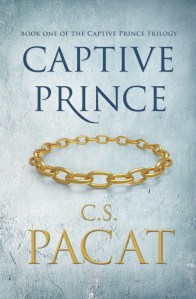
You can find out more about CS Pacat on her website http://www.cspacat.com
Read Full Post »


 Donna Maree Hanson, Author, Phd in Creative Writing