Feeds:
Posts
Comments

I am pleased to present you with an interview with Russell B Farr, from Ticonderoga Publications, which has been in print since 1996. So Ticonderoga has published 25 titles, with a focus on SF, fantasy, horror, dark fantasy, paranormal romance, and related genres. With Ticonderoga Russell has published, single-author short story collections, multiple-author anthologies, The Year’s Best Australian Fantasy & Horror anthology series. Russell says he is currently looking for genre novels.
Ticonderoga Publications can be found here.

Why did you become an editor?

RF: It seemed like a good idea at the time. Seriously. I was fortunate to be hanging around with the Eidolon editors Jeremy G Byrne, Jonathan Strahan, and Richard Scriven. I saw the great work they were doing and how essential they were to the genre in Australia at the time. In the mid 1990s, Eidolon were the quality flagship for short genre fiction in Australia. This coincided with me finding myself bringing out Howard Waldrop as a convention guest. Jonathan suggested that I could do a chapbook as Howard had very little in print in Australia at the time. Out came Custer’s Last Jump, by Steven Utley and Waldrop, with a cover by the pre-Academy Award winning Shaun Tan.

Somewhere in the process of lugging boxes around I thought it was fun, so I asked Steven Utley if he’d be willing to let me do a collection of his work. Utley is a remarkable short fiction writer, a world-class master of the field, but sadly under-appreciated. I remember vividly writing at the top of a draft contents list: “Over 25 years of writing and it takes a 23 year-old punk in Australia to make his first collection”. I think it was much later that I told Steven how old I was when I approached him.

From there it kind of steamrolled, and I was able to publish the first collections by Simon Brown, Stephen Dedman and Sean Williams (Sean’s was his first full-length collection, having first been collected in a chapbook by Bill Congreve’s Mirrordanse in 1994).

I took a few years off from books at the start of the last decade, working at webzines, moving house about 30 times, doing other stuff. In 2005 I was invited to be a guest at the 2007 SwanCon, and felt a little embarrassed I hadn’t done enough to deserve this. Something snapped in my brain and I was soon talking to writers about an anthology project, and before I knew it I was on the phone asking Simon Brown for his collection of Iliad-themed stories, Troy.

Since then my wonderful, creative and especially tolerant partner Liz Grzyb has come on board and we’ve published a further 18 titles, including work by Terry Dowling, the late Sara Douglass, Kaaron Warren, Angela Slatter, Lucy Sussex, Lisa L Hannett, Justina Robson, Lewis Shiner, in addition to numerous anthologies and a Year’s Best Australian Fantasy & Horror anthology.

At the end of the day, editing for TP is still the full-time job I come home to after my daytime full-time job. This may change over the next 5 years, but has certainly been the case for the last 16.

What is the most important aspect of your editing role?

RF: Everything. I have control-freak, perfectionist tendencies, and so for me every stage of the process is important. It’s important to get the writers onside early and keep them onside, as a happy, satisfied writer is essential to the whole process, including in marketing. The book – the product, if you will – has to look good. I picked up early from the Eidolon crew that if indie press isn’t going to be able to compete with large press for price, it can and should be competitive when it comes to quality. Good covers, good paper stock, attention to detail with what goes on every page, you will rarely find a widow or an orphan in a Ticonderoga book (there are occasional pages that refuse to comply but these are well and truly the exception). The contents have to stack up, each story should be able to justify its inclusion. Talking to readers is important, finding out what they liked and didn’t like.

Which areas of editing to you find the most enjoyable?

I guess I’m happiest when I’m bringing the whole package together, when the cover art is falling into place, the look and feel of the book is coming together, the stories are almost finished, I’ve got a happy writer I can bounce ideas around with, I’ve got Liz looking over my shoulder spotting what I’ve missed, when I can see the virtual product in my mind. At this point the book never gets better, it’s my happy place.

At this point, I can usually reflect happily (or at least with a smile) everything that has led to now. I can bring together what I’ve discussed with both the writer and with Liz, so I have an idea of what we’re all looking for. I want to produce something that the writer will be at the very least pleased with, if not somewhat stunned at the realisation that their words and thoughts are materialising into a solid form.

Once this point is passed, reality drifts back in, and things like deadlines start to reappear. And the finished book rarely totally realises my ideal, though they are getting closer. Seeing a stack of books together is as close as it gets – and that stack represents work, boxes to shift, books to pack and post, stock to track, and so on.

In your view can editing be taught?

RF: I don’t know. I certainly believe that it is a learned skill, but from my experience it does require a certain predisposition to loving books and language. I think I’m not the best person to be teaching editing, as I find a lot of what I now do is more intuitive and I’m not always great at communication intuitions.

I certainly don’t believe that doing a course and getting a certificate at the end of it makes a person an editor. Much of the process involves learning on the job, learning from mistakes, developing as a person.

How do you define the editing role?

RF: I think as an editor/publisher at an indie press with a total staff of 2 part-timers, there isn’t the luxury of strictly defining roles. I’m not really strongly in favour of trying to do this – if a box of books needs taking to the post office they won’t move themselves. No job is below me and no job is above me.

I think even in a larger organisation, editors should take a wide view of their role, something like whatever needs to be done in order to get books out of writers’ heads and into the hands of readers.

What do you look for when employing an editor or working with an editor?

RF: I’m not the best at playing with others, so am yet to really find the ideal mix for someone to collaborate with as an equal on a project.

When I’m looking for editors to take on projects for TP, I’m looking for people I respect – to the point of being able to have a respectful heated discussion if necessary. I like to work with editors who have ideas, drive, enthusiasm and a good knowledge of the genre. I’m happy to work with someone who may not have a great deal of editing experience if they have a passion for and knowledge of the genre. I think I’m good at this as we’ve managed to bring on board some fantastic editors – Liz Grzyb, Talie Helene and Amanda Pillar.

What areas of editing do you find most challenging?

RF: I think the biggest challenge is growth. We started small, a couple of books in a big year, and records of almost everything could be kept in my head with the help of a couple of spreadsheets, a diary and a couple of napkins. Now I’m looking at whether to upgrade to specialist publishing accounting software to keep track of royalties on 8 titles per year, dealing with transactions in 3 currencies, or if our current systems are suitable. Finding the time to investigate these things takes time and focus.

At the same time I’m thinking if I should be buying books that won’t see print until 2014 (even with our 8/year schedule), balancing our titles across genres and formats, tracking review and other promo copies, getting books into the hands of the right advocates.

Growth also brings the challenge of making every writer know that we love and respect their work, the love to share does grow accordingly but I’d like to make sure that we continue this. No one writer is less special to us than any other when it comes to getting our books out and noticed, or when it comes to treating all writers in a respectful and professional manner. I hope we succeed at this.

What do you find rewarding about editing?

RF: Seeing a row of the same book, spines out. I think some books only become real at that stage, and I do put a lot of effort into our spines. Having a writer tell me that I’ve somehow contributed to their creative process, making their work better through my input. Having a reader tell me that they’ve enjoyed a TP book, or seeing someone recommend a TP book to one of their friends. Getting a cover design right. The little creative touches I’m able to add to books. The feeling I get from writers trusting me with their ideas and visions. Putting a book in the post is a wonderful grounding experience, knowing that at the other end is someone who has chosen to buy a book I’ve been involved in putting together (there are probably only a select few who buy a book because of my involvement – a handful who seem to trust my taste regardless of wherever it takes TP – but for all the others I just feel privileged to have been part of the process).

Books are a reward, ebooks included. Each book is a little package of a writer’s ideas, visions, thoughts and feelings, broadly or narrowly filtered through an editor, and then wrapped up in a form that should be pleasing to all interested parties. I’m involved in bringing incredible talent and creativity into the world. I like that.

Do you have any advice to aspiring editors?

RF: Love books. Love words.

For new entrants to the market, where is a good place to start in the editing field?

RF: I guess work out what you’re good at and what you want to do, and look for suitable roles accordingly. Don’t start an indie press, really, don’t. Cat Sparks is probably the only editor in Australia who started that way and now makes a living from working with books (as separate from writing), and she does that with 2 different editing jobs. There are a number of reasons why someone would want to start an indie press (wanting to dispose of an embarrassing fortune, certifiable insanity, a pathological love of books, a dislike of relaxing and doing nothing, the inability not to do it), but wanting to gain a foothold in the industry isn’t one of them.

I think the most important thing is the love of books and the desire to get books into the hands of readers. If you have that, then pursue this wherever it takes you.

First a little about you Laurie.

I’m the Submissions Editor at Black Library, based in Nottingham, UK. We’re the publishing arm of Games Workshop, so we deal exclusively with science fiction and fantasy stories based on the Warhammer gaming backgrounds. In the past, BL was more diverse (with general sci-fi and thrillers being released on the Solaris label, etc) but that was a little before my time here.

I asked Laurie for a photo so that you can track him down at Gamesday.

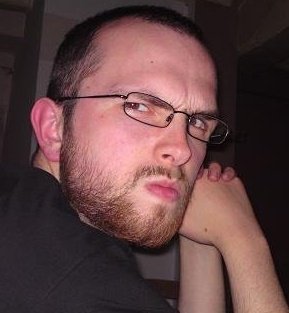
Thoughtful Laurie

I’ve been with the company since January, although I did a lot of freelance work for them for many years before that so I knew most of the authors and editors on a social level, as well as professionally. I had also been organising online fan-fiction contests in my spare time and releasing PDF anthologies of the submitted stories, just for fun.

From an early age, I was always fascinated by language and the written word–I upset my primary school teachers by finishing their reading scheme at the age of six, and having to bring my own books with me to school. I read ‘Lord of the Rings’ aged eight, primarily because my mum bet me £10 that I couldn’t. In hindsight, I think that appealing to my immature, mercenary nature was probably quite a shrewd move on her part. That’s the dangerous thing about having parents who are teachers: you never know when you’re being tricked into learning something.

My role is actually focused on discovering new authors, and either working with them on new projects or helping them to refine their style to fit with Black Library’s range–to use a music industry term, I’m the A&R man! We have a very peculiar readership (dare I say, fanbase?) in that almost every BL reader also seems to want to have a go at writing for us, too. We actively encourage this by having an annual ‘submissions window’ where we accept amateur writing samples and project pitches, and I’m trying to arrange more workshops and seminars at our events so that people know what sort of things we look for in prospective authors.

Why did you become an editor?
I actually became an “editor” long before I started working in publishing, although not in the sense you’d expect–for seven years I ran an audio-visual production company, so I was in fact a film editor and sound engineer. I like to think that the skills involved in editing, in any medium, are transferable at some level. Hollywood film editor Walter Murch famously said that editing takes ‘a certain kind of personality’ where you have to help craft ideas and refine other people’s work; both on a small scene-by-scene scale, but also in the wider context of the whole piece, the genre, the culture etc.

In short, I became an editor because I have that kind of personality. I’m opinionated, I’m a compulsive fact-checker, I like to have structures and procedures in place that I can follow and amend…but I also love to get involved at the creative level. Inside every editor is also usually a frustrated writer, but while I dabble in a lot of artistic fields I like to think that I work best in helping to refine the work of others.

What is the most important aspect of your editing role?
Well, for editing as a technical or artistic skill, it’s diligence and a keen eye for detail, or the ability to help craft ideas towards a goal. That goal depends on what you are editing, and why–it can be as crass as ‘to create a product which will sell to our customers’, or it can be to help an author craft something truly special, something that is an absolute pleasure to read. Usually, my goals fall somewhere in between… although as a lifelong fan of the science fiction and fantasy genres, I often edge towards the latter even when I perhaps shouldn’t…

But if we’re talking about my role as Submissions Editor, it’s actually far more important to create and maintain good working relationships with our authors. As I said before, I knew a lot of the guys before I started working in-house for Black Library, but I have also discovered a few new authors in the last eleven months or so, and so I’ve been able to build rapport with them right from the start of their careers with us.

Certainly, there have been times when my editorial style clashes with a writer’s personality, and I’ve gracefully handed these chaps over to other editors on my team–there’s no point in trying to force it, when what we really want to do is collaborate with them on great fiction. If an editor loses interest in an author’s work, or if the author feels they aren’t getting anywhere with that particular editor, then it’s time for a rethink.

Which areas of editing to you find the most enjoyable?
I love seeing a project through, from commissioning right up to the finished, published story. Although the publishing industry often moves at a near-glacial pace, I’ve already got some work from my authors in print even though I’ve only been here for eleven months. Without fail, even though I helped them thrash out the synopsis and refine the prose, guide them through rewrites and sort out the proofing copies…I still always read the finished, printed book. There’s a degree of finality in holding that novel in your hands, and I still get excited by that ‘new book smell’, especially when I know that I helped bring it into being.

In your view can editing be taught?
I think the basic skills of copy-editing and proofreading can be taught, but not so much the personal side of things. You can’t force someone to be creative, diplomatic and amiable but still to remain critical. If they don’t have the basis of that within them already, then they won’t be able to learn it. It’s about being a ‘people person’, or at least being extrovert enough to interact with others in a productive way.

Having said that, I often ask my editorial colleagues to check my responses before I send them back to authors–I have a tendency to be overly factual, which can sometimes sound officious or curt on paper. I find written feedback the hardest to give, which is strange really. My senior editor is Nick Kyme, who is also a successful author himself, and he has really helped me to find a suitable ‘vocabulary’ when dealing with my own authors: even if the message is harsh or very critical, it’s important to find a constructive way to deliver it, and to be direct without bruising egos along the way. As with anything, it’s an ongoing process, but once you find your rapport with an author you can sometimes get away with being a bit more direct or cheeky.

Something which Nick said to me very early on, which has always stayed with me in this role, is to ask yourself this: ‘Does it matter? And is it cool?’ (Believe it or not, I’ve got those words taped to my computer monitor so I always remember them!) This piece of advice came from me over-analysing author submissions, and picking fault with storylines or even character names. Especially working in the genres that we do, I had to constantly remind myself that there weren’t really any ‘facts’ as such, and that as long as something was AWESOME, it didn’t matter if it was actually possible or not. It illustrates my point perfectly – it’s important to learn the skills you need, but to constantly develop your own attitudes and the way you interact with your authors.

Do you have any advice to aspiring editors?
Aside from needing the obvious fastidious personality and attention to literary detail, you mean? An editor not only needs to know the difference between there, their and they’re, but also needs to be able to communicate those sort of facts to others in a helpful and diplomatic way. It’s fine to check your facts–I always have dictionary.com and Wikipedia open on my desktop, for first-stage research and basic fact-checking–but a good grounding in the English language and an academic spirit are invaluable.

It’s also very important to consume as much literature and media as you can. It’s good to have examples of tone, imagery and style that you can pitch as ideas or to help develop an author’s work, but it’s also vitally important so that your author doesn’t accidently “borrow” the plot of an old episode of some TV program, and you unknowingly approve and commission it!

As with most careers in this age of devalued university degrees, in order to get a foot in the door you’re going to need some experience in the field. For me, this was doing freelance video and literary editing on contract for Games Workshop, and it allowed me to get to know people in the industry, and specifically the company I wanted to work for. When there was no role available, I honed my skills by running the aforementioned online fiction contests and acting as an editor there.

Although everyone on the BL editorial team happens to come from an academic background (degrees, masters, post-graduate study, foundation courses etc) this is not necessarily required to be good at the job. For example, I have a BA in Cultural Media and Film Theory, and a BSc in Digital Post-production Technologies, and I have also studied English Language and Linguistics…but none of that directly relates to editing or the role itself. A professional qualification in publishing would be far more valuable to someone looking to get started in the industry, and that would still be secondary to actual experience.

The Black Library can be found here

Here is a scary shot of Laurie, which is probably why he signs his emails (Pedantic Corrections Goblin).

Scary Laurie

Well what a week. I received another high distinction for my second assignment, the content of which was based mostly on this blog. Lesson: proofread blog, because score was based on content and not well-edited prose. I’m writing this post on the IPad so not the best medium for editing posts.

However, while my assessment is over, I still want to include editor interviews on this blog. I have one just in that will go up tonight or tomorrow and it is fantastic. I’m chasing the others but it’s like pulling hen’s teeth. Editors are busy people so I am very grateful for the interviews I do have, and I hope they will forgive my nagging persistence.

I did embark on Nanowrimo this time. I am even registered (Gistalia) but I did this knowing there would be obstacles due to work and my major assignment. The major assignment, I’m happy to say, is mostly done. I have to compile everything and prepare a presentation. I might have mentioned that I did two editing assignments. One was insurance. Well, for extra marks I can submit both.So Wednesday is delivery day.

Doing two, one way longer than required, means I was able to demonstrate project management skills, (this is my strength) and also my fiction editing skills, which was the part I loved best of all. Both projects are different and the relationship with the author was too. I think what evolved out of the projects was unique to each. I’m very happy with outcome, and I hope the authors are too. Proofreading is my weakest area. Luckily, this skill can be learned. I can do it, but it is the least enjoyable and takes time.

Work is very intense right now, moving from drafting to editing and polishing draft chapters of my audit report. This is very finicky, with evidence checking and cross referencing and deep analysis. Long days soon compound, leaving me utterly drained. Last night I was so tired, I couldn’t do anything and, due to being wired, I was unable to sleep. As the manager on the job, I have the greatest responsibility, writing more and supervising the work of the team.

This means it has been physically impossible to write this week. However, the uni assignment gets handed in later next week, one load is going, gone. The other issue with my Nanowrimo project is that I don’t think it is very good at this stage. It is contemporary romance and that is darn hard to write. Reading one is nothing like trying to write one. It is very precise technique, and I like the challenge. I am hoping that revisions will fix it. My first drafts suck mostly, and I’m trying not to let it dishearten me. I have a truck driver from the USA willing to be interviewed so this will help. I have Valerie Parv’s great book, The Art of Romance Writing. At this stage of my writing journey, I believe that I should be able to write anything, military SF, romance, young adult etc. So while it is not natural to me to write something that is not weird in anyway, I know I can master it.

I have other writing tasks I want to attack and my boss has hinted that I may not get my leave (for January writers’ retreat in NZ) Argh!!! No! You see the project is behind and Christmas is one hell of a deadline, particularly in the public service, because in non-project delivery departments people often go on leave until February. So that is in the watch this space position. What this means is that I hope to write fiction on the Nanowrimo later this week and see if I can catch up. Also, on the work front, I’m going to revert to fulltime for the duration so that this project gets where it needs to go. That means less time all around and possibly more fatigue. I’m not as young as I used to be.

However, the big benefit for me at this stage is that I am fairly kicked into editing mode at work and that usually translates to excellent revision and self-editing at home. This is probably another reason drafting for Nanowrimo will be harder, though not impossible. I do like deadlines and challenges. When you are not under contract deadlines are playthings. This could change one day.

I’ve got loads of things to do and, of course, I can’t decide what to do first. I did a bit of my uni assignment and not as much as I should have. I am supposed to be drafting an outline for my Nanowrimo project. I’m not certain I can commit to it, but it never hurts to do an outline, I have discovered quite recently. I’ll do that tomorrow.

I had been talking to Nicole about Dragon Wine, lamenting that I had cut a bit but needed to cut more and didn’t think I could get another 20,000 out of it. Then we talked a bit more. I suggested I could cut the bad guy’s point of view. A couple of chapters I had written during revision were from the Inspector’s point of view, nasty stuff too. Nicole said she’d done a twitter survey suggesting that readers don’t like the bad guy’s point of view. I figured I could live without it, but I’ll have to do a bit of patching to make the ending sensible. I can’t all be interpreted from the action. Actually, writing the bad guy helped me flesh out a few things. Now I’ve done that I can get rid of it.

Then I revisited a scene, which I thought I’d cut back, only find heaps of things to cut back. I had way to much detail and the action was full of words that didn’t need to be there. I was quite surprised really. Not only could every second sentence could go but just about every second word, or at least it could be written tighter. So I played with that scene and began to worry that maybe I had quite a bit of work to do.

So the MS is now at 141,500 words. I have 11,500 words to do before I reach my goal. I’m beginning to think it is doable.

I used to think Dragon Wine was the best thing I’d ever written. Now I’m thinking this is the best thing I’ve ruined through overwriting. Well that is repairable.

I am co-chairing the Australian National Science Fiction Convention in Canberra in 2013. I’m very excited about it and I wish it was all going to happen next week. Unfortunately there is a lot of organising to do between now and then. We have great guests, Nalo Hopkinson, Marc Gascoigne, Karen Miller, Kaaron Warren and Rose Mitchell is fan guest of honour.

The wordpress site is here

Currently we have cheap introductory memberships which end on 31 October and I’ve updated the venue information so members can start booking their rooms.

We are running three streams of programming, a steampunk themed high tea, a Regency gothic banquet, workshops, readings, mass book signing etc etc.

If you read this and you don’t know what a science fiction convention is, then please ask and I’m happy to explain. SF conventions should come with an addiction warning though.

I’ve been quiet mostly because I’m busy at work and with the university assignments. After a bunch of personal stuff hitting me last Thursday I got word just before I went to bed that a novel manuscript had been rejected. Apparently my rejection went astray and I waited a year to query. I had a feeling this one wasn’t quite right for the imprint so I’m not surprised by the outcome.

It was pretty tough news though, coming as it did after a day of blow after blow of personal crap (not my personal crap but originating in those close to me). What it sparked off for me though was the assessment of where I was at. Here I am at this time of year and still I haven’t sold a novel and I know that it’s not going to happen anytime soon, particularly with Christmas round the corner. So I guess I really hate this part because it feels like I haven’t achieved anything.

This is my negative self speak talking and I really should own it. I do have this negative ear worm. If an editor says something nice, I tend not to believe it. Silly really when you use logic. If one asks for a manuscript, I think they are humoring me. If one says send me something else, I think he or she is just being nice.

My lovely partner, Matthew, and my good friend, Nicole Murphy, both gave me pep talks. Nicole told me to submit the novel to the Manuscript Monday so I did. Then if I didn’t hear back in the month then I am to submit it elsewhere, so I will.

I also sent out a few short stories and did an outline for another novel. I’m thinking about what to write for nanowrimo, although I think I’m going to find it hard to write given report writing at work and the massive proofread I have to do for the uni project.

However, I’m stating this here and now. I have achieved stuff this year. Maybe not the novel sale, but this year has been massive for me. I did the reading submissions thing and learned a lot and I’ve been doing this editing course, which has also been excellent. I’ve sold more short stories this year than I ever have. I also still have another MS under consideration out there.

And I’m going to write another novel on the writing retreat in January and I have some revisions and cutting back to do on Dragon Wine so I can send that out too.

I let these negative feelings interfere with things. I leave manuscripts in my hard drive for years and do nothing with them. I’m not going to sell anything leaving them in there.

Another thing, and this maybe useful to others, I continue to write new projects because they aren’t going to get published if they aren’t written. The more projects I write, the more chance I have of hitting the right editor with the right manuscript. Perhaps hitting isn’t the correct word to use here.

The upshot is I’m not giving up. I’m not listening to the self deflating, negative mind speak. I’m pushing forward.

As you may know I’ve been studying editing this year, and I have some previous experience in editing, particularly when I had a small press. Also, recently I interviewed seven editors about the editing scene; what it all means; the role of editing, etc.

What this has brought home to me is that profession of editing encompasses a wide range of roles and tasks. From the curator type role, where the editor selects stories and compiles them into themed anthologies, at times garnering awards for the anthology as a result. There are acquisition editors, who read with the view to publishing works for a particular imprint, which requires an understanding of the ‘vibe’ of the publishing house. Sometimes in a small press the publisher performs this acquisitions role along with many others. There are copy editors, whose role is assist authors to get their manuscript into a publishable state, or more likely to finesse it to its final publishable state. There are proofreaders who specialise in honing the sentences and dotting the i’s and the t’s and making sure those commas and periods go where they belong. There are interns, who may do many tasks, such as read the submissions pile, do copy edits and other editing related tasks under supervision.

The interviews also touched on the question of whether editing can be taught. There was pretty much a consensus view that copy editing and proofreading can be taught. Whether a person has a flair or talent for editing in the sense of making a good work great, was not really resolved. I did touch on whether editors used creativity when editing in my questions to James Frenkel. He warned me off that view as editors work with work that is already created. I had asked this because I find when I’m critiquing and analysing and making substantive suggestions to a story or novel, I find that it erodes the creativity I have left for my own writing. James Frenkel said he did not think that was the case, because he knew many editors who did not write.

I have not quite made up my mind about editing. It is a very useful skill, particularly if you can use an objective eye on your own work as a writer. However, I do find that it competes with my writing some of the time. That may be fatigue rather than both editing and writing being drawn from the same well. I am not quite sold on whether I want to do it for a career or freelancing. Another thing against that is I get paid better than a salaried editor in my current job. Freelancing is a different thing, where it is possible to make a reasonable living, if done well. There is the potential that I could edit as a job at my work one day as well. Mind you audit reports are not that groovy or exciting as a novel or a short story. About 50 per cent of my job is report writing and editing, polishing, proofreading etc anyway.

To argue against myself, I find that when I go through the months of editing on my report in my day job, I am able to be critical of my own work. So during this period I am more likely to be editing at home as well as work, because my mind, after a few weeks, has been kicked into analysis mode and even detail mode.

The parts of editing I like best include choosing stories for anthologies. I haven’t done this for a while. I also like working on ideas and seeing them come to fruition. I did this with Johnny Phillips, Werewolf Detective collection by Robbie Matthews. I went over there and pitch the idea to him. I loved his stories and I’d read a couple of them. I thought they could be trimmed together in one volume and also made more accessible so that young adults could read them. I also, asked Robbie to make more stories for the collection. I think that worked rather well. We did get an award nomination out of it.

I think I have a reasonable eye when it comes to diagnosing what is wrong with a manuscript. The submission reading for Angry Robot certainly helped me there. I also found that with my major assignment this semester, which is a full on edit and production of a manuscript, that I could really exercise my mind with the structure and the copy editing to help make the manuscript sing. I think it has been an excellent partnership. (To own the truth, I am editing two projects, a novel and a novella).
To my mind, the work is the authors and it is up to them to decide if they will listen to my advice on an edit. Mind you, I am probably of a like mind to James Frenkel when it comes to using persuasion to get my own way.

As for my style, I am probably more of an interventionist that Alisa. I am using quite precise when saying what is wrong and why, when responding to a manuscript. I will even offer suggestions. It often depends on my relationship with the author. For example, when I edited Kaaron Warren for The Grinding House, we would often choose to disagree over commas. However, I also found that I could talk to Kaaron and she would address whatever the issue was we were discussing.

I do own that my proof reading skills are not the best. I mean I can do it, but I have to take my time, limit my distractions, focus. That is not easy for me and I don’t enjoy it. However, I hear that there are people out there that love proofreading. I don’t think I’m cut out for it. Though, I have been known to pick some errors up in my time.

My next challenge is the work on a glossary, a blurb, imprint pages and a commissioning letter to a designer for the manuscript. We aren’t going to print but we have to have it ready to go to print as part of the assessment. I have until early to mid-November to get that done.

To help me answer the question I posed in the title of this blog post, I must look at my satisfaction and enjoyment I have had from this semester and the major editing assignment. I have enjoyed it. It’s been challenging and tiring, but I have steamed on ahead as if it was all very easy. I think that confidence comes in part from the Angry Robot submission reading. I had so many things pounded in my head from reading so many submissions. I also think my previous experience has been useful too. First semester laid a good ground work for the second semester, particularly the focus on grammar, punctuation and the development of style guides. So I like editing. It is very useful and if I give up writing, I’d probably focus on editing. (I’m more likely to attack my ‘to read’ pile and read until my eyes fall out of my head.)

GamesdayOZ

I’m taking a break here in the series on editing. I have a few interviews outstanding, but they aren’t here as yet. Also, I will be doing a set of interviews with authors who use beta readers. It will be interesting to the different point of views.

On the October long weekend, Matthew Farrer and I went up to Sydney for Games Day Australia, which is like a convention but more like a trade show for Games Workshop. For those of you who do not know, these are the shops that sell the miniatures for Warhammer and Warhammer 40K, among other things. To put you in the picture, Matthew writes for Warhammer 40K on occasion, so he was appearing there to sign books. His blog is here. Games Workshop have a publishing arm called Black Library. See their website for more about them. Here.

As part of Games Day, Graham McNeill had been dispatched from the UK to make an appearance here. Graham McNeill is one of their big authors, being a multiple New York Times best seller and he won the inaugural David Gemmell award. Here. Graham has a website too. Here.

We actually had two conventions to go to, because Conflux 7, science fiction convention, was on in Canberra too.

We arrived in Sydney on Friday night, hopefully in time to have dinner with Graham and Anthony Reynolds, another Black Library author. However, Graham had a meet and greet at the City Games Workshop and by the time we got there it was still going on. I mean there was a queue which didn’t seem to get any smaller. There were a whole bunch of people from the UK. Mal Green, who I had met at the Games Day UK 2010, but others who I didn’t know as well as local crew. So it was up to us to make small talk, while we waited for Graham to wade his way through the field of adoring fans (okay maybe it wasn’t like adoring fans) and finish up. It was pretty late actually by the time he did finish up. So about 15 of us trotted down to China Town, looking for a restaurant that was still open for serving food. We found one and piled in.

Now I sat next to Alan, who I’d been told was part of the executive from the UK  and Matthew. Phill Kelly and his wife were on the other side of Alan. (I tell you about Alan later). It was a big round table and every one was pretty hungry and most of us went for this mega banquet menu. The fare was okay, a bit on the ordinary side, but you know when you are hungry as long as it is fresh and good, you eat it.

I talked to Alan about Games Workshop. He told me he had been with the company from almost the beginning. Not the beginning but not long after. He told me a bit about the business. Firstly he said there were three aspects to it, the collector, the hobbyist and the gamer. The collect likes the miniatures for collecting, as works of art etc. The hobbyist likes to assemble them, paint them etc and the gamers like to play the battles. This is a very simple explanation and with me putting it in to my own words. Alan was a bit more erudite than that. However, he did say that Games Workshop makes people happy and he liked that what he did made people happy and made a profit.

So after dinner a few of us went looking for a bar. Alan, Mal, Matthew, Graham and me. (forgive me if I left anyone out). Actually it was a bit hard to find a bar/pub at that time. We settled with our drinks and got onto the topic of sport. Anyone who knows me will understand that this is bizarre because I don’t like sport, watching it, playing it etc. Matthew and I sort of said well the only sport we like is Roller Derby and then the conversation took off. I asked Alan about the different codes and over a drink until about 2.00am he regaled me with the history of Rugby Union, Rugby League and Football (Soccer). It was fascinating.

So on to Games Day. We took a train from Central to Redfern to the Tech Expo, which happens to be the old Redfern Railway workshops. I was fascinated again (I did get fascinated quite a bit). These old buildings were strong in my memory. I recall when I was young taking the long train ride in from Rockdale to the city. By the time, we got near Redfern I was bored and my imagination took hold. I’d see these dark gloomy buildings with a small window near the gable, with something that looked like white paint spilling out of it. The sight always reminded me of blood and monsters, so I was…happy to finally see inside these buildings. The whole estate has been gentrified and bits of machine parts, rail carriages decorate the expo area. There was one machine that looked like a steam driven engine with a hook on the end. It was probably used to haul machinery but I thought it looked like the perfect Dweeb catching machine. (Matthew is the Dweeb).

Here is a photo of the Dweeb, not quite being caught.

Dweeb Machine

The next photo is a shot of the inside. This venue was great. It was an old industrial Victorian Era building, so a wonderful setting for Games Day Oz.Very gothic I should add.

Interior of venue

Diorama after diaroma lined the room, waiting for the players to arrive. A man dressed as a pirate urged the workers on and revved them up, while the fans waited in long queues outside. On the centre stage was a model of a two meter tall Space Marine, with a chainsword replica at its feet. The Chainsword was going off as a prize, so the boys thought they’d play with it. Lucky for me I got a couple of shots. This one is of Graham McNeill.

Then there was Matthew.

Matthew with Chainsword and Space Marine

Sorry about the light on the face on that one, but it couldn’t be helped.

So while things were being set up, Matthew and I went in search of bacon. The UK lot had told us the venue had these amazing bacon sandwiches. However, we couldn’t find any. Here is a picture of Matthew without bacon. He is smiling because I made him.

Matthew without bacon

Okay. He hates his photo being taken so you owe this great shot to me and my powers of persuasion. We had to settle for coffee. So while we went in search of food, we managed to get a glimpse of the queue outside. I wonder if I can get them to line up.

Front of queue

the queue continuing out the door

The queue continued

So with the excitement outside and the revving inside it filled me with excitement. Because I knew that once everyone came it it would be hard to see things, we had a quick look at some dioramas. I saw this amazing Reaver Titan. Matthew says, no it’s not. However, we asked one of the attendants and it was a titan. A Chaos Reaver Titan and it looked awesome. The machine had been corrupted  by Chaos and had teeth and looked entirely feral. Anyway here is a shot but I don’t think it does it justice. (Hoi! Universe. I want a Reaver Titan, even one corrupted by Chaos!)

Chaos Reaver Titan

Okay you got me. I’m a dweeb. A geek. And I love this machine! Well miniature of a machine.

So the doors opened after this amazing pirate countdown. My heart raced. I felt all this tension and tears came into my eyes. It was so amazing. (I have been to Games Day UK last year but I missed the opening). What a buzz!

Soon after ( I mean minutes) there was a queue forming for the Forge World kits and one for Graham.

Queue for the Forge World section

I took a shot of this because you know these guys had been queuing outside to queue inside. They are very dedicated.

Mal mentioned that they were a bit short handed because a new game was launching and all the stores needed to be staffed. I was there, you know, looking bored (I mean beautiful and dweebie) and I thought I may as well lend a hand. Matthew was to sign books. Mal and Josh were the main guys on the book stall. Then I helped and snaffled a  staff t-shirt and a mock flintlock pistol.

Mal Green working the Black Library table

This was another thing that amazes me. I’ve done SF conventions for years now and I’ve never seen books fly off the table as fast as these ones, nor have I seen so many books sell. The fans are very loyal. They did have the added incentive of Graham McNeill there to sign books.

Me with staff t-shirt and pirate pistol

Here is the back view with the lovely graphic of Dreadfleet. The photos of me were taken by James Sweeting. Thanks James.

Me with staff t-shirt and Dreadfleet graphic

Then there was Graham signing books.

Graham McNeill signing

Graham had a queue too. I have to say these Black Library authors sign books–all day. Not an hour or two but the whole day, with little treks to the seminar room to go on panels or Q&A sessions. Graham worked right through lunch.

People queuing for Graham McNeill

Mal leaves me to do some table minding with the amazing Josh (manager from Cairns’ store) and he tells me sometime during the morning that this really famous guy, Alan Merettt is coming to sign books at 12.00. I’m like wow. This guy must be special. I keep my eye out for this Alan guy. Then comes 12 and Alan sits down. I’m like oh that Alan. The Games Workshop guys tell me that seeing him is something very special. I’m like, I’m sorry I didn’t know. I didn’t quite fall to my knees and say I’m not worthy. I hope Alan realises I know nothing. He treated me very nicely. I have a nice shot of Mal, Alan and Josh.

Mal, Alan and Josh

That’s not the only thing. Phill Kelly sits down to sign. I whisper to Matthew. “Hey I didn’t know Phill was an author.” Matthew says back. “He’s a designer. He designed Dreadflett and he also writes.”

“Oh” says I, feeling a little more silly than before. Matthew bought a copy of Dreadfleet as part of his Games Day haul. Speaking of things fanish. I captured a shot of The Gildar Rift by Sarah Cawkwell, which was on pre-release. She is the first female novel author for Black Library. There are other female writers but I believe they have written shorts stories.

The Gildar Rift by Sarah Cawkwell

I bought a copy and am currently reading it. Go Sarah!

After the day progressed, I happened to turn around and look at Matthew. He had a queue. Don’t get me wrong people line up to get Matthew to sign books, but a queue, a long queue. Well I’d not seen that before.

People queuing for Matthew Farrer

So we’ve been selling books and posters. I was the poster lady. I bought one myself! Then it became afternoon. Graham finished signing so I was able to grab a shot of him and Anthony Reynolds.

Anthony Reynolds and Grahham McNeill

You might notice the huge coffee stain. Apparently someone bumped into Graham when he was finishing up a seminar and spilt coffee all over him. He didn’t have a change of clothes with him and had to sign most of the day in a wet t-shirt.

So my final shot is Josh (I pray I have his name right because I’m terrible with names) with a parrot. I didn’t quite get the significance of the parrot but I believe Mal gave it to him.Josh was a great guy. I had fun working with him. He is such a dedicated Games Workshop employee and fan, he has a maw tattooed on his navel. I can’t quite remember the significance of the maw. I’m sure someone will tell me. I think it has something to do with orks. I believe Josh has now moved to manage the Macarthur store. (I was eavesdropping).

So the doors shut, people left, staff did their shopping and we helped pack up the books. We met the guys later in the bar. I was numb from the waist down after being on my feet all day. So we didn’t stay long. The bar was small. There weren’t any seats and we had to drive back to Canberra. So we said our goodbyes and went  on our way.

Josh with parrot

The next day we were at Conflux 7. Here I was not quite normal because I was very tired. I made a few panels but went home early. I was much better on Monday. That was good because we launched the Conflux Natcon for 2013 and sold memberships. Rock on!

Alisa Krasnostein from Twelfth Planet Press has kindly agreed to be interviewed for this series of editor interviews. Twelfth Planet Press and Alisa have garnered a number of awards. The latest is a nomination for the World Fantasy Awards for her work with Twelfth Planet Press in the Special Awards, non-professional category.

Her website is here.

AK: I’ve been editing for over a decade. I started editing nonfiction and was employed by my uni department to work on editing various articles for publicity and so on. I’ve also edited a few scientific journal articles and reports. I moved into fiction in about 2005 when I set up my own small press. I’m an engineer in my day job and editor and publisher at Twelfth Planet Press.
Why did you become an editor?

AK: I love editing. I think I have the skill of reading or hearing what someone is saying and then helping to translate that to a wider audience. It’s where I started in nonfiction editing. I really enjoy reading technical scientific pieces and reworking them for more mainstream consumption.

I became a fiction editor because I wanted to influence the kind of fiction being published in Australian speculative fiction. Actually, as it turns out, that’s why you become a publisher, but I didn’t know that at the time.
What is the most important aspect of your editing role?
AK: Buying great material in the first place. Obviously I only edit work that I am buying to publish and so the choosing of pieces is the most critical aspect on the outcome of the project.

I think the second most important aspect is building a rapport with the author I’m working with. Sometimes that means being supportive and encouraging to get a self doubting author to keep on writing or working on a project. Sometimes that means being able to nudge them to hurry up on a deadline. And most importantly it means being in sync on the direction you’re both heading and the route you’re taking to get there.

Which areas of editing to you find the most enjoyable?
AK: I really enjoy the back and forth synergy with an author as we work on a story. I really enjoy working with authors who are open to feedback and criticism on where a story may not be working. I don’t see my role as making suggestions on how to fix a problem and I very much enjoy seeing skilful writers go away, work on it and bring back a new draft. Sometimes, you can’t even see exactly what they did to fix it (unless you use the track changes function) and it amazes me how sometimes a piece only needs the slightest of massaging to get it into place. I love being wowed by writers who can do that. I love how sometimes it takes an outsider to point to the flaw in the glass that the writer can’t see but then they go away and polish it up so that you can no longer even see where it was.

I also really enjoy reader feedback. Hearing what other people think of your editorial choices, and whether readers agree or disagree is really interesting. And of course, the ultimate high is uncovering a hidden or undiscovered gem. Or finding a new writer first.

In your view can editing be taught?
AK: I think everything can be taught and learned.
How do you define the editing role?
AK: In small press, the editing roles are much broader and more encompassing than in bigger publishing houses. In small press, editors work from acquisition (the much loathed slushing process), rewrite, copy editing, proofing, proofing the layout before and after print. And also, beyond that into sales and promotion.

To me, an editor needs to be immersed in the genre they edit so they can discern what is truly original and fresh. They also need to be the confidante, morale booster, timekeeper and deadline pusher to the writer. And then the aspects of editing such as structure, pacing, character development, typos, commas etc kick in.
What do you look for when employing an editor or working with an editor?
AK: Synergy and shared vision. Someone with a keen eye for the technical side of story telling and also a sharp eye for copy editing.

What areas of editing do you find most challenging?

  • ·         project management,
  • ·         copy editing,
  • ·         proofing, promotion,
  • ·         marketing,
  • ·         dealing with authors,
  • ·         dealing with acquisitions?

AK: Time (and money) and lack of (both) is the area I find most challenging. I love all of the above mechanics of editing. And the only thing I regret is not having enough time to spend more on each of them. Sometimes authors are difficult to deal with. That requires tact and strength and sometimes you have to go in directions that are regretful and unpleasant. But those experiences have also helped me head off at the pass similar ones next time.

What do you find rewarding about editing?
AK: Being the first person to read a work that you know everyone will be talking about in the future. And then bringing manuscripts into real books and selling them to readers who love them. All of which is not necessarily “editing” per se. I really love collaborating with writers to make a manuscript into the best it can be. And when you have emails back and forth as creative sparks fly, that’s the real high.
Do you have any advice to aspiring editors?


AK: Read a lot in the genre you want to edit in. Read industry publications to find out what’s happening in acquisition, commission and development in the bigger presses. Remember that editing is not writing – don’t get in the way of the story and the way the author is choosing to tell it. Don’t edit for your style, edit for the style of the author.

For new entrants to the market, where is a good place to start in the editing field?
AK: I think interning is a good way to get experience and also to show what your skills are.

I am very lucky again to have the very interesting and talented Cat Sparks here for an interview.

First a little about Cat.

Cat Sparks is fiction editor of Cosmos Magazine. She managed Agog! Press, an Australian independent press that produced ten anthologies of new speculative fiction from 2002-2008. She’s known for her award-winning editing, writing, graphic design and photography.

To see more about Cat check out here website here.

Cat has varied the format. Instead of answering the questions I sent, she has mashed them all together into…A  rant by Cat Sparks

Cat says: 

I didn’t originally set out to be an editor so much as a producer of anthologies with editing being a component of the product. I perceived there was a gap in the Australian SF marketplace so I decided to fill it with the sort of books I wanted to read myself.

In 2002, I unleashed Agog! Fantastic Fiction on the scene while being engaged in the process of acquiring a post-graduate certificate in editing and publishing from UTS. The course was a good one, covering marketing and writing as well as the nuts and bolts of editing and copy editing.

Eventually the burden of running a small press while trying to write my own material and hold down a day job became too much so I bailed. The short fiction landscape had blossomed in the meantime and the internet had made redundant the isolation previously experienced by many Australian writers.

I feel very fortunate to hold the fiction editor position at Cosmos magazine because it has enabled me to continue with the part of the process I enjoy most – sniffing out and shaping good stories – while others are responsible for layout, sales and distribution.

Fiction editing is performed in partnership with the author. The aim is to enhance the story without overpowering the author’s style. Some stories come to me like diamonds in the rough. Precision tooling is required to make them shine. Others are almost at publishable standard when I receive them, needing little more than suggestions, taps and tweaks to get them across the line. My job involves knowing when to intervene and when to leave well enough alone. I never try to leave my mark on an author’s work. Good editors are invisible menders. Our best efforts go unnoticed.

When I ran my own press I had more time for the shaping of rough diamonds. The Cosmos publication schedule does not allow for this so anything too unkempt and unruly gets passed over for works where the author has taken more care. There is no shortage of quality writing on offer. If an author can’t be bothered presenting a professional manuscript, I’m not prepared to run behind them with a dustpan and brush sweeping up errant adjectives and punctuation.

Most stories I reject have one thing in common. They’re boring. I’m bored before I’ve reached the end of the first page because the prose lacks style, rhythm, content and, quite frequently, all three.

We’re living in a society where the majority of citizens are literate. Possession of literacy is not enough in itself. If you’re calling yourself a writer you need more. Fiction writing is storytelling, not just telling. Anyone can tell me that a character went someplace and did stuff, what I’m looking for is the layer below the surface.

A story is more than the sum of its parts. The reader needs to walk away with more than they went in with, even if only for a moment. Even if the resonance doesn’t last. A slab of prose containing a protagonist, a beginning, middle and end is not necessarily, by default, telling a story.

If you don’t understand what I’m talking about, go and read the good stuff for yourself. When you pick up a page, read a couple of lines and want to know what’s going to happen next… that’s story. The bit about wanting to know.

Because remember, no one has to keep reading that page. They can easily flip to the next one, or put down the magazine. Other forms of entertainment like TV or music are more effortless to consume. Readers have all the power, most especially the power to move on to something else.

Apologies, Donna – I seem to have veered wildly off target and off topic. I better stop now before I start ranting on about all those submission faux pas editors despise most.

DH: That’s great Cat. Great to get another point of view. Thank you for taking the time to share.