Feeds:
Posts
Comments

Posts Tagged ‘Writing’

It’s been a month now since Skywatcher was released so I guess it’s time I calmed down and stopped looking at what people are saying about both Shatterwing and Skywatcher. It’s time to develop some composure, some sense of being a writer. What does that even mean?

You put to work out there in the world and people are going to like it, think it’s ‘meh’ or that it stinks. As a writer you are not meant to care, and you’re definitely not meant to engage, unless people actually ask questions, which they usually don’t. (BTW I’m happy to answer questions about the story. However, I won’t be giving out spoilers for future installments.)

It’s creates a big jumble of emotion and intellect seeing what people say about your work. There have been highs (amazing and exciting highs) and there have been cutting lows, especially negative comments from people who you know and respect. I was tempted to respond, to explain myself, but that’s not on. That’s not how it goes. I have to live with it. There comes a point where you have to step back from that. You have to develop as Zen sense of calm. (I’m searching around here for some incense and quiet space, bother there are none.)

It’s also very distracting getting excited, then upset. It could be hormones (they are a bit crazy at the moment) but I’m sure other writers struggle with the same thing. That initial roller coaster ride of being published.  Maybe it’s childish to think of my story as my baby. The novel is a form on entertainment. You write for people to read. If they love what you do that’s great. If not it’s tough luck-tough love!

Although I appear to be whinging don’t I? I’m not really whinging, I’m struggling to adjust, to reorganise my mindset. I’m so happy with the reception of the Dragonwine series. I love what Momentum Books have done, the covers, the promotion. I am amazed at the thoughtful, respectful reviews, even those that have taken issue with what I’ve done. I am inspired and awed by that. It must be a good thing if people get upset and angry about what happens to the characters or the twist in the plot. I know why things happen and I guess I know how it all ends up, although I’ve not written the ending yet.

I’m amazed people around the world are reading Shatterwing and Skywatcher and talking about it in another language, even though they read the book in English. I didn’t expect it to be like this. I didn’t really expect anything. I’m just starting out. I need all the help I can get to get noticed. I’m humbled. I’m grateful and I’m tantalised that people are reading about Salinda, Brill, Danton, Nils, Laidan and Garan and reacting. I have to say a big thank you to those reviewers and readers. THANK YOU!

And to give you something to look at, here is the Tower of London and the ww1 remembrance day installation. It was an amazing sight. So many people died. These poppies represent the British soldiers.

Tower of London, WW1 remembrance day installation

Tower of London, WW1 remembrance day installation

Read Full Post »

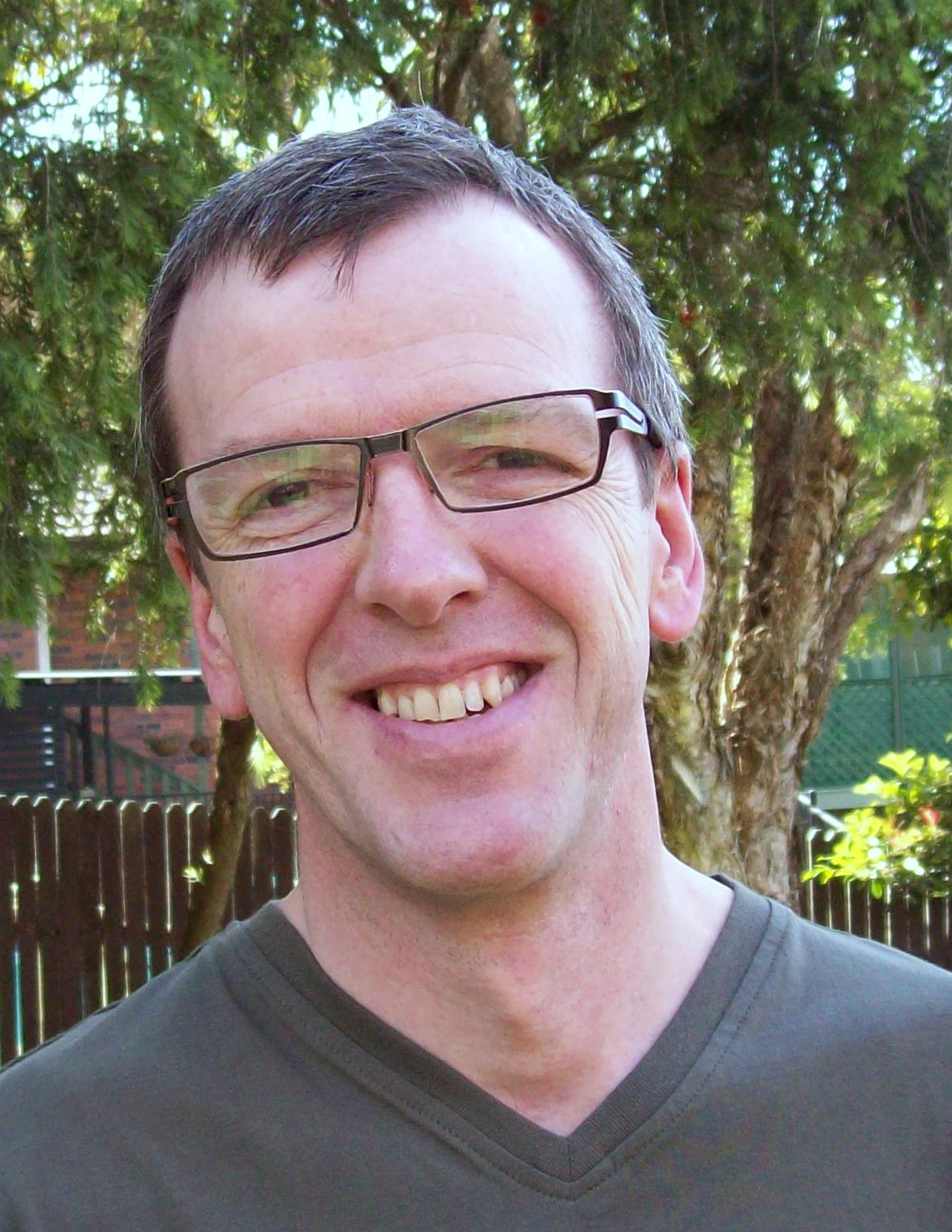
I’m very lucky to have Keith Stevenson visiting the blog today to talk about writing and his science fiction novel, Horizon.

keith_stevenson_colour_hi_res

Can you tell us a bit about your new novel?

Horizon is a science fiction thriller, where personal and political differences between a small group of space explorers play out in the cramped confines of a starship far from Earth, with repercussions for the future survival of the rest of humanity. I wanted to write something that set believable characters, with their own fears, weaknesses and biases, in an extraordinary situation while addressing the key issue of our time: climate change, how we respond – or fail to respond – to it and what that means for our future. It also has quite a bit of cool science about travelling through space and exploring new planets, but at its heart it’s an adventure story.

Keith can tell us a bit about yourself?

Well I’m originally from Scotland, but settled in Australia in 1989 and now live in Wollongong. I’ve been fortunate to be involved in some really cool projects, firstly as submissions manager and later editor of Aurealis Magazine, and organising convenor of the Aurealis Awards when they were still in their relative infancy; then founding my own publishing company coeur de lion with fellow author Andrew Macrae, publishing a lot of excellent Australian spec fic authors (and picking up more than a few awards); running the Terra Incognita speculative fiction podcast which featured the best Australian speculative fiction read by the authors who created it; and most recently launching Dimension6 the free and DRM-free electronic spec fic magazine.

All through that time, and even before, I’ve always been writing. I actually started writing horror stories for a class magazine in primary school. I’m a really slow writer, so I’ve only had a handful of short stories published in Aurealis Magazine, Agog! Fantastic Fiction, and ASIM. And Horizon took a lot of time to come together.

Tell us a bit about why you are write SF?

I love he hopefulness of science fiction, even when it’s SF where bad stuff happens, because at the very least it posits a future where humanity still survives. When I was a kid I read in a junior encyclopaedia that the sun would eventually swell up and destroy the Earth, killing everyone on the planet. That really upset me, regardless of the fact that fate was billions of years in the future. It was pretty soon after I discovered science fiction and realised that was our escape plan – the future imagined by SF writers is a future that has to come about in order to save us all.

Later as I read more and more, I understood that SF was also an ideal way to dissect and interrogate the present, magnifying trends or playing out ‘what ifs’ to demonstrate the underlying truth of the world around us. And it’s a genre that lends itself easily to amazing, adventurous stories. It’s an incredibly powerful and underrated genre. There should be more of it.

I understand that you have been working on this novel [for a long time?]. What kept you going back to this story?

First novels are pretty daunting. I was lucky because Horizon was my ‘project novel’ while I was studying Professional Writing Course, so my approach was very structured. I had to write a proposal for my tutor, exploring the ideas and forms I wanted to portray, and a detailed chapter by chapter synopsis, and then turn in 3,000 words every fortnight for group critting. By the end of it, I had 60,000 words of fairly robust text, which was a big leg up to getting the thing finished. Of course it still took a long time to finish, but I had developed the characters so much that I wanted to see how it all panned out for them, and how believable I could make the whole story. It’s the same with the space opera I’m writing, which I talk a little more about below. Those books have taken me years, but I have to go back to finish the story because I owe it to my protagonist. I’ve made a promise that I won’t leave him high and dry. But I’m also just enjoying writing a massive adventure.

Can you tell us a bit about what’s coming next (is there a sequel)?

Horizon was always envisaged as a standalone. There’s room for a prequel based on the events on Earth as well as a sequel, but I like the story as it is. The crew learn what’s happened on Earth while they’ve been in hibernation and the book ends with a very neat jumping off point that leaves the reader to imagine what might happen next. My focus was on the character interplay as part of the present action and how they deal with the dangers and threats that face them.

What are you working on at the moment?

Aha, well this is another long term project.  The Lenticular Series trilogy is a huge galaxy-spanning space opera with lots of alien species, space battles etc., which will hopefully see the light of day in a couple of years. It has at its core a really strong character study of a person (alien actually) who loses everything, achieves some sort of redemption but almost destroys himself in the process. That’s really given me a solid backbone to build lots of action and intrigue around and I’m really enjoying writing on such a big canvas.

What is your writing process? (planner, panster, write every day, write sporadically, writers block etc).

I map out key plot beats, where I know characters will end up at point A, B, C on the storyline and then I tend to just write towards that beat. I prefer to write longhand for the first draft, because it really slows me down to think about the action as it’s unfolding. It also lets me follow impulses (and maybe stray off the main throughline to explore and develop related ideas). That’s allowed me to build in whole side plots I hadn’t considered in the planning stage. I pretty much go at that day in day out until I’ve written through to the end point – which may not be the end point I envisaged at the start. After that it’s into the rewrite phase, interrogating what I’ve written and trying to coalesce it and also look for missed opportunities, things that are not working, or aren’t fresh enough and so on. At some point I’ll sub the ms to Serapeum, which is a group of Australian writers who meet every year or so and is solely focused on novel development. If I please those guys, I know I’m on the right track. Then it’s more rewrites until I think it’s ready – to be put through the wringer by an editor, that is!

I’ve never encountered writer’s block. I tend to stop writing in the middle of a scene, so I know where to pick things up the next day. Richard Harland does something similar and he’s never been afflicted with it either.

What do you prefer drafting the story or revising and reworking?

I really like the discovery of first drafts. It’s almost dreamlike the way lines of dialogue float onto the page. But I also love the invention of revising, when you’ve just read something you wrote a while back and it suddenly falls into place with something else, creating possibilities you hadn’t considered before.

What part of writing do you find hardest?

Making it right. Work can always be improved and at some point you have to trust someone else – an editor – to help you do that. A fresh set of eyes really makes a difference and I am very much in awe of what a really good trade editor can do across a whole spectrum of things from making ideas gel better to really making the language sing. Authors are often too close to their work to do that for themselves.

What do you plan to work on next?

Well I need to redraft book 2 of The Lenticular and then start on drafting book 3. That will keep my busy for a long while, I suspect. After that I have an urban thriller I worked on as a screenplay with Paul Haines many years back. I’d love to dust that off and see if it can be turned into a novel.

Thank you, Keith. Those are some very insightful and indepth answers. Here is the book cover image and the blurb.
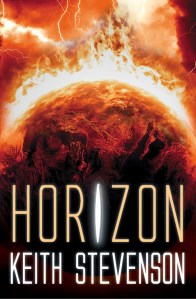
Horizon book cover

Horizon book cover

Thirty-four light years from Earth, the explorer ship Magellan is nearing its objective – the Iota Persei system. But when ship commander Cait Dyson wakes from deepsleep, she finds her co-pilot dead and the ship’s AI unresponsive. Cait works with the rest of her multinational crew to regain control of the ship, until they learn that Earth is facing total environmental collapse and their mission must change if humanity is to survive.

As tensions rise and personal and political agendas play out in the ship’s cramped confines, the crew finally reach the planet Horizon, where everything they know will be challenged.

____________________________________________

“Refreshingly plausible, politically savvy, and full of surprises, Horizon takes you on a harrowing thrill-ride through the depths of space and the darkness of the human heart.” – Sean Williams, New York Times bestselling author of the Astropolis and Twinmaker series

“Crackling science fiction with gorgeous trans-human and cybernetic trimmings. Keith Stevenson’s debut novel soars.” – Marianne De Pierres, award-winning author of the Parrish Plessis, Sentients of Orion and Peacemaker series
You can say hi to Keith on Twitter and Facebook and on his blog.

https://www.facebook.com/keithstevensonwriter

@stevenson_Keith

Read Full Post »

I’m sadly behind in the blogging. Sorry but it’s been a bit of a whirlwind during this trip to the UK with not much internet. The few windows of access I’ve had I’ve peppered Twitter and Facebook with photos and stuff.

I’d thought I’d back track to talk about Loncon3, my fifth worldcon. Wow. Loncon 3 was huge. That has good sides and bad sides. To accommodate so many people meant the venue was big. But it was a convention centre after all. Despite having edits I did get to a few things.

We stayed in this fab apartment in Limehouse with Kimberley Gaal and Shauna O’Meara, fellow Canberrans and CSFG people. It gave us a bit more freedom than a hotel as we had a sitting room and a washing machine and two bathrooms. Loncon 3 was about catching up with people and about getting to see famous people in panels.

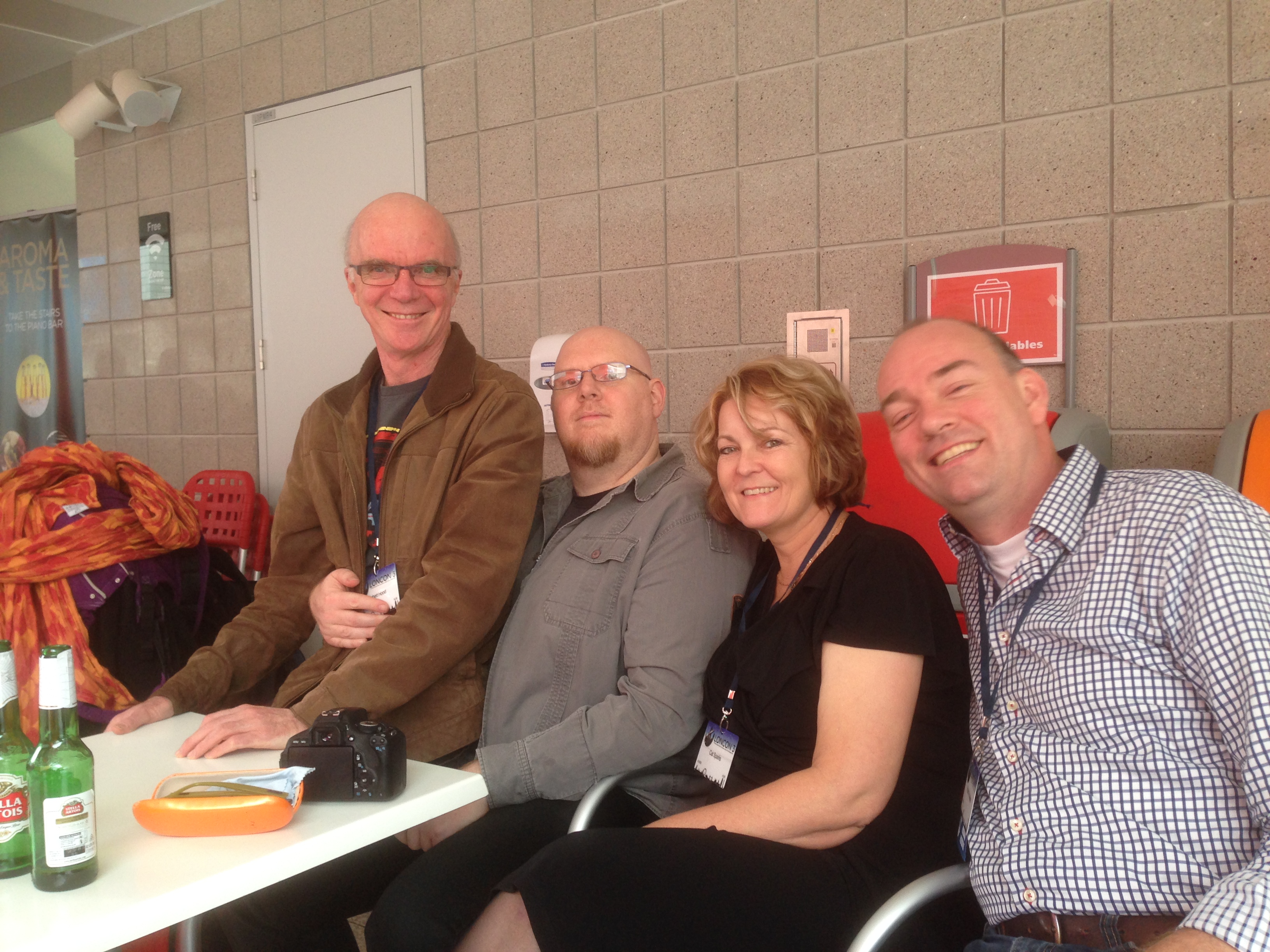
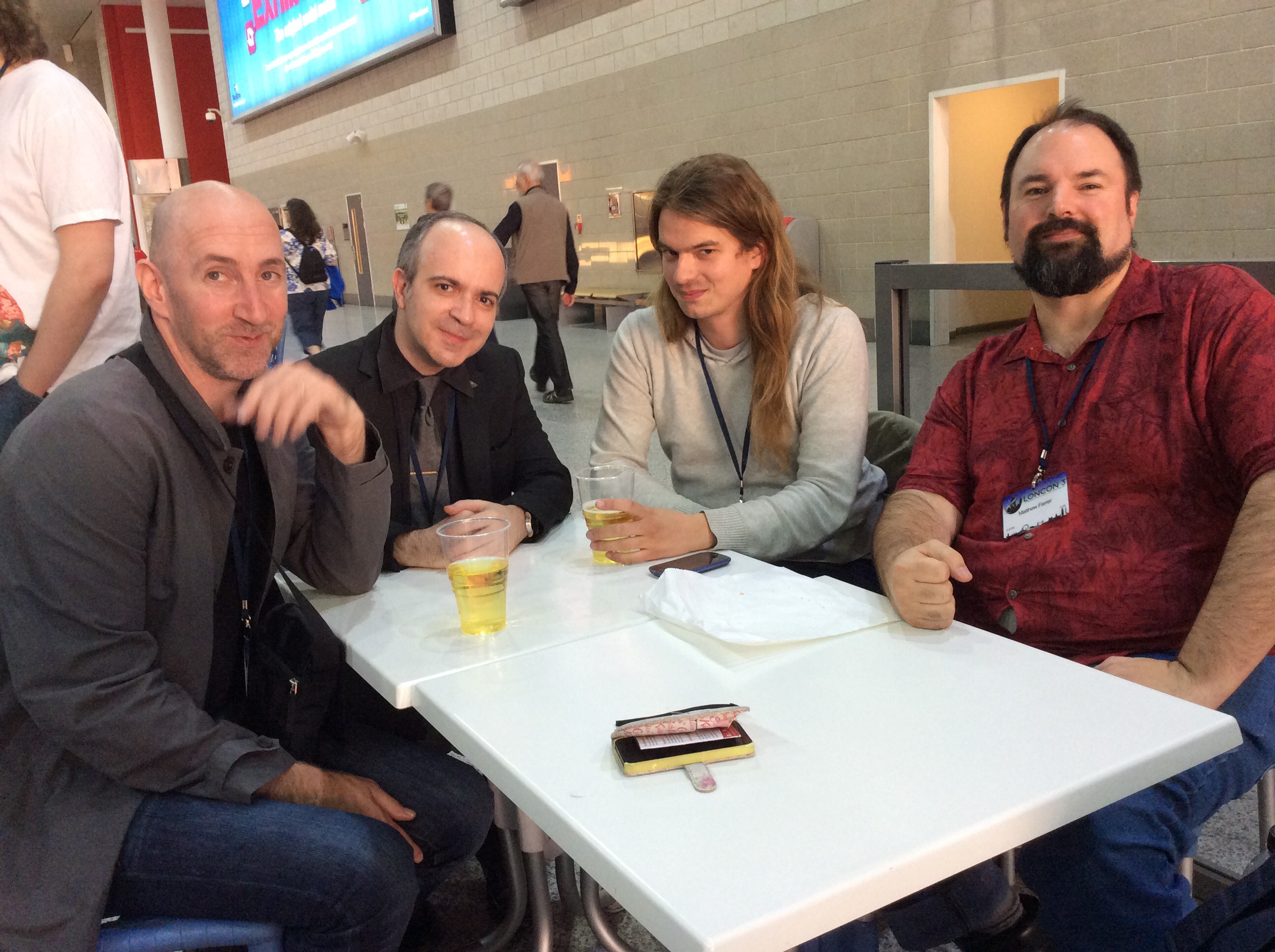
I managed to catch up with old friends and meet some new ones. Glenda Larke, Karen Miller, Cat Sparks, Robert Hood, Amanda Bridgeman, Abigail Nathan, Tansy Rayner Roberts, Alisa Krasnostein, Russell B Farr, Liz Grzyb, Ben Peek, Jenny Blackford and Janeen Webb, Justin Ackroyd and a wave or two to Jonathan Strahan. The new acquaintances were entirely international Alistair Rennie (Scotland), Fabrizio Luzzatti (Italy), Teador Relijc (Malta), Gert (Netherlands) and Isabelle Varange (France). These guys were fab.


Robert Hood, Ben Peek, Cat Sparks and Firenze?

Robert Hood, Ben Peek, Cat Sparks and Firenze?

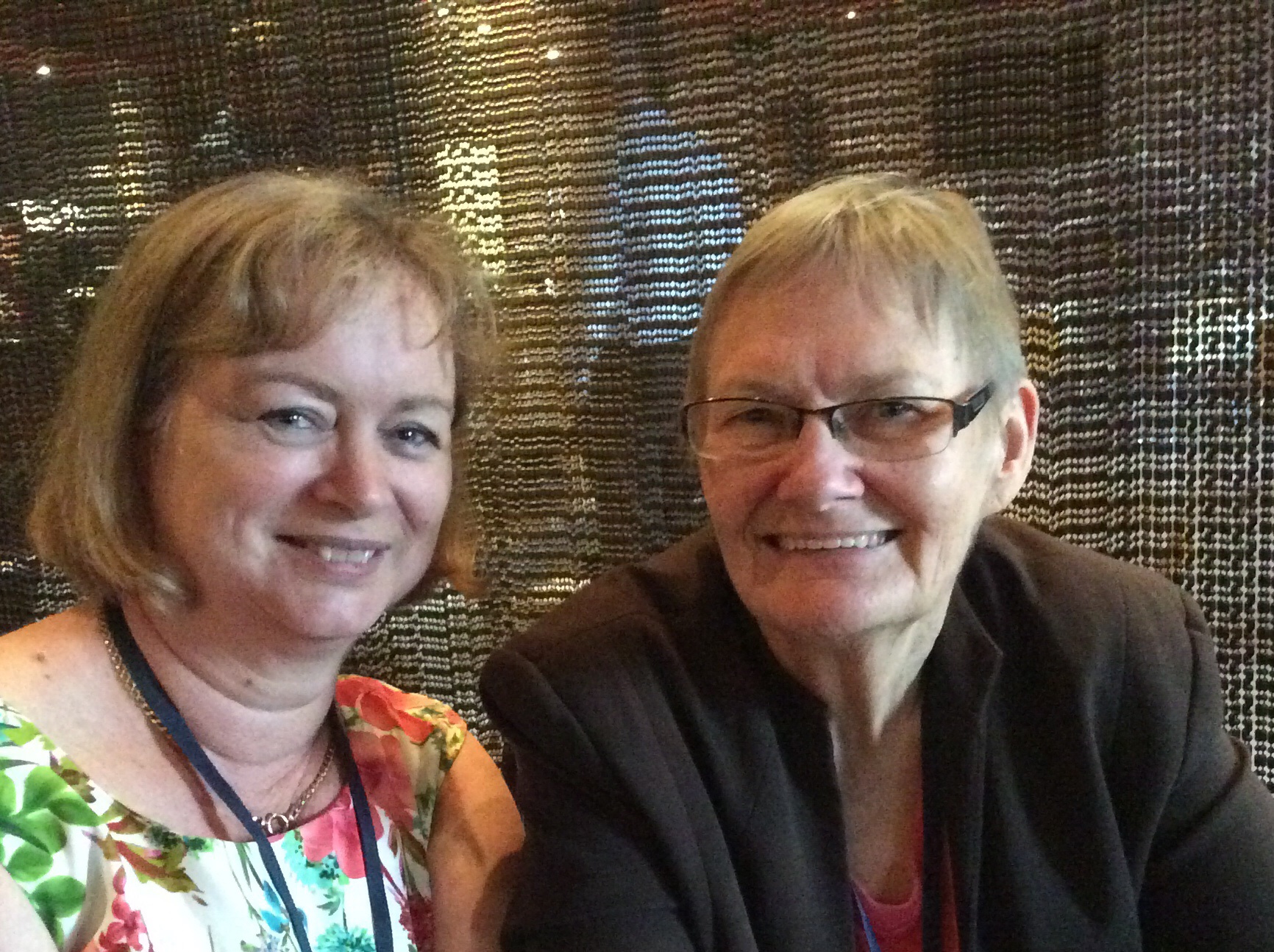
Me and Glenda Larke

Me and Glenda Larke

Alistair, Fabuzzio and Teodor, with Matthew

Alistair, Fabuzzio and Teodor, with Matthew

I went to a few things. Not as many as I would have liked because it was a big con and the rooms were full. I sat on the floor with Glenda Larke to hear an interview by Paul Cornell with George RR Martin and Connie Willis and that was fab. My first taste of the convention really. We went to a panel on full time writing, which was one of the best we saw. It had Scott Lynch and Juliet E McKenna, who we chatted with later. Actually Kim hijacked Juliet and took her to dinner with us. Alas, her meal didn’t arrive in time and she had to leave for a panel. The service was pretty bad at the Fox@Excel that day. Lots of people. Scott Lynch was really interesting too. The interview with Robin Hobb was very interesting. Her childhood was so interesting. In Alaska!

Scott Lynch and Matthew Farrer, Loncon3

Scott Lynch and Matthew Farrer, Loncon3

Here is one of Matthew and Juliet E McKenna and then Kimberley Gaal doing the high five.

Matthew Farrer and Juliet E McKenna

Matthew Farrer and Juliet E McKenna

Juliet E McKenna and Kimberley Gaal

Juliet E McKenna and Kimberley Gaal

I also met up with the lovely Tsana Dolichva too. She very kindly name-checked me in a panel.

There are other photos but they are on my iPad and as I’m travelling I’m not sure how to get them off. Ahah! secret missing to swap to iPAD accomplished.

I’ve now switched back to the laptop because I can’t control where the photos are going from the iPad. But here are a few more.


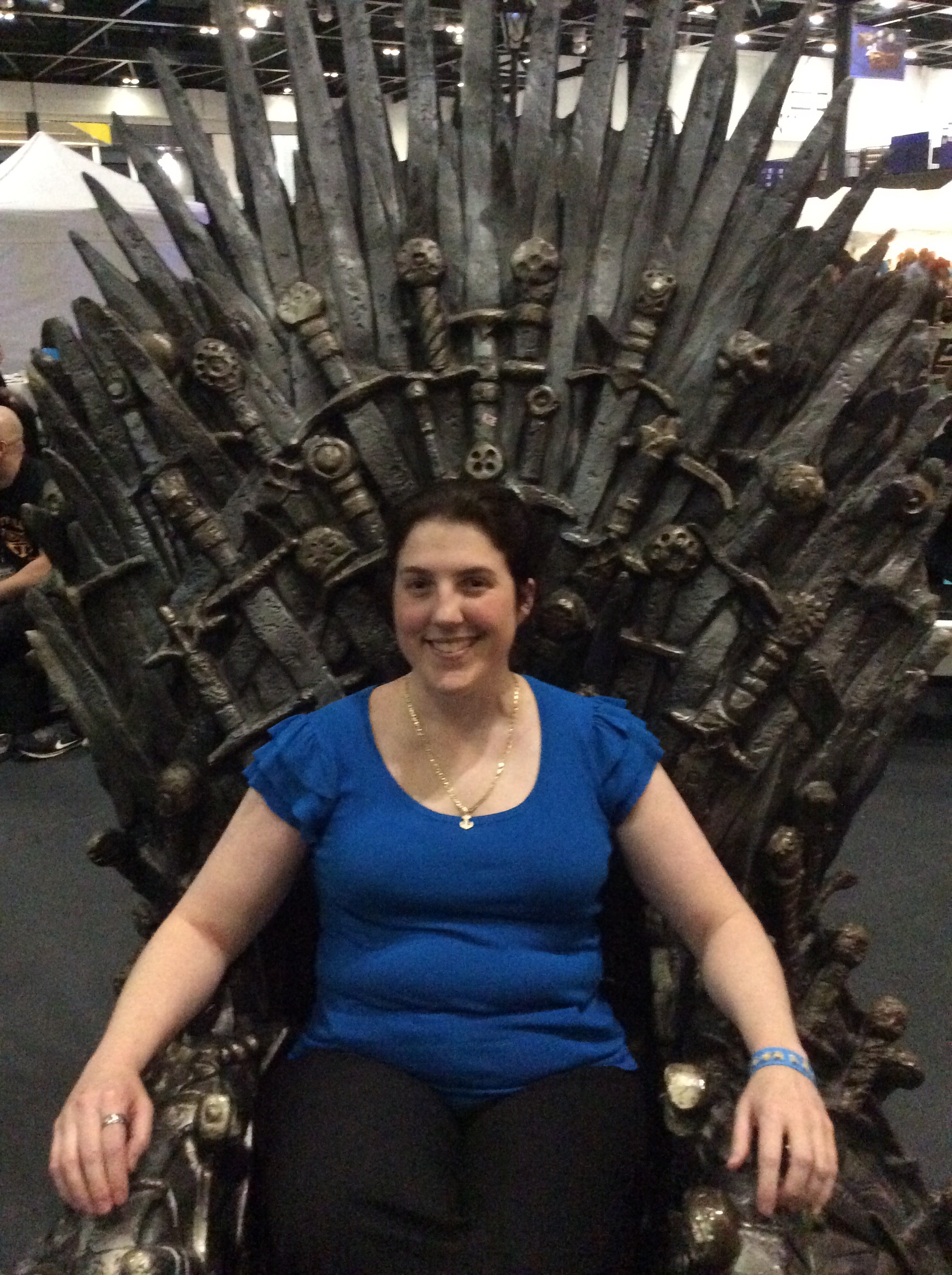
Here is Shauna on the Throne of Swords (Yes there was one in the fan lounge)

Shauna O'Meara, mother of vets, Queen of everything

Shauna O’Meara, mother of vets, Queen of everything


I have to put up a picture of the lovely girls, who are so good to room with and hang with.

The lovely girls, Kimberley Gaal and Shauna O'Meara

The lovely girls, Kimberley Gaal and Shauna O’Meara


Did I mention this thing where Kim takes her little Russell Bird and poses him with people. Well here is Russell B Farr with Russell Bird.

Russell B Farr with Russell Bird

Russell B Farr with Russell Bird

And to round things off, this is Matthew and me being very relaxed at Kensington Gardens in the Orangery.

Matthew Farrer and me

Matthew Farrer and me

So overall we love travelling around Britain and the food and the people and the accents so there will be more blogs to come. I also want to congratulate the London3 team for a brilliant job of organising the convention. The program was varied and interesting and events were well organised.

And finally from me. A photo that says everything.

Me, mother of swords, Queen of food

Me, mother of swords, Queen of food

Read Full Post »

I’m pleased today to bring you and interview with the lovely and talented Jo Anderton. Jo is going to tell us about her new book, the follow up from Debris and Suited.

Jo Anderton

Jo Anderton

Hi Jo, can you tell us a bit about your new novel?

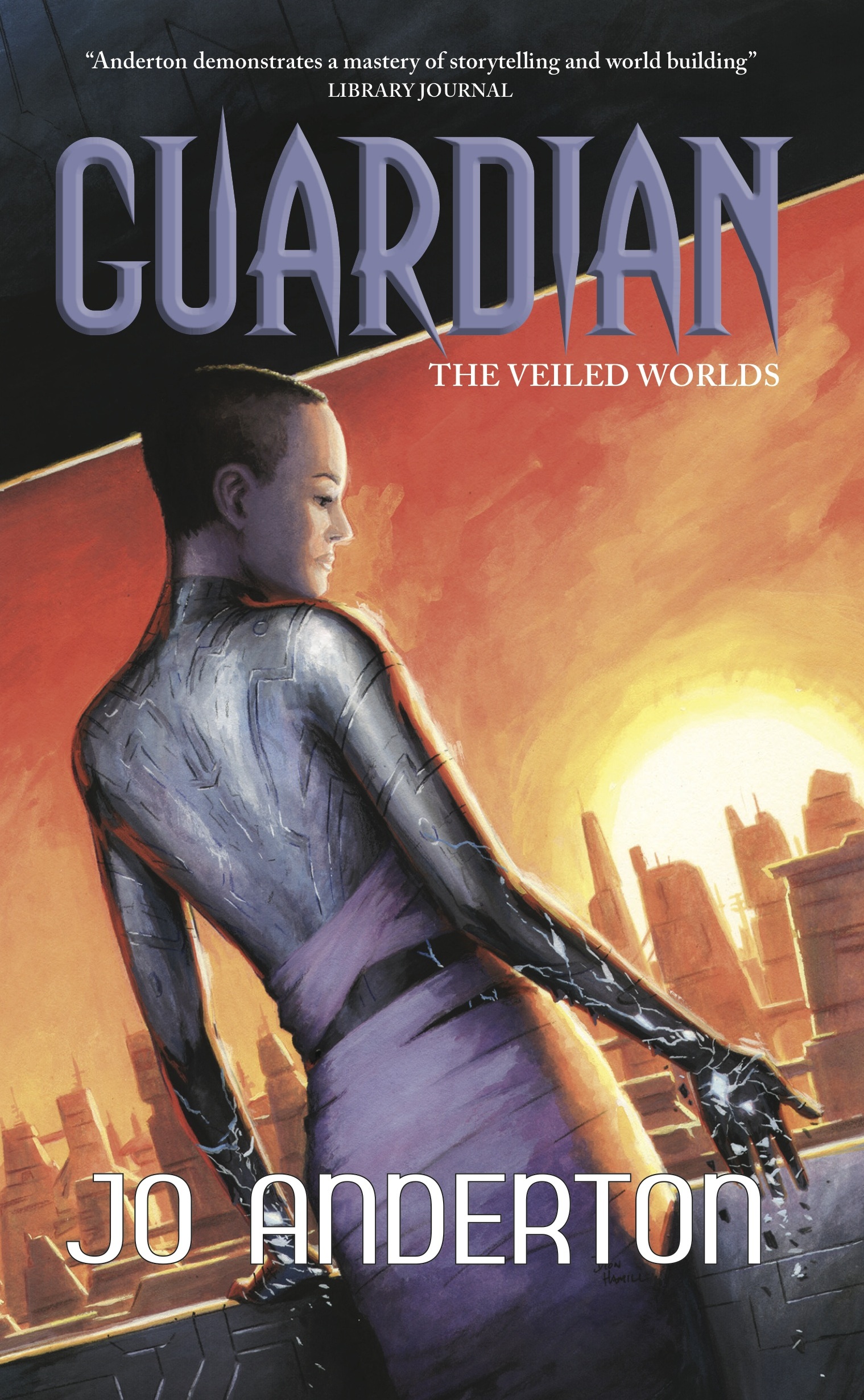
Guardian is the third book in the Veiled Worlds Trilogy, and the final step in Tanyana’s journey. The official blurb is:

“The grand city of Movoc-under-Keeper lies in ruins. The sinister puppet men have revealed their true nature, and their plan to tear down the veil between worlds. To have a chance of defeating them, Tanyana must do the impossible, and return to the world where they were created, on the other side of the veil. Her journey will force her into a terrible choice, and test just how much she is willing to sacrifice for the fate of two worlds.”

Unofficially, I’d say Guardian is about sacrifice and love. And the ending still makes me cry.

Jo can tell us a bit about yourself (where you live, how long you’ve been writing, previous publications etc)

I live in Sydney, with my husband and pets, and I’ve always written. Even as a kid I used to tell myself stories, and eventually decided I should try writing them down instead of just keeping them in my head.

Apart from the first two books of the Veiled Worlds Trilogy, Debris and Suited, I’ve also published a short fiction collection The Bone Chime Song and Other Stories, which won the 2013 Aurealis Award for Best Collection.

Tell us a bit about why you write speculative fiction.

Because I can’t help it. Seriously, I’ve tried writing not-speculative fiction and it was so hard. It’s what I love, it’s how I think, and it is definitely how my writing brain works. All my ideas come with unusual worlds and/or magic systems attached to them. I usually blame my Dad for that. He brought me up on a diet of Tolkien and Star Trek and I can’t thank him enough.

Your novel is a third in a trilogy. Are we going to see more of it in future?

No plans at the moment, but there are possibilities. No story ever really ends, does it? And if this story did continue, I know the direction it would go. But for the moment, I’m excited to be working on new projects.

What are you working on at the moment?

I’m working on a new book currently called The Bone Gardens. It’s young adult, it’s science-fantasy, and heavily influenced by the movies of Studio Ghibli (Nausicaa of the Valley of the Wind, Laputa: Castle in the Sky, and Princess Mononoke in particular). Flying gardens of bone and toxic flowers, never-ending desert, steampunk cities, genetic engineering. That kind of thing. And I’m loving it!

What is your writing process? (planner, panster, write every day, write sporadically, writers block etc).

I think of myself as somewhere in between a planner and a pantser. Before I start writing I always know the beginning, the end, and a few important plot points in between. I’ve learned that if I know too much of the story before I start writing it, I get bored! The joy in writing is telling myself the story, learning about the characters, and living it all as it happens. This usually means my first drafts are a wreck, and I have to go back and do significant rewriting, but that works for me too. The most important thing is to enjoy the process, and love telling stories!

I make sure I do something every day. Even if it’s not much — if I come home from work exhausted or my lower back can’t handle sitting in a chair anymore, I don’t beat myself up about it. Even a few words, or some blog posting is better than nothing. I have at least one full-time writing day a week, and most of my holidays are actually for writing J

What do you prefer drafting the story or revising and reworking?

Ha, my favourite part of the process is usually NOT the part I’m doing! If I’m writing a draft I long for revision, when I’m revising I long to be writing something new. The grass is always greener, you know?

But my overall favourite part is the planning — when an idea is fresh and new and full of potential and I can get swept away in it.

What part of writing do you find hardest?

Knowing when to stop. I’m terrible at working out when a story is done. If it was up to me, no story would ever be done, and I would probably tinker with them for eternity. This is why we have publishers and deadlines.

What do you plan to work on next?

The sequel to The Bone Gardens. I think it’s called The Fiery Skies and it’s been waiting very impatiently for me to pay attention. Soon, my precious. Soon.

Here is the cover of Guardian followed by some links to where you can find Jo on the web.

Cover image of Guardian by Jo Anderton

Cover image of Guardian by Jo Anderton


Website: http://joanneanderton.com/

Twitter: joanneanderton

Facebook https://www.facebook.com/joanne.anderton.16

Details on fablecroft website are here: http://fablecroft.com.au/about/publications/guardian

Read Full Post »

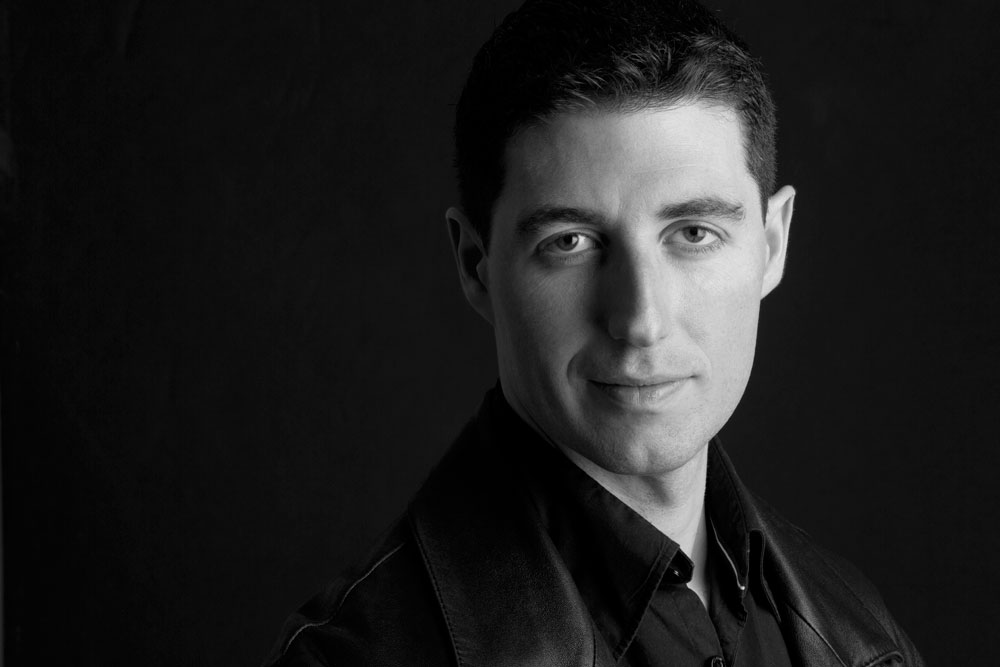
Today I have a fantastic interview with Daniel, who lives in Canada but is from Perth originally. Thank you Daniel for coming along.

Daniel-de-Lorne3


I understand you have a gay romance out with Escape Publishing. Can you tell us a bit about it?


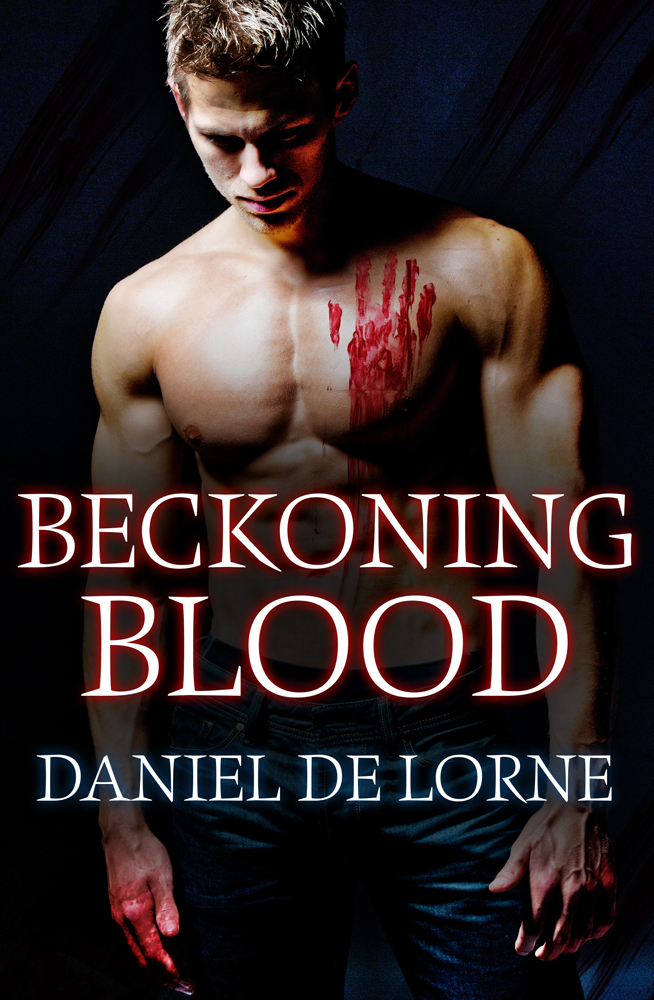
It’s called Beckoning Blood and is about twin brothers, Olivier and Thierry, who are made into vampires in medieval France. Olivier is obsessed with his brother, while Thierry’s heart belongs to another. Olivier isn’t exactly one to take no for an answer so their path through the centuries is littered with plenty of corpses and misdeeds.


Daniel, tell us a bit about yourself (where you live, how long you’ve been writing, previous publications etc.)


I’m a Perth boy, born and bred, but at the moment I’m living in Toronto with my soon-to-be-husband. It was while in Canada that Kate Cuthbert from Escape Publishing accepted Beckoning Blood for publication. I wrote the book at the end of 2009 but it’s gone through a number of edits since then, and then took time to find a home. It’s my first published novel so I’m pretty excited about it.

Prior to that I worked as a professional writer, amongst other things, and studied creative writing and journalism at university.

Daniel, what draws you to the romance genre?

It’s not so much that I was drawn to the romance genre, just that that’s where I’ve found a home. I love reading paranormal and fantasy novels, but a lot of them have straight romance in them (a lot of the ones I read in high school anyway). The male/male market has boomed so I feel there’s more opportunity to write (and publish) the paranormal stories I like. As a result, they’ve usually got a gay love interest in them, which is integral to the plot.

What are you working on at the moment?

I recently finished writing the first draft of the sequel to Beckoning Blood but it’s nowhere near ready. I have a feeling there’s going to be almost a full rewrite. I’ve already rewritten the opening chapter and showed it to my critique partner. She loved it so I think I’m moving in the right direction.

What is your writing process? (planner, panster, write every day, write sporadically, writers block etc).

I’m more a pantser than a planner. I start with a general idea about what’s going to happen but once I start writing, things can change quite a bit. Often in new and previously unthought of ways. That’s what I love about the writing process: the discovery. Especially when one element at the beginning, that you thought was innocuous, ends up playing a significant role by the end (and saves the plot).

When I’m writing a new book, I try my best to write every day, and I can usually do it. Once it’s done though, the thought of editing it is almost too much. It takes a lot of effort to get into the mindset to edit my own work.


What do you prefer: drafting the story or revising and reworking?

Revising and reworking. My first drafts are always hideous, but I treat them like a first sketch of a painting. I’ll then go back and flesh out the detail, or rub sections out. It’s a long process. But like nearly every author, I wish the first draft came out gleaming.

What part of writing do you find hardest?

Not using clichés. When I’m doing the first draft, I’ll put them in as it gets the words down on paper (unless I’m feeling particularly inspired). Then later, I’ll rewrite as many as I can into something a bit more original. It’s hard to overcome the almost subconscious use the first time around.


What do you plan to work on next?

After I get the sequel together, I’ve got two more books to edit. The sooner I get them polished and published, the better. I will have to work on something new somewhere in there, otherwise I’ll feel like I’ve forgotten how to write. I have a few ideas (including one new one that has struck me) but I’m keeping them close until I make a decision.


Here is the cover and the book blurb.

The cover of Beckoning Blood

The cover of Beckoning Blood

Book Blurb

A gripping, blood‐drenched saga about twin brothers, the men they love, and the enduring truth that true love never dies — no matter how many times you kill it.

Thierry d’Arjou has but one escape from the daily misery of his work at a medieval abattoir — Etienne de Balthas. But keeping their love a secret triggers a bloody chain of events that condemns Thierry to a monstrous immortality. Thierry quickly learns that to survive his timeless exile, he must hide his sensitive heart from the man who both eases and ensures his loneliness…his twin brother.

Shaped by the fists of a brutal father, Olivier d’Arjou cares for only two things: his own pleasure and his twin. But their sadistic path through centuries is littered with old rivals and new foes, and Olivier must fight for what is rightfully his – Thierry, made immortal just for him.

Here are Daniel’s contact details on the web.


Beckoning Blood is available on Kindle (http://www.amazon.com.au/dp/B00JD7EYX0), iBooks (https://itunes.apple.com/ca/book/beckoning-blood/id852042874?mt=11) and Kobo (http://store.kobobooks.com/en-CA/ebook/beckoning-blood).


For a free short story, introducing the heroes of Beckoning Blood, head to Daniel de Lorne’s website (http://www.danieldelorne.com/the-boys).


Facebook: www.facebook.com/danieldelorne

Twitter: www.twitter.com/danieldelorne

Google+: http://plus.google.com/+DanieldeLorne


I can’t wait to read this Daniel. Best of luck and thank you for appearing on the blog.

Read Full Post »

Ah finally I get to drag Alan to my blog. I hear rejoicing!

Thank you Alan for answering some questions about your new book coming out with Harper Voyager.

Alan Baxter

Alan Baxter

Your new novel is coming out, Bound, the first novel in your new trilogy. Can you tell us a bit about it?


It’s the story of Alex Caine, a martial artist fighting in illegal cage matches. His powerful secret weapon is an unnatural vision that allows him to see his opponents’ moves before they know their intentions themselves.


An enigmatic Englishman, Patrick Welby, approaches Alex after a fight and reveals, ‘I know your secret.’ Welby shows Alex how to unleash a breathtaking realm of magic and power, drawing him into a mind-bending adventure beyond his control. And control is something Alex values above all else.


A cursed grimoire binds Alex to Uthentia, a chaotic Fey godling, who leads him towards chaos and murder, an urge Alex finds harder and harder to resist. Befriended by Silhouette, a monstrous Kin beauty, Alex sets out to recover the only things that will free him – the shards of the Darak. But that powerful stone also has the potential to unleash a catastrophe which could mean the end of the world as we know it.

The cover of Bound by Alan Baxter

The cover of Bound by Alan Baxter


Alan tell us a bit about yourself


I live on the south coast of NSW, among rolling dairy country. It’s beautiful, we’re very lucky to live here. I’ve been writing since forever, even as a kid I would make up stories and write them down. I’ve got three novels out now, a dark fantasy duology, RealmShift and MagesSign, and a short horror novel called Dark Rite, co-written with David Wood. My new trilogy is coming out from Voyager soon – Bound, Obsidian and Abduction. Bound is out in July. As for other work, I’ve had over 50 short stories published all over the place. I recently sold a story to Fantasy & Science Fiction magazine, which is like the holy grail for me. I’ve been trying to sell the for a decade and it’s always been top of my short fiction wish list. My full bibliography is here:


Alan what do you find so attractive about the fantasy genre? In what ways do you find it fulfilling?


I like the total freedom it gives us to explore any ideas we like. We can expand any concept well beyond the boundaries of the real world and that makes it much more exciting for me.


I know you have had a new addition to the household. How does having a baby affect your writing time?


It makes it much more precious! I wrote my first novel during my lunch hours at a 9 to 5 office job, so I trained myself early to make time whenever I could to write. Having a baby means I’m drawing on those experiences again.


What are you working on at the moment?


I’ve got a new novel under way – a standalone horror novel that’s a kind of organised crime/Lovecraftian thing with other stuff mixed in. It’s slow going with the baby, but I’m working on it while also doing edits and final proofs of the Alex Caine books.


What is your writing process? (planner, panster, write every day, write sporadically, writers block etc).


My process is to make time to write whenever I can. No one can find time to write, so you have to make it. I also run a martial arts academy, so I can’t write every day, nor do I think people need to. But you do meed to be a writer every day – that means always thinking about writing and stories and characters even when you can’t be writing. Always look at the world with a writer’s eye. I’m a bit of a hybrid pantser/planner. I make loose plans and outlines, then wing it from there. I’m always happy to throw the plan out the window and go wherever the story takes me though.

What do you prefer drafting the story or revising and reworking?


Drafting. Get that first draft down no matter how shitty it is. Get it finished. I make notes along the way of things I think will need looking at later. Then edit and polish and edit and polish and edit again until it shines.


What part of writing do you find hardest?


The middle of books. I hate middles!


What do you plan to work on next?


Not sure. I want to get this standalone novel finished and hope the Alex Caine books go well. Beyond that, I’m not sure!

Thank you Alan. Here is Alan’s contact details on the web.

Website – http://www.warriorscribe.com

Twitter – @AlanBaxter

Facebook – https://www.facebook.com/pages/Alan-Baxter/115972625096325


Book cover and mugshot attached.


Read Full Post »

So my bags aren’t quite packed, but my darling man bought a keyboard cover for the iPad Air so I can take it instead of the heavy laptop. I’m so excited by that. He is awesome. I didn’t have time today to go shopping but Matthew went after work.

Tonight my children cooked me a late birthday/early mother’s day dinner, with prezzies. Homemade lasagne and flourless chocolate cake with coconut cream/chocolate frosting. It was great to see them and I’ll miss them while I’m away. Matthew is staying here holding the fort, having horror movie nights, hopefully not eating too badly and enjoying the cold. I understand that New Orleans is warm. Yay, I had to totally rethink my wardrobe, but I’m quite prepared to shop!

I’ve printed out the stuff I need, now I just need to organise what I’m taking with me. Not easy to do when you’re on the computer.

I injured my knee in the move in November and have a torn tendon. Everything had been going fairly well, not hurting, able to walk, except these last couple of days it’s flared up. Now I have to get on a plane for 15 hours with a bad knee. I’ve bought a knee support and just hope I won’t need to buy a walking stick. Eek!

I’m looking forward to the RT Convention and the shopping and eating, except I believe I’m now allergic to fish so I have to be careful. I love fish so you can imagine not being able to eat it is going to be tough. The other night we had chips from the local takeaway and I reacted to them. I’m getting more and more sensitive.

I’m taking Invoked, my current WIP with me to work on. I’ve not done much in recent weeks except on writing dates, with  my mother being deadly ill over Easter and then family coming down to say their goodbyes, but mum rallied, but is still exiting this life, just more slowly. I really thought she was leaving and I went through all the saying goodbyes, the crying, the grieving and now I have to adjust to her being still here, but also with a different personality. It’s just plain odd, but the brain injuries do weird things.

Anyway, it’s time to cuddle my man and leave this computer be. I may blog while I’m away, it depends on how well wordpress and ipad get one.

Waves!

A shot of me and Cat Sparks

A shot of me and Cat Sparks

Read Full Post »

The wonderful Nicole Murphy and her team of volunteers put on a wonderful day last Saturday (April 5), presenting the inaugural Canberra Writers Day and the Aurealis Awards. The venue, University House, particularly the Great Hall, had wonderful charm. There’s this long gold fish pond in the quadrangle that I’d love to take home to my place.

Conflux Inc with Nicole at the helm put up bid to run the Aurealis Awards for two years in Canberra. Nicole wanted to make it worthwhile for people to come up for the ceremony and thought up a professional writers day.

The first thing I have to say is that both events were very well run. Nicole and the team were excellent. That’s pretty awesome for a multi stream event. Also, I know it was hard financially as there was absolutely no sponsorship money to be had for either event. That’s pretty tough going. I did note that Escape Publishing put an ad in the Conflux Writers Day booklet. Awesome.

I had a full day and I presented a talk. The plenary sessions were pretty amazing. Joanne Anderton, Kaaron Warren, Ker Arthur, Ian McHugh. All of them had inspiring and interesting presentations on their processes, their journey.

Joanne blew me away with her writing process and her copious notebooks, all so clean. Mine are NOT clean but I do have a similar weakness when it comes to notebooks and pens. I do much less thinking though. But then Joanne is an amazingly talented author and bloody hardworking.

Kaaron shamed me most terribly with her talk on using the minutes when you don’t have hours to write. I’ve known Kaaron a long time and I’ve always admired her talent but also what a devoted mother she is and how family focussed. She’s an inspiration.

Keri talked about her journey to becoming a published author and a New York Times best seller. Her story was a amazing. She persevered when many would have given up. Thank you for the inspiration Keri.

Ian McHugh talked about submitting work, write and submit and repeat was my take away message. Ian always inspires me with his focus and the stories he writes.

I went to the shorter concurrent sessions, which were 20 minutes long. I gave one myself on ‘You are not alone’ the value of writing relationships. It was about writing groups, writing buddies, writing dates and writing retreats. But I ran out of time, which surprised me and I forgot to talk about the really good part of writing retreats- the socialising (read drinking and talking crap). Someone came up to me afterwards and thought I was going to talk about relationships in writing, you know science fiction with romance. I laughed so hard. I would have loved to talk on that topic.

Craig Cormick was awesome.  I have to reprogram my head to say I’m going to win at this writing gig. Marcus Armann talked about Evernote and Scrivener and I’m now tempted to buy the later writing program, particularly after catching Phil Berrie with his word frequency proofing/editing talk. Scrivener has analytical tools that does that stuff. I’m always repeating myself when I don’t want to.

Russell Kirkpatrick sorted his mob into top downers and bottom uppers in the world building sense. He’s definitely a top downer, planning his worlds and then writing the story. I’m quite near the other end. To me it’s story first with an idea of the world, but often I build as I go.

Chris Andrews talked about blogging, which was an excellent session. I learned something. See Chris!

The lovely Shannon B Curtis talk about using Microsoft Word to navigate our novels. That was also very interesting.

The Canberra Speculative Fiction Guild had a table selling books (theirs and others) and I bought a copy of Joanne Anderton’s collection, The Bone Chime Song and other stories and lost it. (so if anyone found a copy. It could be mine).

Overall it was great to network with people and also see the new faces. Again I didn’t get around to everyone to chat.

Congratulations to Nicole Murphy and the team for a wonderful event.


I didn’t take many photos during the day, except this one of Russell Kirkpatrick. (Happy birthday Russell for tomorrow!!!).

Fantasy author, Russell Kirkpatrick, presenting at Conflux Writers Day

Fantasy author, Russell Kirkpatrick, presenting at Conflux Writers Day

PS I’ll have to write about the Aurealis Awards in another post. My time has run out this morning. I decided to get up early to write. Though technically writing a blog post doesn’t count as writing.

Read Full Post »

One of my favourite people in the world is Glenda Larke. Not only is she a wonderful, knowledgeable and interesting person, she is an exceptional author. I’m so pleased her next book is out (or coming out) that I thought it would be a good idea to interview her.

Your new novel is coming out, Lascar’s Dagger. Can you tell us a bit about it?

It’s the first book in a trilogy, The Forsaken Lands.

It is set in a fictional world, evocative of our 17th to 19th centuries when the expansion of the Dutch and British East India Companies led to colonial wars and aggressive expansion. The wealth of Asia fed the prosperity of Europe at the expense of Asian freedom.

In my fictional world, a lascar arrives from the East with a magical dagger — and nothing is quite the same again…Image

Glenda, tell us a bit about yourself (where you live, how long you’ve been writing, previous publications etc)

I’ve spend most of my adult life abroad: Malaysia including Borneo, Austria, Tunisia–but now I’ve returned to Australia to live, not too far from where I was born. I started to write fiction when I was a kid, but my first published work was all photo-journalism articles (travel and nature). My first novel was accepted for publication when I was 52.

Since then I’ve had three trilogies and a standalone published. The standalone, Havenstar, was the first published, and — weirdly — has garnered the most passionately enthusiastic reviews and the least negative ones, yet has sold the least copies.

Glenda, what do you find so attractive about the fantasy genre? In what ways do you find it fulfilling?

It enables a writer to explore all facets of humanity with greater ease than any other genre. For example, within the pages of The Lascar’s Dagger, a reader will find cultural misunderstandings and irrational prejudice; the tragedy of arranged marriage; the greyer areas of murder and piracy; misuse of inherited power; religious compassion and spirituality alongside evil, sanctimonious self-righteousness; sacrifice, bravery and honour; battles and … Well, you get the picture. In a fantasy, anything can happen. The secret is to make it believable.

Have you had any feedback from readers about your fantasy worlds and if so what have they said?

Each of my trilogies is very different from the next. The Isles of Glory is more of a kick-ass swords-and-scorcery. With intelligent, aquatic aliens.

The Mirage Makers is really a story about an individual stolen from her culture and family, rather as children of Australia’s stolen generation were, and how she exacts her revenge — and the cost involved. All with mirages.

The third trilogy, called either the Watergivers or the Stormlord trilogy,  is about the preciousness of water and understanding what it takes to live in a desert nation and survive. With magic. And pedes and ziggers…

Some readers have loved them all; others have favourites. As I said above, everybody raved about Havenstar. Probably the least popular of all was the second book of The Mirage Makers. Some people found that very difficult to read because it reminded them of their worst memories of highschool!!

What are you working on at the moment?

Book Two of The Forsaken Lands. Publication is scheduled for January.

What is your writing process? (planner, panster, write every day, write sporadically, writers block etc).

Not much of a planner. Or rather, I plan like mad, then never follow it because I think of better ways to tell the story. I write anytime, anywhere – literally. In the past that has involved sitting on  the floor of crowded Asian airports, or the deck of a fishing boat chugging up the Kinabatangan River, or in a study so untidy I can’t find anything…

I do find that as I grow older, my ability to write for long hours has diminished. Writer’s block? I write anyway, knowing it’s mostly rubbish, throw it out and try again. Until I get it right.

What do you prefer — drafting the story or revising and reworking?

Reworking & revising, because that’s the fun part. That’s when you decide that maybe, just maybe, this particular story is not crap after all.

What part of writing do you find hardest?

Almost everything?

It’s self-torture. Nothing comes easy. You pick yourself up off the floor and try again. And again. The weird thing is that I never thought of myself as a masochist — yet I must be, because I would do it all over again. Every bit. And still believe I enjoyed myself.

What do you plan to work on next?

Book 3.

You write under different names. Does maintaining these identities (blog, twitter and facebook) it take a lot of time? Do you have any tips for those of us who write under more than one name?

Well, I do double up a lot. My webmaster set up a system whereby I can send blog posts on writing/publishing straight to my website. My tweets go straight to Facebook.

Changing my name was at the request of my publisher at the time. They thought Noramly was too difficult for readers to remember. If I were to do it again, I’d start with the name Larke.

There are only two reasons to use different names: 1) because books flopped and a change of identity seems a wise strategy, or 2) because you write several different kinds of books. For example, Melody Silver for romance, Morgan Sheild for fantasy and Mike Storre for military sci-fi.
You can find Glenda on the web

Blog:
http://glendalarke.blogspot.com.au/

Twitter: @glendalarke

Website: www.glendalarke.com

Facebook: The Glenda Larke Page
 http://www.facebook.com/groups/105625628881/


Read Full Post »

Finding focus

So after being a time fritterer (see earlier post), I’ve got into a rhythm. I  have been writing for days and I don’t feel guilty anymore about not being focussed. I go back to work on Monday, but I can do so without being ashamed.

I finished a revision of two novels. One being 35,000 words and the other 57,000 words. Compared to one of my fat fantasies, they are small, but still a lot of work.

As you see from yesterday’s post, I’m back onto another MS, Emerald Fire, which I haven’t opened in two years and only partly drafted. When drafting that I wanted to make sure I could do something, that is, complete the plot. Then I realised it was missing something, the people interaction so I put it away with the intention of going back to it. As Ruby Heart hasn’t found a home and it’s the second part of that, there wasn’t much hurry.

I’ve decided this is to be my writing year, but I note in the schedule that besides the day job I have two overseas trips planned. It’s starting to get crowded. At least the Aurealis Award judging is done. Then again I realise I did say I would do the accounts for Conflux and present at the writers day. But both of those are relatively small things. Mmm actually I realise I committed to doing something else. Sigh. Crazy in the head.

I also sat down and wrote up my to do stuff on my white board. I have set myself the task of writing at least two more novels in the current series. Cough. Oh dear. I’ve left one off. Make that three! That’s a 35,000, 56,000 and a 80,000 word novel. I also have a wishlist in there of at least commencing either a Scottish historical or Regency Romance, but there is no hurry on those as they are dream projects that I would like to tackle, rather than what I think I must tackle. I also have a couple of MSs to revise in my pipeline, but they are on a as needs basis. And if by any chance I do all those, I have some other projects in the pipeline and bugger Into the Dark Glass is to be revised/rewritten and I completely forgot about that. MMMM.

So really, I’m not really looking around for something to do. I find the white board helps me focus on what I need to do. Then again I have ignored the thing on many occasion. Last year I knew I was going to be terribly busy so I bought a scheduler to put on the wall to map out everything (like a white board but with days). I was so busy I didn’t even open it and now it is rubbish because it was for 2013.

Anyhow, I’m taking the day off today and going visiting. I’ll be back in the grind tomorrow, or this evening if I have any oompf left. As I live with a writer, he perfectly understands if I am attached to my laptop. I love it.

Read Full Post »

« Newer Posts - Older Posts »