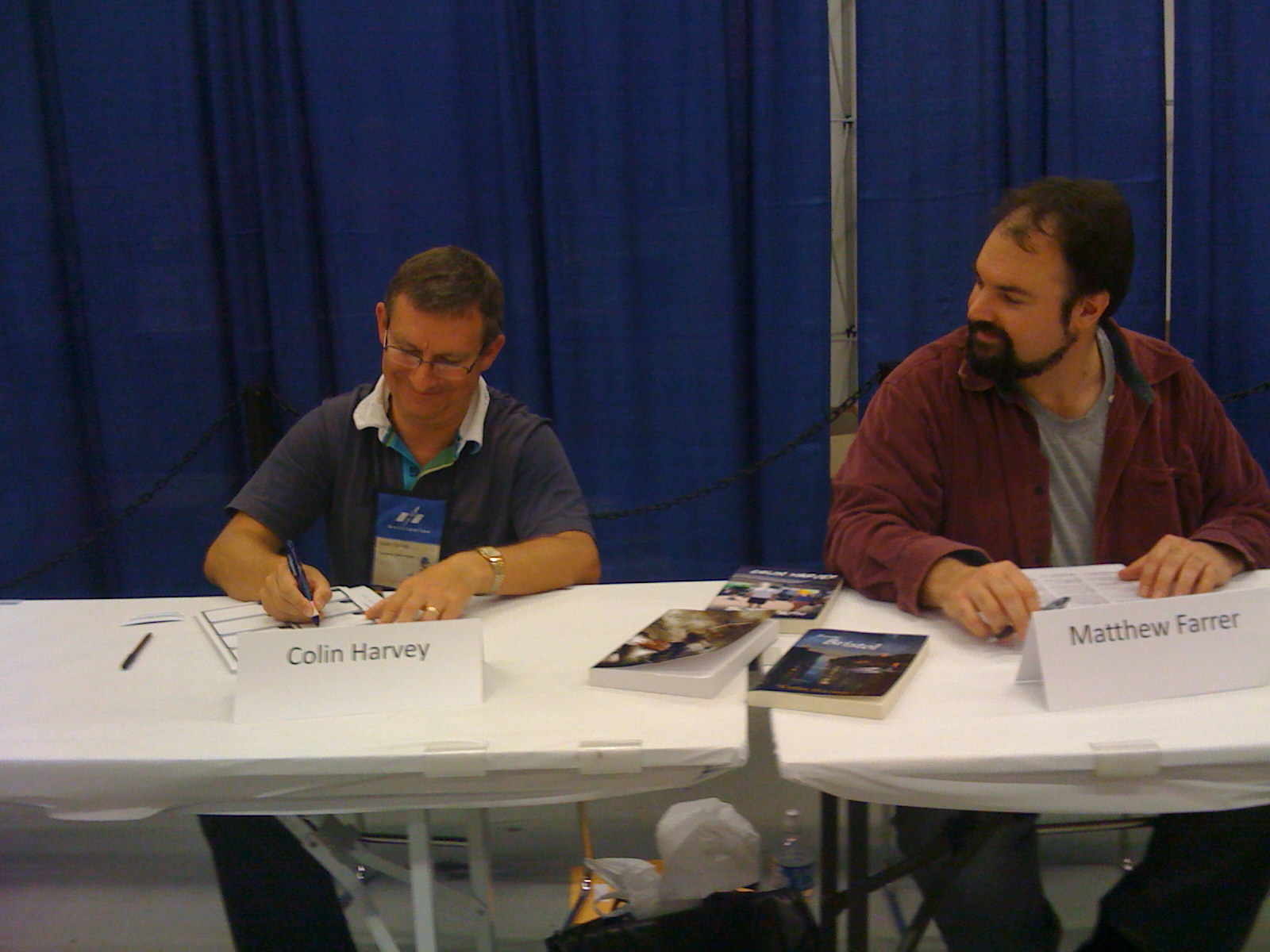
Finished ms number 32 and starting ms number 33. Things are going well. I wonder if I can finish number 34 before the weekend ends. 20 mss left to go.
Currently reading ms number 31.
Dragon wine cutback broke the 150,000 word barrier, which means I’ve cut 17,000 words so far about one third of the way in.
Knackered tonight so relaxing with a ms.
Posted in Uncategorized | Leave a Comment »
I had a interesting day yesterday. I did not read an MS, or start to read an MS. I feel like I’m shirking but not reading is certainly allowing my mind to recharge. I’ll start full MS number 31 tonight.
So I continued with snipping away at Dragon Wine. This morning I start with 152,342 words (actually I already cut something this morning but I’ll talk about that). That is approximately 15,000 words less that the original word count (167,200). I’m aiming for 130,000 words but I’d be happy with 140,000.
I’m now starting on part two and the introduction of a new set of characters. This is a bit refreshing to start with this new lot of characters.
Last night as I tried to sleep I thought about a scene that I identified yesterday as not doing it’s job. I cut it back substantially, but kept its backbone. Then I thought about it some more. You know this scene has the best descriptive writing in the book. I love it. People who have read that bit have gone wow. I added this scene during a revision a while back, back when I was looking to flesh out the world, ensure I had the detail and to make it sound more real. Originally I had this group of characters get to a point, suggest they are going somewhere else and then pick up their thread then. You know when they are already there and it’s in the middle of the action. The scene I added was how they got from there to there. I might have had some plot discussion points in there, but basically nothing happens. They move through an amazing geothermal landscape, scale a gorge, confirm their thoughts that the garrison was attacked and who their opponents are and think about where the thing they are following went. That’s it. Very pretty, some character insights, but nothing important happens. So this morning I gritted my teeth and cut it all. Phew! It was hard. I thought about restructuring so I could keep that one paragraph of description but didn’t. I cut it.
I have writer friends who do up spread sheets and work how who has the point of view in which chapters and change it if it isn’t balanced, work out the percentage of action and narrative etc. This type of detail analysis I don’t usually do. I sort of play it by ear. However, I can see now that this sort of micro examination of a novel can help to refine it to its lovely bones. After I’ve done this cut back and see what word count I’ll end up with. I’ll go back to the start and then look at it at sentence level to see if I can write a few things more succinctly. I’m doing that at the moment on this pass through but I think it will be worth doing again, to tighten the prose. Then there will be another read through and maybe a pass by unsuspecting beta readers. It’s time to kick this baby out of the door. Revising Dragon Wine was one of my goals for the year. I think I can see me doing it now. As for drafting another novel, well my day job is going to impact on that. I’ll be report writing right up to Christmas. That is very draining. However, I do have a writers’ retreat planned for January, where I am hoping to achieve another 80,000 words. (I touch type btw). Report writing at work usually sets me up for critical thinking though which is good for editing.
Yesterday while playing with my ipad I found a tutorial on WordPress. So you will see I have a contact form now. I believe that will email me.
Posted in Writing advice | 1 Comment »
I’m still reading mss, but today and tomorrow I’m taking a break from work and assessing mss. I’m a bit tired and I really do not get a kick out of sending rejections. I worry, too, that my comments may come across as nit picky, when the author of the ms has to deal with the rejection. It is hard to tell whether someone is ready for feedback. I’m thinking if someone got a full request then they should be ready…I’m hoping they are ready and see them as a way forward.
In my ten years or so of writing I’ve been rejected many times for various mss, short stories and novels and I’ve felt the whole gamut of feelings from being close to tears to preparing myself for bad news beforehand so it don’t kick so bad. Sometimes I couldn’t help getting my hopes up only to have them dashed. The thought that the elusive email or phone call from an editor or agent saying they loved my work is a fading fantasy. I’ve had friends get that email and I’m just close, not quite good enough. (not necessarily a good profession to aspire to when you have low self-esteem, though these days my self-esteem problems are under control).
So here I am grasping hold of the shreds of hope, revising the novel that I have faith in. Today, I’ve been able to put to use some of the insights from ms reading and apply it to myself. Do I do the common errors that I noted while reading? Most definitely. Today I cut back, restructured and rewrote a chapter that I had trimmed last week. However, I missed a few things. Then I went back to check something and found a continuity error. I’m trimming back and I can see the discipline of word count and succinctness are really useful things to help focus dialogue and make me question whether I need all those character thoughts and all that description. I also start to question whether I like the sound of my own voice. Snip. Snip. Snip.
It’s around 11.00am and I’m down to 158,798 words (last tally was 159,283). I’m trimming and it’s hard work. It takes concentration, some skill and perseverance.
Posted in Writing advice | 11 Comments »
As I’ve mentioned previously, I am not yet done with assessing the full 53 full manuscripts but I have completed 30 of them. This gives me some insight into some general issues with full MSs as opposed to the partials. Also, I think it is worth noting what actually takes places when a full MS is assessed and what is not taking place.
Passing through the full MS assessment and being recommended to the editors is a great achievement I think. However, it is really only the start of the process. I know you think the months you have waited are long enough, but it can take ages. Once the MS is sent to Lee and Marc, they have to find the time to read it and then they do their own assessment. So far I have recommended 9 manuscripts and all of them are different and remarkable in their own way. All of them excite me as a reader. However, in any imprint there is limited space. This means it is still competitive. You’ve made it to the top of the pile but there are many factors involved in whether your MS gets published or not.
A reader like me makes a decision on the merits of the MS itself and is not in the position to be in the commissioning editor’s shoes or even the publisher’s shoes. What I mean is, I have an idea of what Angry Robot publishes and I know what they have asked me to look out for. However, I do not know who they are currently negotiating with and what that MS may be. I do not know the strategic direction of the imprint and what holes they are looking to plug in their existing list. The editors are also much more abreast of the market, what they think is popular, what is going out of vogue and what might be hot in future. I may have views on this myself, but it is they who are steering the ship. (okay a bag of metaphors there)
What this boils down to is, you may have a fantastic, publishable manuscript and it doesn’t get picked up. That’s the sad fact of life, really. It could be that it is like something Angry Robot just bought or they might want to publish it but the list is full…there are many factors that come into play.
In my opinion there is a lot of good stuff in this submission pile and I think the Global Financial Crisis had something to do with that. Good MSs that should have been picked up or may have been picked up in previous years weren’t and they are there with the new crop of good mss that are coming through. Also, there are structural changes going on within the industry too. Loss of retailers impacts on booksellers and authors. There are less outlets for your product. Less opportunities to market. Then there is the upsurge in ebooks and online retailing. This has changed the mix dramatically and in my view made the publishing cycle much harder. I don’t have hard facts here, these are my observations and my opinion.
Is an assessment/reading of an MS an edit?
No, definitely not. An edit starts with a read through of an MS to assess it for potential issues and to develop approaches for the editor to work with the author. It has usually been commissioned before this takes place. I think a read through/assessment for this MS reading is similar, except we are not working up an editing approach with a view to edit. We are assessing several aspects of the ms. Namely:
- general readability;
- execution of idea and prose;
- structure; and
- overall wow factor or impact.
Common issues
While reading we make note of issues. I think all mss, no matter how good they are, have issues. I think for a full ms to be recommended to the editors rests on the degree or severity of the issues. As I mentioned in blog post 3, some issues are endemic and aren’t easily addressed in an edit. For example, the style of writing needs work. The author may improve over time or not. However, at this stage you can’t take the risk. If the idea is cool, then you hope the author works it out and it will get published further down the line.
Another issue you may have is structure. The events don’t unfold as they should or it is confusing. Here there is an assessment made on the run. I have not recommended any mss that I felt needed restructuring. However, during an edit, which is much more focussed on the work may identify that a restructure is needed. As a reader I’m not in the position to make that call.
One thing I have struck in a few MSs is overwriting. I find this is particularly so in the first quarter. As I writer I would say this is due to continual reworking and adding until it is overdone. This may extend to the full ms but often there is this line, where the writing changes. I never really understood what overwriting was until I saw it a few times. Then I had this aha moment. By overwriting I don’t mean purple prose. Overwriting is where it the description of the action is over detailed, or done more than one way. For example,: she slammed the door shaking with anger. She had never felt such rage before and wanted to hit someone. This is overwritten. You could achieve the same effect with –She slammed the door. Or She slammed the door, shaking with anger. But you don’t need the rest. You’ve said it. You have to trust yourself. Another example is where the detail is so step by step precise the action takes much longer than it would in real life, or there’s so much of it, it diffuses the tension. For example: She opened the car door, sat in the driver’s seat, put the key in the ignition, saw leaves floating on the wind through the windscreen and then switched on the radio. Then she is grabbed from behind.
So while the detail is nice and adds flavour to the scene, there is so much of it the tension disappears. An alternative might be: She returned the car and inserted the key in the ignition. A blur in the rear view mirror gave her a start, just as the cord encircled her neck.
Anyway these observations are quite subtle but do stand out.
Of course, full MS contain other issues common with partials, except they occur later in the work. For example, I might get to chapter 7 or 8 and find a big chunk of indigestible info dump, or pages of back story, or a deux ex machina prong, where it shouldn’t be. Also, the dialogue gets sloppy further in or there’s a sag in the story or the action.
As I mentioned in comments on blog post three, world building issues become more apparent in full MSs, because the world building has to be sustained and more opportunities arise forinconsistencies and for dropping the ball entirely. Again here it is a matter of degree, if there is a minor inconsistency that can be addressed in an edit it is not a problem. However, if the world building needs more thought and lots more work then it is going to be a problem.
I am sure there was a time in the past where authors had their mss taken up with work still needing to be done on them. Perhaps the editors liked the idea, trusted the talent and skill of the author and were really committed to it. A submission pile situation is a bit different. Your ms is competing against others. So you might be close, but need some work, but the next MS or the previous one had no issues or very minimal issues. This is the risk of a submission pile. If you have an editor who you know who is willing to read your work, then you still have similar issues but I think (I don’t know) that your chances are better. Having said that the same caveats apply. The editor may love your ms but can’t sell it to acquisitions. There may be no room in the list. It may not be right for the imprint.
Bad ,or less politely crap, endings. You could have the most elaborate of plot with amazing twists and turns but your ending is not quite cutting it. Actually a bad ending can be a let down. If I was editing the MS I might have some ideas how to fix it (and I’d be paid for this) but as a reader it’s not my place.
I mentioned the wow factor and that’s the really hard one. Have I recommended ms, which didn’t have a wow factor? Probably, because that is darn hard to pin point and subjective besides. I tend to go the more safe and conservative route—it has a good beginning, middle and end, is well executed and has something different. There have been a few wows in there. They excite my mind. They make me admire the writer for their ideas and their execution. For the record, one of the most exciting MSs for me was a full I rejected. It wasn’t quite ready yet, but its potential screamed out of the page. I am hoping my feedback will prove useful to the author.
Feedback
Of the 21 MSs that didn’t get referred to Angry Robot, I gave the author’s feedback. I couched it in terms of my subjective view. All the authors I heard back from appreciated the comments. I don’t know about the others. However, I know how it feels to have your full ms requested and then get nothing back. I was like: What made you request it? What made you reject it? So I tried where possible to articulate that. It could save years of naval gazing. Actually it depends on the author’s reaction to the comments. If the comments lead to an ‘aha moment’ then I feel very happy about that. If they mean nothing and are just totally annoying then I don’t feel good about that. If I’ve requested the full, I think you have something. If I’ve given you comments then I’m trying to help (from my point of view) you get there next time. I’ve waited years for some meaningful feedback on my novel. When I got it I was so happy, finally the mist cleared and I could see my way out of it. I had been really down in the doldrums about a particular MS. Note here that editors are subjective too. One editor might have different ideas and approaches. That means there is no one way to develop a story.
I’ve probably covered off two blog posts in one here. If I post again, it may be about some thoughts on the process, exercise. I’m not sure.
If you are wondering do I want my life back. Yes I do. My family think I am surgically attached to my ipad. If I did this again, I’d like to get paid. LOL!
Posted in Writing advice | 3 Comments »
The awesome Amanda, who has read about 500 partial manuscripts for Angry Robot, has blogged about her experience. Floor-to-ceiling books here
I’m amazed about how she has powered through the reading and assessing full manuscripts, works a day job and continues to write reviews, very impressive reviews too. Amanda did mention the gender of those she requested fulls for. I think I saw someone asking her on twitter. I probably have a breakdown, but will wait a bit. I’d have to check back.
Gender didn’t really come into the reading process from my perspective. If you check back to Blog post one you’ll see I uploaded about 5-10 partials on my ipad to read. So the file names don’t usually say, ‘Chicken’s roost by female author Chris Post’. Some times the file names didn’t even say what the book was called, just something generic like ‘Angry Robot Submission’. Also, people like to disguise their names so it is hard to tell sometimes. If I had read the query letter, it was a while before I got to the story. So mostly, it didn’t register for me until I wrote a rejection or a request for a full. Where it really hit me was when I was referring the full ms to Angry Robot and I’d think ‘Oh so it is a woman who wrote that (just once).’
So I’m up to full MS number 30 and that is out of 200 partial ms. I figure I was requesting more in the first half of reading than the second as I have 23 to go for the remaining 280 odd partial mss. Out of the ones I have referred nine up to Angry Robot, which have been five female and four have been male. That thirty is approximately 16 female writers to 14 male writers. I was reading mostly fantasy, so I think (but don’t know) that there were a lot of female’s writing in that genre pile.
I will do a final tally when I’m done. Next post will be on assessing full mss.
Posted in Writing advice | 4 Comments »
If like me this is your least favourite part of submitting a manuscript, then like me you probably pay the least bit of attention to it. (Edit: what I wanted to say was that I had a lackadaisical approach to query letters and sometimes synopsis, because I’ve always wanted to use that word). As part of the submission reading process, I was exposed to a lot of these (480 of them thereabouts) so I started to have an opinion on them and also had a few realisations. Number one was I have been very slack in the past and I will try very hard not to be from now on. Next thing I should say there is help out there. I usually consult www.agentquery.com as it tends to have sample query letters and search facilities. There are also links out there if you google.
I maintain that it is the writing itself that is important, that’s the clincher and I think that is true. However, the query letter and the synopsis have a purpose.
Query letters/introductory email
This is your introduction to the publisher/editor/reader, that is, the first impression you are going to make. It is not really the place to write an A4 page or more about your life, the troubles of your childhood, the reason you write dark fiction (as a result of said bad childhood) and that your idea came from a dream and then recount the dream verbatim. I am sure these recountings have a place. Hopefully, after you have signed the contract and your publisher has taken you to a bar and bought you so many rounds of margaritas that you drunkenly reveal all. They’ll recover from the shock and there won’t be documentary evidence.
One lovely man said in his email/query letter that he was a failed aspiring writer (waves). This struck me because year before last I was calling myself that (never in a query letter or email). A writer friend almost smacked me down for saying it. The crux being “had I given up?” No says I. Well I’m not failed then am I. Which is basically the comment I gave back to this writer in his rejection, you aren’t a failure until you give up.
So what works in a query letter/introductory email?
A short salutation. A short one liner about your MS, or a pitch. What is your story like and what makes it stand out. Saying you write like Terry Pratchett is not really inspiring. You need to be saying what you are like and how you are different. For example, my story is a traditional fantasy with aliens instead of elves. It will appeal to readers of GRRMartin and Peter F Hamilton (not!).
A bit of background information on yourself, such as your past publications if any, your qualifications/occupation, special interests if they relate to your ms. For example, if you are writing about a pacific nation of 400 people, do say what credentials you have to do so–like you did a thesis on it, or spent your formative years there etc or you are part of the nation etc. Or if you are using a World War 2, European setting, then mention you spent twelve months researching it etc. It lends a bit of credibility to what you are sending in.
Check www.agentquery.com if you want some guidance.
For me as a reader, anything that was brief and to the point was useful.
What made me lift an eyebrow and wonder was the A4 page of oversharing, unamusing attempts at humour, which make the writer sound wankerish, (just personal taste), saying that you have submitted 500,000 words, or 300,000 words or even 275,000 word manuscripts. These word counts are well in excess of the guidelines and did not give me a good impression at all. (hint check guidelines). Actually I’ve submitted somewhere once thinking I could get away with over word count and basically I got it back the next day with a rejection. It wasn’t read because it didn’t comply with guidelines. I did read the partials for these over large ms but I did not request any of them. My knees shook just reading the word count.
The best ones for me were the ones that eased me into the mood to read the ms, filled me with excitement (that sounds interesting etc) and didn’t poke me in the eye for any reason.
Synopsis
These were an interesting thing. When I started out, I read them quite religiously, except where they were impenetrable. Then I’d head straight for the ms (and occasionally the MS was also impenetrable). Then when the pressure built up (lots of MS and not much time), I read the first bit of the synopsis get the idea and then go read the MS because that’s where the ultimate decision was going to be made.
Then if the story didn’t reveal its speculative elements or I suspected paranormal romance I’d go back and read the synopsis.
However, I did come to appreciate the synopsis that was easy to read, the one that caressed my head. I gained an insight here that the synopsis does need to be easy to read. That way it will be read.
It helps not to clutter it up with sub-plots and minor characters. In my opinion, you need the central narrative of the story and those bits that impact on it and not every single detail. Angry Robot asked for character lists. I remember rolling my eyes when someone would say there are hundreds of characters but here is the first twenty or so. Yep I’d head straight to the MS tail between my legs.
There is a trend apparently to put the character names in capitals. It made no difference to me, except where there were lots of characters and then there were all these capitals screaming out of the synopsis at me. A bit off putting, actually.
A chapter summary is not a synopsis, btw. A synopsis has its own narrative flow. It is meant to engage, inform and basically sell your work. A chapter summary has a different function.
This is the most important thing I learned. As a reader and a writer I may not have valued a synopsis as I should. However, it is an important tool. Editors use it to sell the novel to the publisher or the acquisition team. Marketing use it to help market your work and maybe assist with developing the blurb.
While personally I don’t think it is fatal to your prospects if you can’t write a good one, it certainly helps if you can.
I met an agent once who said she only reads query letters and in her view if a writer can’t write a good one then they are a crap writer. A bit harsh to my mind. Obviously I don’t agree. If I do write to agents, I choose ones who allow a sample to be sent with the query and synopsis. But that’s just me.
The other interesting thing in the Angry Robot submissions was the ‘intentions/inspirations’ part. I wonder if you had as much trouble as I did when I had to write to that part a year or so ago. So it was interesting to see what you guys did with it. Rarely was any one the same, though there were a few who said they wrote the novel because they want to write for a living. Hey don’t we all. I did check with Lee about this. According to Lee, there is no one way to respond to it but they are interested in what you say. I thought the response should be about the particular novel, where the idea came from, what inspired you to write it etc. But don’t listen to me. I’m wrong!
Posted in Writing advice | 9 Comments »
I said that the list was not exhaustive and I was planning to do some rounding off later to cover points I missed. However, Rowena Cory Daniels over on Ripping Ozzie Reads here pointed out that I missed some important ones. Actually I could probably wax lyrical on the subject till the end of time, but I have limited time and so do you.
So what did I miss?
Rowena mentioned point of view and world building. World building I was going to cover on a later post when discussing full manuscripts. This is because world building issues become more apparent in the full manuscript. Sometimes they can be disguised in a partial, unless they are fairly well marked.
I’ll also add plausibility and structure to round off this post. Also I will relate some insights from others about ms submissions. I really should be writing myself, or cutting, as I think is what I’m meant to be doing.
Point of view
This is the person telling the story. There are different types of point of view, the all seeing god-like view (omniscient), first person, the story told from the “I”, the third person, “he/she” perspective and sometimes the second person, “you”. For example—you walk up the stairs and push open the door and see blood pooling on the hearth rug. It puts the reader in the firing line. I won’t elaborate here, except to say that it can be done, if done well, but it is a rarer form of narrative. I recollect that Stephen King also mentioned progressive third person, which was how he approached The Stand.
Omnipresent point of view is used, particularly in older works. However, there are issues with this approach. Distancing the reader from the character can be an outcome of this approach. Also, it can lend itself to head hopping.
First person point of view puts the reader in the narrator’s head. I must admit to dreading the next first person narrative in the submissions pile at one stage because when done badly it can be grating. So I have no real prejudice against first person narratives but I have noticed that some people use it to add way too much of everything or try to be funny. In this case sometimes more is less.
So, what do I mean.
A character walks into the bar and they are narrating what they see, feel and hear. Then they stop and say:
I’m six feet tall, with great shoulders and I’m a real chick magnet and with my physics degree I can pull chicks with my grin. Already five chicks are eyeing me off as I approach the bar and my dick hardens at the thought I’m going to get laid. (Haha maybe I’m doing this too well).
I think there are lot of issues here. The CV approach to character description; the thoughts that aren’t entirely relevant, unless you want your character to sound like a dickhead; and the sort of not well disguised info dump and telling nature.
So first person narrator leaves you with choices. They are telling the story or are you sitting in their heads hearing, feeling everything? Moral is you get the closeness but sometimes you get too much detail. Also it can be limiting as your character doesn’t see everything. One author I know who used first person in an epic fantasy is Glenda Larke (she’s on my side bar) in her Isles of Glory series. She uses a series of first person narratives.
Third person narrative allows for you to be close to the character, particularly if it is quite tightly written. You can have multiple points of view so that many persons tell their side of the story. However, here is the clincher: keeping to your point of view.
Some of us call this point of view violations, point of view slippage or just plain sloppy writing. I also noticed, too, when reading a couple of submissions that point of view changes distanced me from the characters and the story as they happened too quickly or suddenly.
A short chapter from one character and I’m almost starting to bond with them and get with the story and the short (very short in some cases) chapter ends and I’m thrust into new character and new scene. Same deal, I’m not getting enough time to actually understand the change in character and scene. Then enter chapter three with new character and new scene. It was choppy and I lost interest. There has to be a judgement there of how many characters are needed. Do they all need to be in the opening scenes? Is the scene long enough to hook the reader? It might work for a Bruce Willis action movie, where you have music and visual cues, but in a text based medium it didn’t work for me.
Then there is the dreaded head hopping. This is where there is one scene with multiple characters and the reader is getting all of it. The worst case is where you can’t tell who is thinking what. Or you think it is this character and then it drifts to another character and you shake your head and feel totally confused. There are lots of books and advice written on this. Some recommend keeping to the same point of view in the one scene or chapter.
There are books out there with head hopping in them. If you read them yourself and become annoyed then you know why. Some writers signal the change in point of view well so it is an easy slide.
Another aspect is the character whose point of view you are in reports things they have not seen or could not reasonably know about. This can be minor inconsistencies that get corrected at the edit stage but you want to minimise them.
Plausibility
This is related to world building and also to character building. I am a real fan of steampunk. However, it is very difficult to do well. There are issues with language. In my opinion, you can’t be a purist Victorian style writer as that type of narrative may not appeal to a modern reader so you have to do enough of the style and language to give it a flavour and even then that is hard to do well. Then there are the characters. They need to be products of their time, or if they aren’t acting like a well brought up Victorian woman then we really need to understand why. Also, you would want to understand that her peers are reacting in the way they ought to too.
This includes the scenario I mentioned in blog post three where you have a demon hunter who doesn’t do a plausible job of killing demons.
Then there are stories where the setting is historical and some things happen way too easy for that period of time without good explanation. If you are using well researched periods like World War 1 and World War 2, you need to have done the research or your bones get picked clean by the avid historians (professional or amateur). This includes naming items like cars, tanks, planes, cities etc.
And that leads us to
World-building issues
The main issues with world building are to do with how the world is portrayed and flaws in the thinking process. If you are using a historical past but you change one thing then you really need to think through what that means. It might sound really groovy but by the end of the MS you’ve come unstuck and I’ll probably send you a list of things you need to consider and a list of inconsistencies you need to address.
Other mistakes include:
- setting up a world and rule system then breaking it;
- not setting up the world and rule system so you can do whatever you want;
- using a broad brush to setting up the world, where choice details probably works better;
- being contradictory;
- using modern vocabulary or tech references that should not exist in your setting.
For example, you have a setting in which the Victorian era never happened but you describe something as a Victorian gothic nightmare.
This discussion is not exhaustive by any means. I’m happy for people to add more through the comments.
Structure of the story
This is another way of looking at the things in blog post three. You have a story with a beginning, middle and end. You have a good start. However, these days you can’t wait to kick the story off in chapter three. You need to be kicking things off much sooner. In some cases, the first line and in other by the end of chapter one. Unless you write like a genius and the writing itself is so mesmerising and then you can do whatever you want.
Once you have your beginning, middle and end, you need to sculpt it so that you are telling it cleverly. This is hard. I find it a challenge. You have to make decisions about that girl in the room with the dead body (see post number three). You have to get her out of there as fast as you can and have her deal with how she got there, how the person died etc, while she is running away and maybe being chased.
I was on a panel at an SF con with a bunch of writers, in particular, Garth Nix. Not sure if you know he was a literary agent for a long while until he retired to write full time. Anyway, he related in this panel how sometimes he would get submissions from people who would say to him. ‘It is really great in chapter five.’ I’ve really taken that comment to heart. You can’t expect people to wait until then, not if you are wanting to publish popular fiction.
I had a bunch of beta readers read my new manuscript and I had comments like “It really takes off in chapter three.” I thought of Garth’s comment and realised I had to fix it so that it took off in chapter one.
Also, when I was about a third of the way into my submission reading and the back story issue was really apparent, I had to look at a novel submission I have out, just to check I had not done that. I was relieved to find there wasn’t a skerrick of back story. The MS probably has other issues but at least it didn’t open with back story. Phew!
Posted in Writing advice | 2 Comments »
Sorry for the slight delay between posts. I went back to the submissions pile to work on the SF, which still had a number in there. I was also taken out by a series of migraines, social events and fatigue. When reading submissions I must remember to wear my glasses and not cheat and upsize the font.
Below is a series of common problems that I recall from reading the submissions. It is not an exhaustive list and I think I’m not saying anything different that what other editors have blogged about submission reading. A number of blog posts back I have a link to one, which I looked at when I started reading for Angry Robot and was heartened to find that I was on the right track.
I wish I could beam this into your brains (if you are interested) because trying to put together this blog post doesn’t seem to capture it all. I also end the post with what worked for me in an manuscript.
So, common issues…
Word usage
One of the things that sticks out in a submission is the use of wrong words and the inappropriate use of words. Also lots of additional words that aren’t needed, or just plain ‘I am trying to be arty and I didn’t quite manage it’ use of words.
As a reader I’m set up to read your story. I like the sound of it and am keen to get started. I read a few lines and then all of a sudden this thing pokes me in the eye. It’s a wrong word. You meant to say yoke but you said yolk, you meant to say coarse but you wrote course, you meant to say pore over books but you said pour over books. There was one really funny one, which I can’t repeat but let’s just say it was a biggie and this wrong word appeared three times on the first page. It made my day.
Okay these aren’t usually fatal. I’m going to keep reading. But then I may come across more of them. You know the words where you want something to sound different so you use a thesaurus to find another word. Well the thesaurus isn’t always a genius. These substitute words just plain jar. If you are wondering, I do get out the dictionary some times to check when I’m not quite sure. I am quite happy to be wrong.
Another is where the writer is trying for something different,a description that is not a cliché but it doesn’t quite get there. It jars, it pokes the reader in the eye.
Sometimes there were too many words, this includes purple prose (overwrought writing, trying too hard to wring an emotional reaction from the reader). These just get in the way of the story. ‘Her eyes stared for a momentous moment.’ Or tautology and saying things twice. I know about this one because I used to do that when I was a beginner and still sometimes catch myself at it.
Then there is just plain whimsical, fluffy-floaty, going all over the place prose and you get to the end of the paragraph and you scratch your head, wondering what the purpose of that communication was. Thankfully there weren’t too many like that.
Back story
How much do you tell about your character and your set up? This can be a difficult question. I think none, until the reader needs to know. Backstory can be doled out judiciously. However, the issue in some submissions was too much backstory. I read one submission that had an excellent prologue then I started reading the chapters. Chapter one was all in the character’s head about what had happened to him in his whole life right to that moment. The action probably consisted of him sitting down at the table. Let’s see what happens in chapter two and it is more of the same…more back story, maybe the character made it to school. As a reader, I am conscious that before being published a manuscript would be edited and that first may get cut. However, if the backstory is continuing in chapter two and maybe three, I’m going to give up reading the MS at this time. This happened frequently in the MSs I read.
Sometimes the writing in the MS is fine. The sentences are lovely, containing vivid descriptions of the room, the character waking up. Trouble is nothing is happening. There is too much description. In chapter one all the character has done is get out of bed, put on a cardigan, walked down the steps and got a drink.
Or the character wakes up to find themselves in a room with a dead/dying person. The whole chapter is about them considering what to do. It contains descriptions of cobwebs on the window and repeated rethinking about how they got into the situation and how they should escape but very stilted or no action. What I mean is that they don’t escape they just think about it.
There are no hard and fast rules. A story doesn’t have to be just about action. There can be intrigue or a foreshadowing of something more to come. However, there has to be something tol keep me reading.
Info dumping
Getting information across to the reader can be difficult at times, too. The worst example in reading is big chunks of indigestible info dump, particularly when the character says to another character—“Why are you telling me that? I already know.” You might think this happens more in SF but there was a bit of it in the fantasy. I didn’t read enough of the horror submissions to have an opinion on those submissions. Some examples would be explaining the properties of the asteroid the character was on in the opening chapters for some obscure reason. I wonder how relevant it is to the story, particularly at that moment in time. Or a character/narrator explaining the impact of global warming, which is fairly common knowledge these days. The reader does not want or need a lecture.
In my mind, if the info dump gets in the way of telling the story and is not relevant, particularly in the opening then you don’t need it. Withholding information from the reader can increase the intrigue. For instance, your character is trying to kill someone. The reader doesn’t know who, they don’t need to know why. If you write it well enough then the reader is engaged. This is an insight I got from reading submissions. Learning to be smarter in story telling. Moving from writing the story to crafting the story.
Pedestrian writing
You may wonder what this is. I haven’t searched the web to find a definition. To me it means writing that does not excite me. For example, There was this and there was that and he did this and he did that and he went there and did that. Or first person: I came there, I saw that, I went there and then did that. Sometimes you can see it as soon as you open the MS…the IIIIIII and the he he he…or she she she at the beginning of sentences.
Sometimes pedestrian writing to me is where there is something going on, action…but the writing is not interesting. There is no descriptive words, nothing to excite the eye, the mind. I do not mean situations where there is a deliberate flatness to the writing as part of the technique.
Too much detail
This is probably a subset of the above. The detail is accurate but there is too much and it is getting in the way of the action. It is clouding the narrative line.
Really bad dialogue
Actually it doesn’t have to be bad. It can be mediocre and it leaves a lasting impression. The only thing the reader remembers is the bad dialogue even though they enjoyed the rest of the story. Bad dialogue includes:
- having characters say things that make them sound stupid;
- having meaningless dialogue to fill up space;
- repeating what the character thought;
- flowery, silly speech that makes the character sound stuck up or stupid;
- dialogue that is imprecise; and
- many other types of transgressions.
Lots of setup without anything going on
This is a bit harder to define or even recognise. The writing is good. It’s luring you in and you keep reading and then there is no payoff. It is all set up. Sometimes this can be that the action is all internally focussed. For example, a couple arguing. You expect something from the bigger picture is going to be felt, either as a hint or some event. However, you get to the end of the chapter and it’s only about the couple arguing. You read the second chapter anticipating the bigger picture event but it’s about the couple making up from the argument and nothing else. Chapter three and still no bigger picture event. It might be coming by chapter 10 but you are no longer reading it.
Talking heads
By talking heads, I mean dialogue with no scene setting, no character thoughts, no description. A big glass jar of dialogue, sometimes with no attribution so you don’t even know the names of the characters, you don’t know anything. Sometimes talking heads is fine for a short period, particularly when you know the characters and you know enough about the scene. The talking heads pop up in the middle of the book or a few chapters in. Having talking heads straight up at the beginning of a novel is harder, I think, unless the dialogue is very interesting.
Characters acting out of character
This is where we set up characters to act inconsistently with their set up. For example, the character is a witch, say a white witch. Then when confronted with black magic says they don’t believe it exists. This makes little sense to me because by being a white witch it goes without saying you know there is something called black magic and black witches.
Characters not written convincingly
Another is a character who is a demon slayer. However, when they get to the demon slaying scenes, the character kills ten demons in two sentences in a way that is neither convincing nor descriptive. It is a bit hard to write an action character without decent action scenes and seemingly realistic means of dispatching the foe.
Telling
Too much telling instead of showing through the writing can disengage the reader and also represent missed opportunities for the writer to show something important. I think a writer can use telling in small doses. Perhaps when wanting a link between scenes.
Typos
One or two typos are not going to get in the way of your manuscript reading. A couple of inconsistencies won’t either. However, lots of typos and mis-spellings will mount up over time to give a negative impression, as will bad grammar and sloppy writing.
Impenetrability
This didn’t happen too often or it did but in different ways. Firstly, the writing was so dense and obscure that I had a hard time trying to read it. I’m not sure how to describe it. Obviously the writer knew what they were trying to say but I didn’t get it. I might be warned about this when the writer says something along the lines of “I wrote this novel to challenge the reader.”
So what works for me as a reader
Firstly the absence of those issues discussed above. Sometimes it is difficult to analyse why you like one MS over another. This indefinable quality is something like having your head caressed. You start reading and next thing you know you are at chapter five and wanting to read the whole MS. Generally, to grab the reader, I think there needs to be a balance of scene setting, character and action and…
Clear narrative line
This is what I’m calling it. It may also be the writer’s voice but I’m not so sure. I guess what a clear narrative line is the absence of the above. The writer has a clear voice. The words means what they say. They evoke a positive response in the reader (or the desired response). That is they want to keep reading.
Pace
Pace is where there is a string of tension pulling the reader through the story. Pace can be intellectual as well as action-based. It can be fast and it can be slow. A good writer can control the pace through the rhythm and structure of their writing in the same way a piece of music has a particular beat. Basically, there are things happening in the story that keeps the reader interested. This can be the events unfolding or the quality of the writing. Eliminating some of the issues mentioned above may assist in developing pace.
Tension
This is a subset of the pace. Tension is about the intensity of the story, which includes things like the subject matter, the substance of the character, the importance of the events they are facing. For example, the character needs to make a really big life or death decision quickly and the consequences are horrible. This situation can put the reader on the edge of their seats.
Ideas
As I’ve already mentioned in previous post, things exotic appeal to me. Really clever ideas excellently executed will grab. There were heaps of great ideas in the submissions pile. Sadly, a lot of them were not well executed or the MS was not there yet. Not there yet means that they had promise but there was stuff to be done. For example, ironing out details, polishing the prose, fixing dialogue, the pace, style etc.
So many stories, plots, ideas have been done before and done to death. If you are submitting a first person detective story featuring vampires, then I swear so did fifty to one hundred other people. However, if you’ve done something different, like ‘no vampires’ or the detective is different (not human, vampire, magician or werewolf) and the setting is amazingly different and well executed and you have action, pace and tension then it will stand out and I would have wanted to read it.
I’d say angels were another type of story I saw a lot of. Don’t get me wrong, I did request a couple of these but they had been well executed and the idea was remarkable.
I also saw a lot of life after death stories, with variations on the theme. I picked a couple that had something new or appealing on this angle.
So you can use an idea that’s been done to death but if you do it has to be very, very good. (I’ll talk more on marketing through the query letter and synopsis in the next post).
Setting
Setting can be the subset of the idea of your story. When you think about it there is so much scope out there with regard to setting. You can have alternative pasts, alternative futures, paranormal past and present, fantasy world settings, outer space, space ships, asteroids. You name it you can make it a setting. Describing the setting without info dumping or backstory can prove to be the trick. However, a really good setting (world-building) can really be a grab for a reader.
Pet hates
These are the things you really should not do if you want put the reader in the right frame of mind to read your MS. Basically it comes under the heading of follow the guidelines but I’ll elaborate.
Formatting
The formatting of the document is really important. The smoother and easier it is for the reader to read your MS the better the experience is for them and hence for you. Format the manuscript like a manuscript. Look at a novel to check if you aren’t sure. Though if you google standard manuscript format you’ll find examples and advice. Here is a link to William Shunn, here but there are heaps. However, always check the publishers website. Some publishers don’t like Courier font.
Block paras
This blog post is written in block paragraphs, that is non-indented. A fiction manuscript is not formatted in block paragraphs unless it is specifically asked for, say for publishing on a website.
Blocks and no paragraphs
Blocks of text and no paragraphs at all. This helps make the manuscript impenetrable. The reader will not try to format your ms for you. It is up to you to make it readable and legible.
Fonts!
Fancy fonts, all capital fonts and weird graphics in an ms make the thing damn hard to read. I had two manuscripts in all capital hollow style font, which nearly made my eyes fall out of my head. I could not read it. I tried. I was tempted to do a global change but I didn’t. This goes for other fancy things people do, which draws attention to your inability to look up what a standard manuscript format is. When I see stuff that is not standard, I just think of the work that needs to be done to standardise it and shake my head. When I am assessing an MS I shouldn’t have to think about that.
Non-standard dialogue formatting
There were quite a few variations on this. I’m a stickler for the normal approach to dialogue formatting. If in doubt check a few novels and you’ll find it is pretty standard. “Hark!” she cried. “I’d love a comma or two before breakfast.”
Large headings
Some mss and the chapter headings had large fancy headings, which again draw the reader from assessing your work and your story and your skill. Sadly it also advertises the fact that the person is a beginner and didn’t read the guidelines or bother to look up standard manuscript format.
Graphic banners
Yes, there was at least one graphic banner through out an MS, which I thought was slightly bizarre.
Bright red headings
There were also red headings, which is also strange as well.
I had one MS with graphics, that is photos within the synopsis. That was strange too, but it didn’t affect their MS assessment. It just stuck in my mind.
Final thoughts
Guidelines are there for a reason and that you should follow them to make the reading of your ms easier for the reader and so that it can be assessed on its merits. You want the work to stand out because it is a great idea and well executed and not because you put this crazy-arse font on it and whacked a big heading on it. You want to point people to your story and not the trappings that surround it.
Also, the common issues I found may pertain to you. If you had a typo then that isn’t likely to be the reason your MS wasn’t requested. It is likely there were a number of the above issues that combined. Or as I mentioned earlier, it wasn’t suitable for Angry Robot Books as I saw it .
Did I read all partial submissions to the end? No, some I gave up before chapter five, particularly when the issues were prevalent in the writing and not just one off mistakes. The more I read, the faster I was able to detect these issues. If there was a particularly ordinary prologue, I read the first chapter and then the second until I was pretty certain on my views.
One bit of advice, which I find works is reading my MS aloud (yes, I mean the whole thing!). You pick up all kinds of little errors that are easily missed on a quick read through. Even then you are likely to miss something. Also, a spell check doesn’t hurt either.
My next post I put some thoughts together on synopsis and query letters I encountered and how I reacted to them.
Posted in Writing advice | 21 Comments »
Just a quick update about Conflux Natcon 2013.
Here is a link to the website http://confluxnatcon2013.wordpress.com
Blog post three is on its way. Stay tuned.
Posted in Uncategorized | 2 Comments »