Feeds:
Posts
Comments

Posts Tagged ‘self publishing’

People say it’s easy self-publishing a book, or Indie Publishing as they say these days. It’s not all sunshine a roses and I’m not talking about sales here. I’m talking about getting the files ready and loaded etc.

The proofreading, file formatting and instruction reading and following are very left brain that leave me without a right brain cell to aspire to creativity. I’ve been caught in that vortex for weeks it seems. The difficulty is not in the amount of advice out there or the assistance other Indie publishers provide because that’s so fab. It’s just the tediousness of it. It’s like doing ten tax returns in a row. It’s killing me with my left brain. I can now understand why people pay others to do all that crap for them. They may end up making no money out of their publication (most, I think) but at least they have held onto their creative soul.

I have to go back to the reason why I’m doing this. Argenterra got to acquisitions in Australia but then it didn’t fit the young adult niche here. (just one part of the story) The Australian market is a small.Even the digital publishers are getting thin on the ground. I’ve submitted Argenterra over the years and well I run foul over arguments about whether it is young adult etc.  I always thought it wasn’t, but then on reading it maybe it’s young adult or young adult cross over. Last year I was chatting to Keri Arthur and she recommend I Indie publish. I’ve had titles epublished with traditional publishers and why not try hybrid. I talked to her about the Silverlands Trilogy of which Argenterra is the first. I could get two books up quickly and then polish off the third book. I’m not expecting to do anything earth shattering here, but it is certainly an eye opener. The amount of control you have as an Indie publisher is like a drug. You get to make all the decisions but you have to do the work.

There are various ways to get your book out there these days. When I had a small press it wasn’t so easy. There was no Amazon.com.au and people without US bank accounts couldn’t list their books on Amazon.com. Ebooks were not a thing. It was PDF and maybe just the beginning of ebooks in the world. Having that small press experience has been good, but not having the tools I used to have was pretty ordinary. I used to own Creative Suite now I’m reduced to Word.

It’s hard. I whinge a lot you may have noticed.

I’m not even talking about the stigma of self-publishing here or the difficulties in promoting a book.

The process for formatting an ebook is pretty straightforward. But anything that requires discipline and attention to detail can be tedious for me. I can do it but I don’t/can’t do creative stuff round the same time.I had a author friend proofread for me after I laid out the book. In Word this entails formatting with titles so that you can do a table of contents. For an ebook you don’t have to worry about page numbers or headers or footers. I used Calibre to covert my epub. But for Amazon, you only need to the Word file. Most of the other places do the conversion from Word for you too.

It was formatting the print version that life became more complicated. Headers and footers and page numbers. I did a proofread and found a few little things which I changed in the ebook too. Unfortunately, using preorder on Amazon meant I couldn’t change the file. Eep! Lesson number one. Do your own proof before uploading the file. I was able to do it after it became live. Second is don’t underestimate how long it can take to proofread your book properly. (I printed the book out to do my proofs) Then research, ask around what is the best way forward. I chose Createspace for US Amazon.com and Ingram Sparks for rest of the world. (I’ll put a link below as to why). Then I got into problems with the paging. I was either missing a page or having two blanks when trying to get the odd number pages to fall on the right hand side. That took a whole night to fix. Needless to say that I have matured emotionally over the last two weeks. (I you believe that then you’ll believe anything.)

The cover was another issue. I had a pro cover done but it was not the wrap required for a print version and the file sent to me was a PDF and you need specialist software to put the cover together. Having exhausted my $ I had to beg help from the lovely Rebekah Turner. We had to do two covers-one for Createspace and one for Ingram Sparks. But I’ve been told you can use the Createspace one for Ingrams. If I had brains I could have used Publisher I suppose.

Today everything is loaded. Because I wanted Createspace to do the Amazon.com I loaded the book there first and then did Ingrams once it was showing on the Amazon listing. This is because Ingram will list it on Amazon if it’s not there already. (See blog link below to understand why.)

Listing the ebook. I could have used Smashwords, but I wanted to some control over key accounts; Amazon, ibooks, Kobo. Amazon was the easiest even with the tax declarations. Kobo was pretty simple and ibooks was complicated. First thing to know about ibooks is that you need a Mac to upload your content. That information would have been useful and would have saved me three nights of wrangling. I’ve used Ingram to distribute the ebook elsewhere.

Many thanks to Patty Jansen for answering near hysterical emails with aplomb. Also thanks to Ainslie Paton for help with book blurb (a whole day back and forth), Rebekah Turner for cover wrangling and Aiki Flinthart for proofreading, moral support and information.

Why am I doing this? Why don’t I forget about this book or this series?

The publishing industry is in a state of flux, particularly here in Australia. I don’t believe we can rely on the book industry to be the gate keepers they once were. Publishers are not loyal to their authors anymore. If you’re not a best seller then you’re out. Heaps of mid-listers have lost their publishers, not because they aren’t good writers with great books, but because they aren’t making the big $$$. Being a new author is even harder. Your book doesn’t sell the expected number your chance is gone. If you don’t have the sales then it’s darn hard to get another publisher.

Why Argenterra? I love this story. I’ve almost written a trilogy and what a waste it if never sees the light of day. I’ve revised and rewritten this story many times because I believed in it. Now it’s time for me to see if others like it too. I love the characters in this book. Sophy and Oakheart are my personal faves but there’s Lillia too.

After 15 years, I’m going to give self-publishing a try.
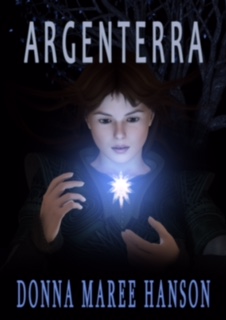
IMG_6085

Cover by Les Petersen

Here is the link I mentioned above. Here

Read Full Post »

The best laid plans are meant to be tramped upon and splattered against the walls. I thought I was going so well and then I don’t know what happened. I fizzled. I lost confidence. Maybe I can blame the Hashimoto’s. I have energy which is great. I don’t have hypers but I have had a couple of crashes in mood and energy despite the meds. The meds are great though. I thought they worked well for energy but not the brain. My brain feels more calibrated though.

I’m off to write with some friends today for about a week. I thought I’d have more done but um I haven’t. I’m progressing things and will be on track before heading back to work. I’ve started some reading for the PhD, mostly Mills & Boon books with some retro which are so fabulous and interesting. Really I mean it. I met with the wonderful Doreen Watt who has an amazing collection way back to the beginning of Mills & Boon and she has a service where she helps people by supplying that ‘missing’ book as well as an amazing database. I’m just back ground reading at the moment to give me ideas on where to focus for the Feminism in Popular Romance research.

One of the reasons I’m at a confluence of indecision is probably the three projects I have on the go. The YA romance is in the final stages of revision, although I have some late feedback that has challenged me. I need to think on it. The Regency Romance is clear in my head and a chaos vortex on the page. I jumped a few chapters when I last drafted it and now I have no idea what is supposed to go there. And it’s messy as all hell. I dictated a lot of it and it’s full of wrong words (misheard by the software) and I’m not sure I want to play in that sandpit right now. That leaves the SF romance to complete drafting. It was my plan to work on this after finishing to draft the Regency, but um …I only read through the Regency draft and got some feedback on the opening. It should go in the too hard basket.

So for these writing things I like to have a project in mind so it should be the SF romance…I’ll settle on that then. Even though I haven’t read it through. I’ll just have to push on.

Meanwhile, I have the editor working on Argenterra and the edits are coming through. Egads! I’m going to try self-publishing this story has  been close in submissions and wasn’t taken up and after 13 years trying to sell it and reworking it over and over, I’m going to push it out there.

I have been working on a guitar cake. Photos later in the week! And I’ve picked up a discarded craft project, a granny triangle rug. I’ve done no housework and I’ve not prepared my study for the Phd.

Mmm maybe I’m not so slack after all. I did take the evening off to watch Jupiter Ascending though! Love it. I know people (particular friends) hate this movie but to a SF romance lover and a paranormal romance reader it’s a fab meld of everything.


PS. The other me, Dani Kristoff, is a finalist in the ARRA awards for Spiritbound.

PSS.I am very sad about the passing of David Bowie and Alan Rickman this week. I haven’t been able to even watch stuff about Bowie. He was an amazing artist and I’m just so shocked and saddened.


Read Full Post »

I’m so happy to be able to bring this interview to you. I met CS Pacat at Supanova. We were on a panel together on our early lives as writers and I was fascinated with her story and I thought you would be too. Hers was a non-traditional story and she has had amazing success. Read on!cat

Thank you so much for agreeing to be interviewed on my blog today. I think your publication story is fascinating so I wanted to share it with others.

When did you first think about being a writer and what did you do?

As long as I can remember, I wanted to write books. I took creative writing classes, but if I’m being honest, they weren’t especially helpful, particularly when it came to teaching fundamental skills like plotting or character creation. I wouldn’t necessarily recommend them for anything other than a place to meet other artists and form a support community, and a way to begin taking yourself seriously as a writer, “I commit to writing”. (A friend once described it brilliantly: In a cooking class, you are taught how to make a soufflé during the lesson. In a creative writing class you’re usually asked to make a soufflé at home without a recipe, then bring it in to class, and then everyone critiques the soufflé. But at no point does anyone ever actually teach you how to make a soufflé.)

What inspired you to write fanfic and when do you start writing original fiction?

I wrote fan fiction throughout my teens and into my early twenties, and I have an enormous respect for fandom as an artistic space. I think what drives the fanfiction writer is a desire to reclaim a text, to explore its themes, in a sense to make it your own. This can be powerful and important, particularly when those reclamations involve queering a heteronormative text, or the insertion of fantasies that until recently have not been given much expression in mainstream works, such as the power fantasies of teen girls. It’s a way of offering alternate narratives and diversifying what can sometimes feel like a narrative monoculture.

I started to write original fiction because I wanted to tell my own stories and to be able to craft the kinds of characters that I love. Captive Prince was my first complete original novel, but I did have a few false starts with original fiction before that, learning the skills that were different to fan fiction.

What made you publish for free on the web and then self-publish?

When I started to write Captive Prince there was nothing that was really like it in the mainstream commercial space. But I knew that online there was a vast community of readers and writers who were reading and creating online in part because they were seeking something that they weren’t finding on commercial bookshelves. It was also an incredibly accessible space with no barrier to entry, and so I started to write Captive Prince, and as I wrote, I posted each chapter to my fiction blog.

Captive Prince ran as a free web serial for several years before I decided to self publish the story. I did it mostly in response to requests from readers for a paperback copy of the books. It was really the support and enthusiasm of the online readership that gave me the confidence to take that step.

What did self-publishing feel like?

Equal parts rewarding and terrifying. There is a very steep learning curve, because as a self-publisher, if you want to produce a high quality book, you essentially have to teach yourself all of the skills, from typesetting to art direction to project management. You have to hire cover artists, editors and proofreaders, while learning how to use InDesign and create layouts for paperbacks, produce ebooks, and so on.

It felt scary to do at the time, but it was also incredibly empowering, because you’re learning everything you need to know about publishing, and it opens up new avenues and gives you control over your own writing.

Did big sales happen all at once or was it gradual? How much of that was due to your previous following from the web?

My online readers were incredibly enthusiastic and supportive, they wanted to buy the self published release, even having already read the free version. As a result of that, Captive Prince shot to the top of Amazon lists within a day or two of being released. It then took a few weeks for the generated word of mouth to spread and create buzz in places like Goodreads, and from there another week or two before the Captive Prince started to garner attention and reviews from mainstream review sites like Dear Author and USA Today. So, in a sense it happened in two “waves”, the first from my online readers, and a second when the book hit the mainstream market. Now that Captive Prince is being published by Penguin, it’s reaching a new audience again.

It must have been amazing to be contacted by an agent wanting to sell your work to a major publisher. Can you tell us a bit about that?

It was incredible, amazing, unbelievable. I was approached by a New York agent basically saying, “I’d like to represent you. I think we can sell your book to a big six publisher in New York.” I didn’t think it was possible but signed with her in the spirit of pure optimism. We ended up with two offers, the most robust of which was from Penguin. Now Captive Prince is being published in multiple countries and translated into multiple languages – it’s been an incredible year.

From your point of view, what are the advantages of self-publishing?

Having been through both processes, self publishing and commercial publishing, I remain a huge advocate for self publishing. I think it offers writers a way to produce a book that wholly represents their best vision of their work. You don’t have to rush or make artistic compromises due to deadlines. You can hire the designers and editors that you most want to work with, devote as much attention to your book as it needs. There are also financial advantages, in that your royalty percentage is much higher. Realistically, a commercial publisher will always be making commercial decisions, which are not always the best decisions for a book artistically.

Conversely, what are the advantages of having a major publisher behind you?

The biggest advantage of a major publisher is legitimacy. Although the perception is changing, there is still a stigma attached to self publishing. A major publisher opens so many doors, and dramatically expands the possibilities for a book, from getting it stocked in major bookstores, to garnering attention from mainstream press.

The other advantage is of course access to world class editorial, and the support of a team. I’ve worked with so many inspiring, talented people at Penguin. Allowing them to support the book frees you as the writer to just spend your time writing, which is a incredible privilege.

Do you have any advice for aspiring writers?

I have two pieces of advice. The first is that to write a book, you have to transform yourself into the person who can write that book. So I’d say figure out what is preventing you from writing, whether it is time, procrastination, or problems with plotting, or coming up with ideas, then dedicate time to solving those problems, making the changes that you need to make.

The second piece of advice is to persevere. Writing a book is difficult and there will be a long period of time where you can’t do it, your writing isn’t working, and the book just isn’t a book yet. Everyone goes through this. And everyone I know who has persevered through this stage has emerged with a manuscript, then gone on to publish it. So hang in there: it will happen.

Blurb
Damen is a warrior hero to his people, and the rightful heir to the throne of Akielos. But when his half brother seizes power, Damen is captured, stripped of his identity, and sent to serve the prince of an enemy nation as a pleasure slave.

Beautiful, manipulative, and deadly, his new master, Prince Laurent, epitomizes the worst of the court at Vere. But in the lethal political web of the Veretian court, nothing is as it seems, and when Damen finds himself caught up in a play for the throne, he must work together with Laurent to survive and save his country.

For Damen, there is just one rule: never, ever reveal his true identity. Because the one man Damen needs is the one man who has more reason to hate him than anyone else…

CS Pacat - book cover - Captive Prince

You can find out more about CS Pacat on her website http://www.cspacat.com

Read Full Post »

« Newer Posts