Feeds:
Posts
Comments

Posts Tagged ‘fantasy’

Phew! What an amazing ride! A big thank you to my many hosts. I could not have done it without you. Thank you for the amazing array of questions and article topics. I count 24 separate posts!!!! The blog tour took place from 16 December 2015 to 8 January 2016. The draw for the books will take place on 15 January. You are welcome to leave a comment here to be in the draw. Meanwhile I’ll be trawling through social media shares etc and blog comments to compile the draw list.

Below I list and link blog posts from the blog tour. If you press the link it will open a new page in your browser.  If you are planning one of these blog tours be prepared for a lot of work and a little bit of organisation. I love how this whole process was so collegiate–other writers helping other writers! I don’t think I’ve ever pushed myself so hard and talked about so many things.

  1. Amanda Bridgeman over in Perth. You should check out her SF Aurora series. This post was an excerpt from Shatterwing. A nice way to ease me into the flow. Here.
  2. Alan Baxter in the ‘Gong, who asked me to talk about the inspiration to the world building for Dragon Wine. Here.
  3. With Matthew over on Smash Dragons. I believe Matthew is in Bathurst. I wrote a short article on what makes fantasy dark. Here.
  4. Alis Franklin also from Canberra asked me for five pieces of advice to the younger writer me. Here.
  5. This one was fun! Matthew Farrer my partner and I in conversation where I’m trying to get him to host me on his blog. The Dweeb and the Dweebette. Here.
  6. This in-depth interview is two-pronged. Ian McHugh (Canberra)  interviewed me and it appeared on his blog and the Canberra Speculative Fiction Guild’s (CSFG blog). Ian did an amazing job, a follow up to his in-depth interview last year. Here and Here.
  7. Over in Canada with Liz Munro,  West Coast Book Reviews, who asked me some quick quirky questions and has been a great supporter since she review both Dragon Wine books. Liz is a spec fic author too. Here.
  8. Glenda Larke in Western Australia. If you haven’t read Glenda then you should right now! Glenda interviewed me with some probing questions. Here.
  9.  David McDonald (Melbourne) included me in his Paying for our Passion series. Here
  10. A Christmas post by me. Here.
  11. Keith Stevenson, also from the ‘Gong, asked me a few questions about the inspiration behind the world and story of Dragon Wine. Here.
  12. Fellow Canberran, Chris Andrews asked me to talk about my darkest hour (writing). Here.
  13. Sydneysider, Joanne Anderton, asked me about my work life balance or lack there of. Here.
  14. Patty Jansen, also from Sydney, asked me to talk about romance in speculative fiction. Here.
  15. Leife Shallcross, fellow Canberran, asked me about my research habits or my own personal research rabbit hole. Here.
  16. Dawn Meredith who is a fellow CSFGer, but lives in the Blue Mountains, let me talk about how reading helps my writing. Here.
  17. Me again for my New Year’s Post. Here.
  18. Romance author, Maggie Mundy, had me talking about romance in Dragon Wine. Now I consider Dragon Wine to be unromantic because it’s dark and nasty, but I did find that I had two love triangles. Who knew?  Here.
  19. Allan Walsh from Queensland had me talk about world building. Here.
  20. DL Richardson had me over for a wonderful and fun coffee chat. Such a fab idea. Love it! Here.
  21. Kim Cleary had me on her blog to talk about why sweet little ol’ me wrote such a nasty story. Here.
  22. Nalini from Dark Matter Ezine had me over to talk about Female Heroes. I’d like to extend this blog post at a latter time as I was quite knackered when I wrote it and there’s so much more to say. Here.
  23. Last stop was MJ Oliver, currently resident in Indonesia, where I talk about how writing is not all about the writing. You know that promo stuff. Here.
  24. This probably went out first. It was an article in Scott Robinson’s newsletter- some writing advice . His website is here.  I’ll put the text of the article here. Writing in the zone. One of the best things about writing is finding the zone. I used to call it the zen zone-the frame of mind where I’m into the story, I’m creating stuff and I’m getting a buzz. Often I’d only get into the zone on a writing retreat. The peak time for the zen zone would be Wednesday of week two. These days I can’t rely on retreats to get me into the zen zone. I need the portacot type of zen zone. One I can assemble and set up and use anytime.I think that is doable, but finding out how to do that requires some self reflection and understanding of what inspires one to write.

    I don’t think I have met a writer who hasn’t had a crisis of faith in their writing, or their writing career. This can be brought about from lack of success in getting anything published, or lack of achievement in finishing the novel or even after being published and having that novel they have worked on for ten years not selling. All of these things can be detrimental to the mind set of putting your head down, believing in yourself and writing.

    Now I don’t have a one size fits all solution to this. I have some suggestions for finding out how to tap into your own zen zone, mostly from my experiences.

    1. Don’t buy into the self-doubt talk down.

    This is where you obsess about not being good enough. For example, you’ve just read the best book ever and you feel that it’s all over, you’ll never be that good and why should you even try. Bollocks. There’s always going to be someone, no matter how good you are, that’s done something more interesting, more popular or award winning than you. It’s not about them it’s about you. Writing what you love, what you enjoy and doing it to the best of your ability. Don’t listen to that voice in your head that tells you to give up. Not if you really want to succeed. If you’re not the best you can be yet, then keep at it, keep practicing. You’ll get there if you really want it.

    1. Figure out how you work best.

    I heard an interview with a writer recently who studied when she was the most productive. Although she was a morning person, she found she actually wrote more at certain times in the afternoon. Some people like writing to music. Or they have to be in a certain space in a certain chair. Others like writing in coffee shops. The thing is to actually think about what contributes to writing well for you. If you stop writing and spend all your time on the internet then think about leaving your phone off, and disconnecting from the internet. If you watch tv instead of writing, think about not watching television at all. Whatever distracts you or makes you feel out of frame, you need to identify it and address it. That will help you get into the zone.

    1. Be kind to your body.

    As a person who has developed RSI and spinal issues over time then I am all for looking after yourself. Take breaks. Use a timer. Take a walk or do something physical. We weren’t built to be on the computer all day. Writing requires that. Unless, of course, you try dictation software or standing up or both. Whatever you do balance the physical with the mental. That way you can enjoy your zen zone to the max.

    1. Read widely and often.

    Reading teaches and it also opens your mind up to possibilities whether you are reading fiction or non-fiction you are shoving stuff in your head that’s going to come out in your writing either the next week or the next year or five years from now. You can learn from other fiction writers about techniques, taking risks or just opening up your mind to possibilities. This is like fertiliser for the zen zone. You have built up enough fuel to give your zen zone blast off.

    1. Try to do the best you can do.

    My motto here and it’s only recently adapted into my approach: Enough isn’t good enough. I am trying to put some perfection into my writing. Maybe this is because I’m pretty sorted with story and plot and world building, although I think I can do better with characters all around. But I don’t want to be just competent or good, I want to go for more. For me that might be patience and subtlety in my story telling. It might mean one day aspiring to write the literary genre masterpiece. All I know is that writing is a continuum and I want to climb up that line of achievement and explore what I can be as a writer. Seeing a goal also gives meaning to my zen zone. When I’m there it’s so right and good and sigh…I just want to be there always.

And here is the exhausted me!

Exhausted me on 8 January 2016
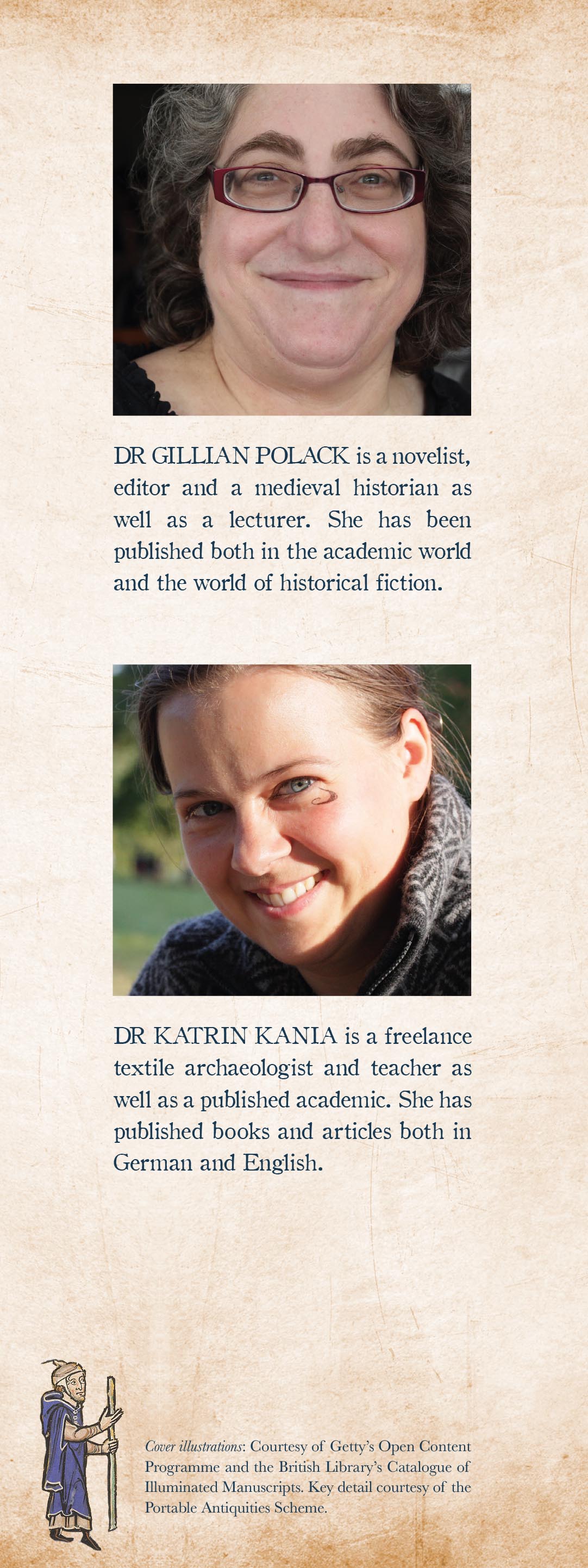
Exhausted me on 8 January 2016

Read Full Post »

Gillian Polack is the author of many things fiction and non-fiction. She’s also a medieval historian, food history guru and a science fiction PHD, her second! I’m probably not doing her justice.

Anyway, I have Gillian here on my blog today to talk about her fab new book (Co-authored with Katrin Kania): The Middle Ages Unlocked- A guide to life in medieval England, 1050-1300.

Gillian and KatrinThis book is a fab resource for writers who want to write about medieval societies and for lovers of history.

How did you come up with the concept for the book?

I didn’t come up with the concept: my friends did. A group of people on a now-defunct email list said “We so need a book that tells us about the Middle Ages in an easy-to-read way that’s properly researched and can be used by writers.”  The friends were from the UK and US and Canada and Australia. Some of them were writers. Some of them were tired of writers not quite understanding things. They got me involved…

How did you two authors find each other?

In a pub! Seriously, we were introduced to each other by Shana Worthen at the big Medieval Congress in Leeds in 2011. It was an international conference, but it was one for Medievalists, and it always has at least one pub. For the record, I was drinking a rather nice English cider. Shana knew about the Beast and I asked her if she wanted to see it. I whipped out my trusty netbook and Katrin read over her shoulder and somehow ended up being drawn into being co-author! Since then, I have taken to carrying all my work with me, everywhere, just in case I meet someone who needs to share it.

Did it take a long time to develop the scope of the book?

It took years and years. Because writers and the general public said “We need this book” I had a good general concept about what kind of topic would be covered and that the approach needed to be easy to read but go into as much depth as was possible in a general work. We (the various people involved at different stages) played with several approaches and a wide range of subjects. Tamara Mazzei still has a timeline she developed for an earlier iteration, for instance, and I still have a list of plants and their uses. A couple of writer friends tested beta versions for their fiction and I could tell how effective different elements were by how they wrote and what further questions they need to ask. By the time Katrin came on board the topics were mostly settled but it covered both France and England. It focussed on England quite late, because it was a better fit for British publishers, but we refined approaches to the bitter end. The Middle Ages Unlocked wasn’t easy, but it was most definitely worth the effort, as I’ve already seen it being read and used by those same people who asked for it, all those years ago.

How long did it take from the concept to completion?

About fifteen years, all up. I’m still surprised when I see it in bookshops, because it’s had the longest development and most work of any of my books. Given how prone I am to research, this is worrying.

At 384 pages it looks to be quite an undertaking! Did you have to  leave stuff out?

We left out more than we put in.  Several times the amount that went in, in fact. The perfect version (from my point of view) would have been enormous. We followed our publisher’s guidelines, however, for those guidelines were there with much good reason behind them, and we wrote the best possible work that was actually publishable.

How did you go about finding a publisher?

We approached publishers that we had contacts with and that were a really good fit for our project. One of them suggested Amberley, for they felt that Amberley was an even better fit than they were: if ever I meet that editor I will buy her a drink, for she was both generous and correct.

I  notice a lot of writers gave you cover quotes. Do you see the book as a resource for writers only? Did all that bad fantasy drive you to spend years of your life developing this book?

It was first designed for writers, but it’s grown to be a volume that’s for the general public. And bad fantasy had nothing to do with it! I’ve taught history to writers for two decades and so it was quite natural for writers to say to me “Why don’t you pull together a book that presents this to a wider audience?” This means the demand came from writers who wanted more, not writers who were lazy about their world-building. I find this very reassuring.

Initial S: The Lord Appearing to David in the Water; Bute Master (Franco-Flemish, active about 1260 - 1290); Northeastern (illuminated)  France Paris (written)  France; illumination about 1270 - 1280; written about 135 - 1375; Tempera colors, gold, and iron gall ink on parchment; Leaf: 17 x 11.9 cm (6 11/16 x 4 11/16 in.); Ms. 46, fol. 92

Initial S: The Lord Appearing to David in the Water; Bute Master (Franco-Flemish, active about 1260 – 1290); Northeastern (illuminated) France Paris (written) France; illumination about 1270 – 1280; written about 135 – 1375; Tempera colors, gold, and iron gall ink on parchment; Leaf: 17 x 11.9 cm (6 11/16 x 4 11/16 in.); Ms. 46, fol. 92

What was the favourite thing you did in this book?

I was really happy to pull together what was known about dance. I’d been meaning to do this for myself and the book gave me an excuse.

What was the hardest section for you? (I noticed at the Q&A you said there were areas where you had a lot of research and some was more general)

The hardest section as the one that dealt with all the bad things in society. It could have had a lot more detail, but neither Katrin nor I could deal with any more detail about people being hurt!
I guess there are things we will never know about the past.  How does that you make you feel as a historian?

Perfectly normal. Historians are always aware we can’t know everything: it’s part of the job description.  History is an interpretative discipline, not one where absolute knowledge is possible.

Do you have other historical projects in the pipe line or is it fiction for you from now on?

I’m nearly finished a book specifically about how writers use history in their fiction. it will be published next year. And I’m starting work on a novel set in the seventeenth century. I’ve already sifted through hundreds of primary sources (over 800) to sort out how I will  deal with various aspects, but the real work on it will hopefully take place next year. I’m also doing work on other peoples’ writing: there’s an article by me in the next issue of Foundation, for example.

Where can people buy the book?

In Australia, ask your local bookshop to get it in: since it’s only just been released here, most shops don’t know about it yet. Online, almost every shop stocks it. In the UK, try Blackwell’s or ask your local bookshop to get The Middle Ages Unlocked in. In the US, either online shops or wait until October, for it won’t be released in the US until then. If you can’t wait, online shops in the UK will sell it to you.

Easiest way is to buy from Book Depository Link here.

Gillian book cover
Thank you for visiting the blog today, Gillian. Mazel Tov!

Thank you for having me!

Read Full Post »

I’m so happy to be able to bring this interview to you. I met CS Pacat at Supanova. We were on a panel together on our early lives as writers and I was fascinated with her story and I thought you would be too. Hers was a non-traditional story and she has had amazing success. Read on!cat

Thank you so much for agreeing to be interviewed on my blog today. I think your publication story is fascinating so I wanted to share it with others.

When did you first think about being a writer and what did you do?

As long as I can remember, I wanted to write books. I took creative writing classes, but if I’m being honest, they weren’t especially helpful, particularly when it came to teaching fundamental skills like plotting or character creation. I wouldn’t necessarily recommend them for anything other than a place to meet other artists and form a support community, and a way to begin taking yourself seriously as a writer, “I commit to writing”. (A friend once described it brilliantly: In a cooking class, you are taught how to make a soufflé during the lesson. In a creative writing class you’re usually asked to make a soufflé at home without a recipe, then bring it in to class, and then everyone critiques the soufflé. But at no point does anyone ever actually teach you how to make a soufflé.)

What inspired you to write fanfic and when do you start writing original fiction?

I wrote fan fiction throughout my teens and into my early twenties, and I have an enormous respect for fandom as an artistic space. I think what drives the fanfiction writer is a desire to reclaim a text, to explore its themes, in a sense to make it your own. This can be powerful and important, particularly when those reclamations involve queering a heteronormative text, or the insertion of fantasies that until recently have not been given much expression in mainstream works, such as the power fantasies of teen girls. It’s a way of offering alternate narratives and diversifying what can sometimes feel like a narrative monoculture.

I started to write original fiction because I wanted to tell my own stories and to be able to craft the kinds of characters that I love. Captive Prince was my first complete original novel, but I did have a few false starts with original fiction before that, learning the skills that were different to fan fiction.

What made you publish for free on the web and then self-publish?

When I started to write Captive Prince there was nothing that was really like it in the mainstream commercial space. But I knew that online there was a vast community of readers and writers who were reading and creating online in part because they were seeking something that they weren’t finding on commercial bookshelves. It was also an incredibly accessible space with no barrier to entry, and so I started to write Captive Prince, and as I wrote, I posted each chapter to my fiction blog.

Captive Prince ran as a free web serial for several years before I decided to self publish the story. I did it mostly in response to requests from readers for a paperback copy of the books. It was really the support and enthusiasm of the online readership that gave me the confidence to take that step.

What did self-publishing feel like?

Equal parts rewarding and terrifying. There is a very steep learning curve, because as a self-publisher, if you want to produce a high quality book, you essentially have to teach yourself all of the skills, from typesetting to art direction to project management. You have to hire cover artists, editors and proofreaders, while learning how to use InDesign and create layouts for paperbacks, produce ebooks, and so on.

It felt scary to do at the time, but it was also incredibly empowering, because you’re learning everything you need to know about publishing, and it opens up new avenues and gives you control over your own writing.

Did big sales happen all at once or was it gradual? How much of that was due to your previous following from the web?

My online readers were incredibly enthusiastic and supportive, they wanted to buy the self published release, even having already read the free version. As a result of that, Captive Prince shot to the top of Amazon lists within a day or two of being released. It then took a few weeks for the generated word of mouth to spread and create buzz in places like Goodreads, and from there another week or two before the Captive Prince started to garner attention and reviews from mainstream review sites like Dear Author and USA Today. So, in a sense it happened in two “waves”, the first from my online readers, and a second when the book hit the mainstream market. Now that Captive Prince is being published by Penguin, it’s reaching a new audience again.

It must have been amazing to be contacted by an agent wanting to sell your work to a major publisher. Can you tell us a bit about that?

It was incredible, amazing, unbelievable. I was approached by a New York agent basically saying, “I’d like to represent you. I think we can sell your book to a big six publisher in New York.” I didn’t think it was possible but signed with her in the spirit of pure optimism. We ended up with two offers, the most robust of which was from Penguin. Now Captive Prince is being published in multiple countries and translated into multiple languages – it’s been an incredible year.

From your point of view, what are the advantages of self-publishing?

Having been through both processes, self publishing and commercial publishing, I remain a huge advocate for self publishing. I think it offers writers a way to produce a book that wholly represents their best vision of their work. You don’t have to rush or make artistic compromises due to deadlines. You can hire the designers and editors that you most want to work with, devote as much attention to your book as it needs. There are also financial advantages, in that your royalty percentage is much higher. Realistically, a commercial publisher will always be making commercial decisions, which are not always the best decisions for a book artistically.

Conversely, what are the advantages of having a major publisher behind you?

The biggest advantage of a major publisher is legitimacy. Although the perception is changing, there is still a stigma attached to self publishing. A major publisher opens so many doors, and dramatically expands the possibilities for a book, from getting it stocked in major bookstores, to garnering attention from mainstream press.

The other advantage is of course access to world class editorial, and the support of a team. I’ve worked with so many inspiring, talented people at Penguin. Allowing them to support the book frees you as the writer to just spend your time writing, which is a incredible privilege.

Do you have any advice for aspiring writers?

I have two pieces of advice. The first is that to write a book, you have to transform yourself into the person who can write that book. So I’d say figure out what is preventing you from writing, whether it is time, procrastination, or problems with plotting, or coming up with ideas, then dedicate time to solving those problems, making the changes that you need to make.

The second piece of advice is to persevere. Writing a book is difficult and there will be a long period of time where you can’t do it, your writing isn’t working, and the book just isn’t a book yet. Everyone goes through this. And everyone I know who has persevered through this stage has emerged with a manuscript, then gone on to publish it. So hang in there: it will happen.

Blurb
Damen is a warrior hero to his people, and the rightful heir to the throne of Akielos. But when his half brother seizes power, Damen is captured, stripped of his identity, and sent to serve the prince of an enemy nation as a pleasure slave.

Beautiful, manipulative, and deadly, his new master, Prince Laurent, epitomizes the worst of the court at Vere. But in the lethal political web of the Veretian court, nothing is as it seems, and when Damen finds himself caught up in a play for the throne, he must work together with Laurent to survive and save his country.

For Damen, there is just one rule: never, ever reveal his true identity. Because the one man Damen needs is the one man who has more reason to hate him than anyone else…

CS Pacat - book cover - Captive Prince

You can find out more about CS Pacat on her website http://www.cspacat.com

Read Full Post »

This is a long time coming. I’m so sorry to be so distracted to write this up. In my own defence I did write up the Ditmar awards straight away!

I headed to Swancon a few days early to hang out with Glenda Larke. We came into Perth on the Thursday night and attended the guest of honour dinner. It was a great meal and I got to meet a few of the committee and the guests of honour, John Scalzi, Kylie Chan and Anthony Peacey. The committee had a really cool thing going. They moved the guests of honour around with each course of the meal so we got to talk to all them over the course of the evening.

This photo so Sarah Parker, Swancon programmer and Glenda Larke at the GOH dinner. Did I mention one of the best things about conventions is socialisting?

Sarah Glenda GOH dinner

The Hugo results were due out while we were at Swancon so Glenda and I got a crash course on the Sad and Rabid Puppies. The next morning we saw the Hugo nominations and continued our education.

On Friday, I had a number of panels. The first one was Food as Worldbuilding, which was really interesting panel. Food is such an important part of our lives and it was stimulating to think about how what our characters eat tells the reader about the world, or even what they don’t eat. Even rituals about food, either religious or other were discussed. I know have a lot of ideas from this panel that I can put into future writing.

lounging about

My second panel was Terrors of the Second Draft, which was fun. The other panellists had different views-I think I was the only one to find second drafts hard work. It is taking a draft, crafting it, to make it into a book and that takes work, consistency and day after day of sitting in front of my computer. Maybe I’m hyperactive but that’s hard sometimes.

My third panel that day was The End of the Printed Page: Are Books (as we know them) Dead? This was a wide ranging discussion covering selling ebooks, piracy and print books. No, we didn’t think books were dead.

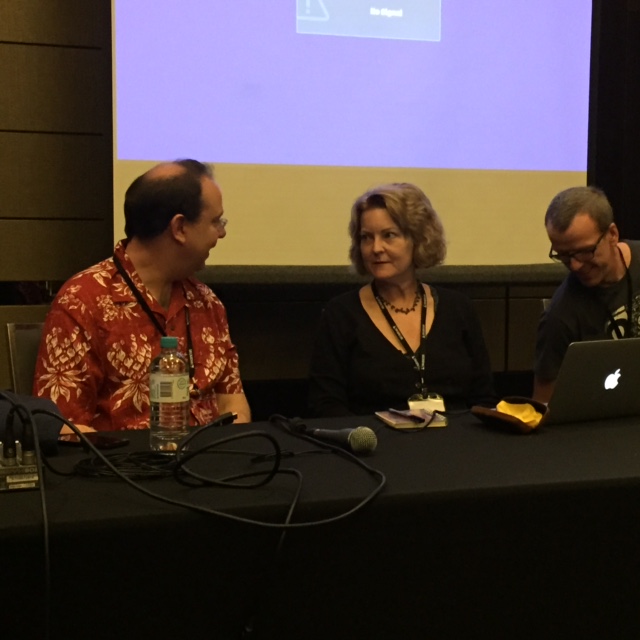
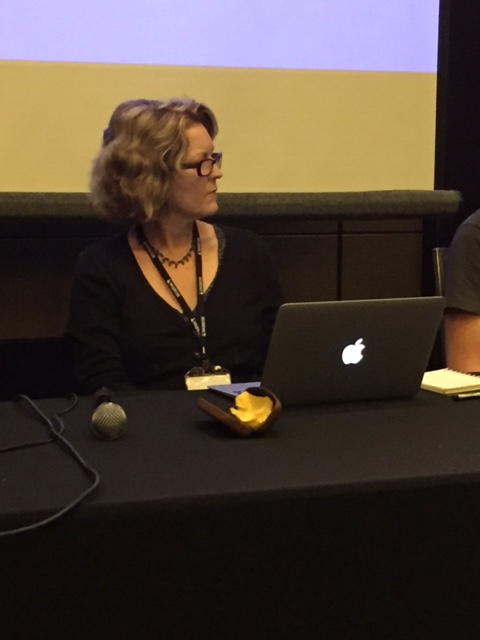
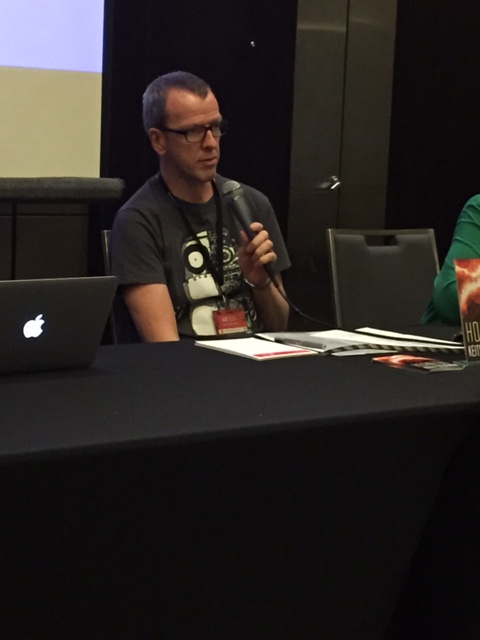
The audiences in the panels were really interested and well informed and were a joy to talk with. I took some photos of the panelists in other panels I went to.

SwanconKeith

John Scalzi, Guest of Honour Speech

John Scalzi, Guest of Honour Speech

The convention had a lovely vibe and it was quite surprising to me that I didn’t know most of the people. I haven’t been to Swancon for ten years. It is also a vibrant SF community. It was great to see the committee had some many people supporting it.

Anthony Peacey picture below hosted and organised the first Swancon. I had to pleasure of listening to his speech on listening, technology and the changing world.

Anthony Peacey, Guest of Honour Speech

Anthony Peacey, Guest of Honour Speech

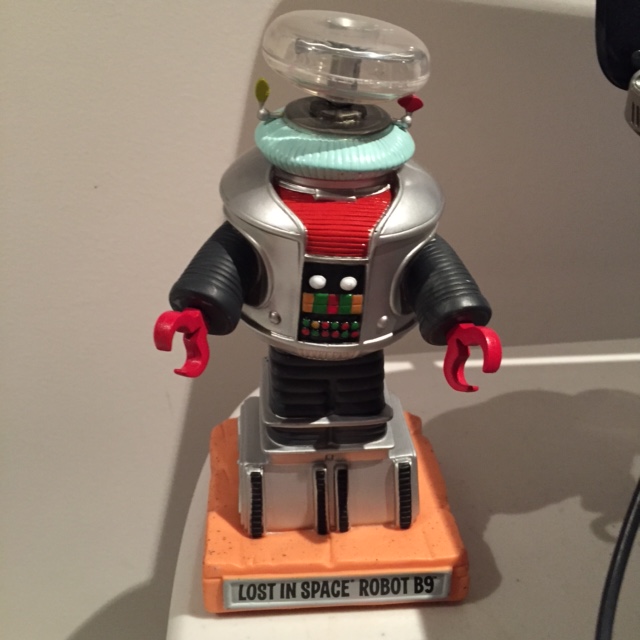
I visited the dealers’ room on Saturday. It closed on Sunday and Monday. I raided the small press tables and also bought a Lost in Space Robot for me and a talking Bender for Matthew. I already posted about the Ditmars so I’ll skip that.

Lost is Space Robot.

Lost is Space Robot.

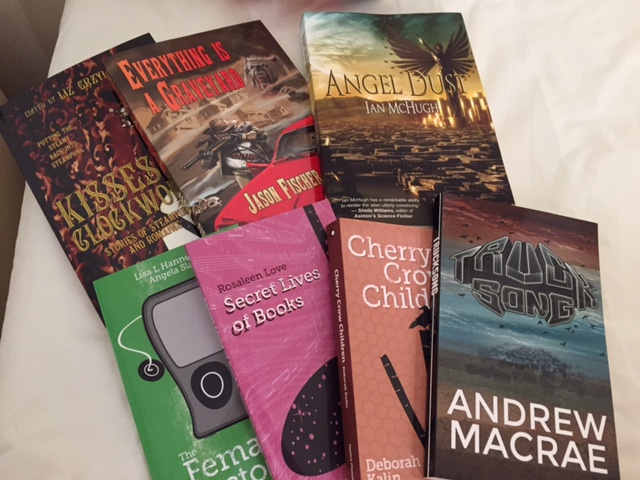
Book haul. One of the best thing at a con is picking up books, particularly small press books that aren’t easilybook haul

Scalzi and Cat Sparks at the Climate Science Fiction panel.

Scalzi and Cat Sparks at the Climate Science Fiction panel.

available in bookstores.

Cat Sparks talking clifi

Cat Sparks talking clifi

Keith Stevenson on the climate science fiction panel

Keith Stevenson on the climate science fiction panel

Glenda Larke talking climate science fiction

Glenda Larke talking climate science fiction

I attended some great panels. John Scalzi’s guest of honour speech was entertaining. He was talking to us while waiting to start his talk and then was 20 minutes into it before realising it had already started. Kylie Chan’s guest of honour talk was also fab and Anthony Peacey’s.

So many interesting panels. Keith Stevenson talked about constructed languages in his panel, using his novel in progress.

The panel I had the most stress about was Spec Fic Writing – Science Portrayal in Fiction on Sunday. It was a panel with John Scalzi, which is awe inspiring to say the least. Tsana was also on the panel and she’s a scientist. But I stressed for nothing. It was a really great panel and there was a lot of hand waving going on (people’s use of science in their writing). The conversation also covered some movies, particularly Interstellar.

The hotel, Pan Pacific, was lovely. Very flash. There was food available for lunch at a reasonable price. So well done to the Swancon 40 committee. I hope to go to a Swancon again in future.

Great opportunities exist at SF conventions to socialise and talk to other writers.

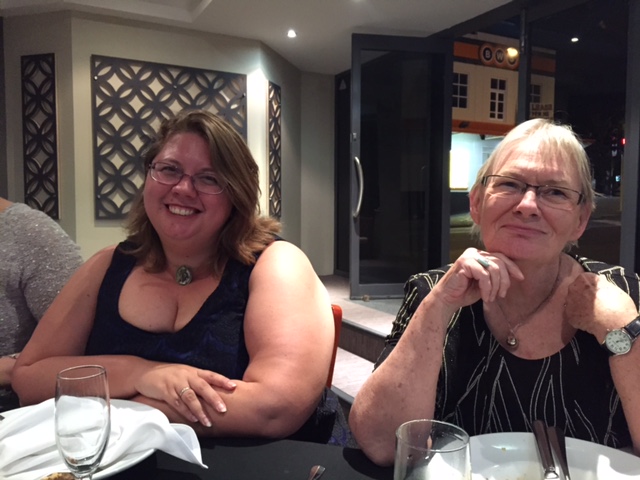
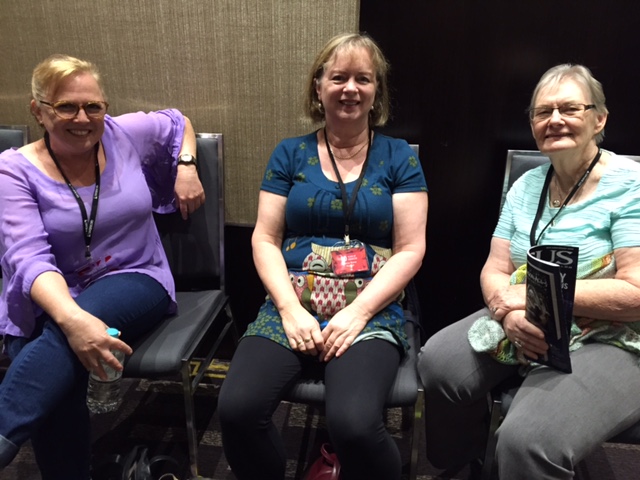
A few photos from dinner or just hanging.

Glenda Larke and Amanda Bridgeman

Glenda Larke and Amanda Bridgeman

Amanda Bridgeman

Amanda Bridgeman

Glenda Larke and me

Glenda Larke and me

Read Full Post »

It is my pleasure to have Jane here today. When I first met Jane I was an aspiring writer with more zeal than talent or craft. Jane made an impression on me as an author who was happy to share her experience and was very gracious and friendly. Jane is a prior winner of the Aurealis Award for fantasy novel and remember thinking when we me met, wow, just wow. I managed to talk her into coming to Conflux in Canberra… maybe more than once.

Jane Routely

Jane Routley

Jane has provided some wonderful and insightful answers to the interview questions. Some of her habits I can totally relate to.

Your new novel is coming out. Can you tell us a bit about it?

In The Three Sisters, a woman warrior and a mage, who refuses to grow up, traverse an oppressed land in order find a kidnapped sister. Elena, the missing sister, has the curse of Fatal Beauty which means those who see her desire to own her. Unbeknowst to the sisters hidden powers are manipulating their destinies.

The Three Sisters was published some time ago by Harper Collins U.S. under a pseudonym. Clan Destine Press have been kind enough to bring it out as an ebook under my own name so that it can be read in Australia.

There is an unpublished sequel called The Melded Child which I very much hope Clan Destine will bring out in the next year or so.

Jane tell us a bit about yourself (where you live, how long you’ve been writing, previous publications etc)

I’m from Melbourne although I spent seven years in the 90’s living in Frankfurt and Copenhagen. I was a trailing spouse when I lived in Europe so I started writing then. I’d always wanted to be a writer so I figured it was time stop making excuses and knuckle down. I’ve published 4 novels and a number of short stories. Two of the Dion Chronicles won Aurealis Awards for the best fantasy novel in the year they came out.

Print edition from Ticonderoga Publications through Indie Books Online and

Ebook edition.

I had a big slump in the early naughties. Changes in the publishing world made it very difficult for a while and I completely lost my confidence. I never stopped writing but I’m back to finishing things for publication again.

Jane what do you find so attractive about the fantasy genre? In what ways do you find it fulfilling?

I’ve always loved history but I find historical fiction a bit limiting. You’re stuck with an already set out world and if your characters are well known to history you know how they’re going to end up. I’m interesting in travelling in new worlds. At the moment I’m interested in exploring a world in which wealth is passed down through the female line, which is does happen in our world too, but not on a state level. I thought it hadn’t been explored enough in fantasy. I’ve also always loved fairy tales – the sense of wonder that comes from magic. You can do that in fantasy. I do like the way people like Kate Forsyth are combining history and fantasy in books like Bitter Greens.

What are you working on at the moment?

I’m working on “Shadow in the Empire of Light” at the moment. “Shadow” is about an orphan without magical gifts in a powerful family of mages stuck in the country managing the family estates with only an eccentric aunt and a telepathic cat for company. It’s about her breaking out to find her own way in the world.

What is your writing process? (planner, panster, write every day, write sporadically, writers block etc).

As a writer I’m more of a panster than a planner. I know what I’m interested in writing about and I usually have some idea of where I want to go, but I never have much idea of how I’m going to get there. Every book I start I try to be more of a planner. It must save so much time and angst. I always get to a point where the book goes dead and I’ve learned that that’s because I’m trying to make the characters do something that doesn’t work. Gee it’s miserable when it happens. I wish I didn’t have to go through it. On the other hand I get bored easily, so perhaps it’s best if I don’t know how things are going to go.

As a panster, I know I write stories and books to see what’s going to happen if… What if a woman was irresistibly beautiful as Elena is in The Three Sisters. What is it like to colonized? This is a big theme in Australia History. So I set up these conditions, invent these characters and just keep asking what if… until I get closer and closer to the story that feels right for me. It’s a bit like being an archaeologist or painting an oil painting.

I try to write most days for at least an hour, two preferably. I work part time so it makes that easier. I don’t wait for inspiration. I just sit down at the computer and stay there until my time is up. If I can’t write I sit there and feel bored. Sometimes I get stuck but even then I sit down. I’ve never had writers block really badly though I have had some really miserable times sitting at my desk. If I can’t think of anything to write I write in my diary (usually a sadly neglected file)

Elizabeth Jolley once said that one way to avoid getting stuck was to leave the previous day’s work slightly unfinished so that you’ve got something to go on with when you sit down next. I find that always works for me.

What part of writing do you find hardest?

Despite the fact that I’ve set up my life to be a writer, I still find sitting down to do it the hardest thing of all. Almost anything is easier than writing. There are still those little voices in my head saying that I’m wasting my time and that nobody wants to read this stuff. I’m very achievement orientated and signs of achievement come very slowly when you’re a writer.

There’s much more instant gratification to be had from doing the garden or having morning coffee with friends or watching eight hours of Buffy the Vampire Slayer. And much more fun chatting on social media. That why I make myself sit down for a couple of hours on a computer that’s not on-line (yes such things do exist.) Otherwise I probably wouldn’t write at all and I’d get very down and grumpy and not know why. I regularly need to remind myself that if it makes you happy, it’s worth doing even if nobody else thinks it’s worthwhile. But I write to be read which is why I finish things.

What do you prefer, drafting the story or revising and reworking?

I find the drafting really really hard work and as I said earlier I sometimes get stuck. Plotting is the hardest part of a story. I really enjoy the reworking and the revising because you have the certainty of knowing where you’re going and you have the pleasure of adding texture to the world that can really make it sparkle. I actually go through each novel three times at least. Once to do a very detailed first draft and the second time to add the flesh to the bones and the third time to polish the prose.

What do you plan to work on next?

I’d like to do a sequel to Shadow in the Empire of Light though ideally I should try and find it a home before I start. I’m also half way through a man on man time travel romance which I started years ago and have been working on on and off for years. I’d love to finish that.

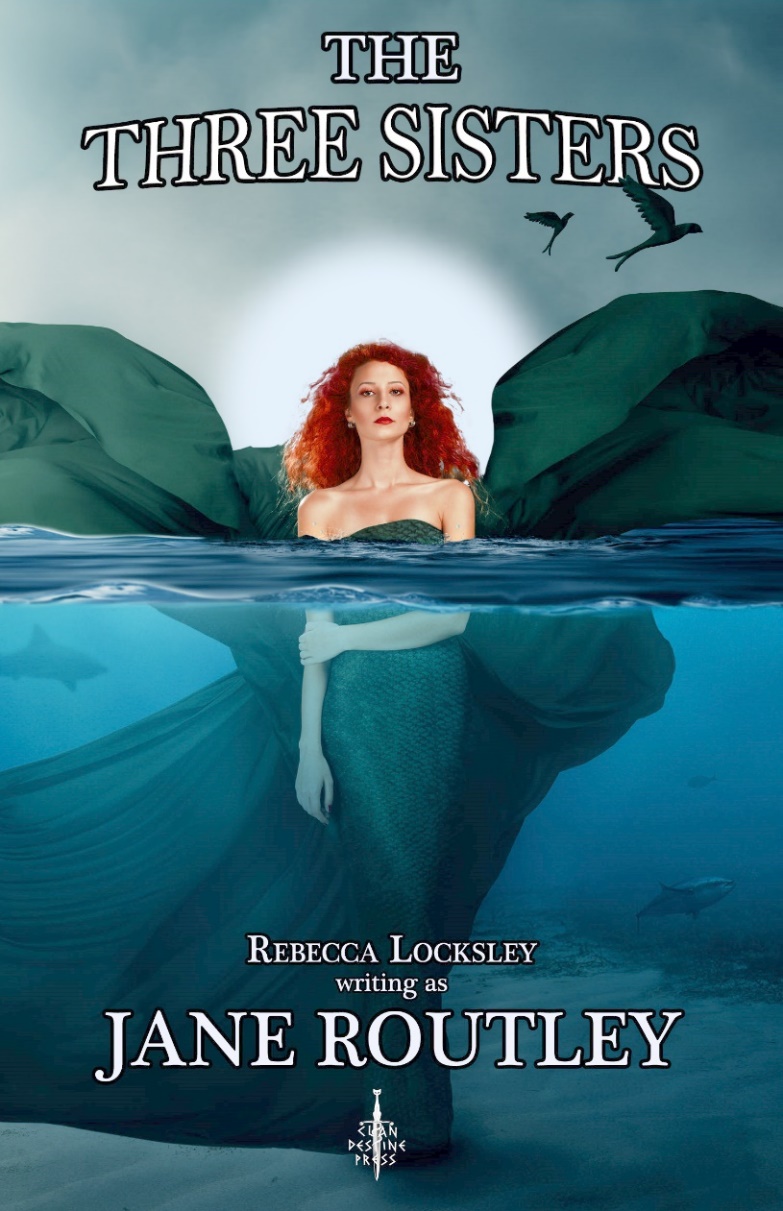
The Three Sisters book cover

The Three Sisters book cover

Here is the blurb!

“A captivating read” Sara Douglass

Three sisters, estranged from the Society they are destined to save. Elena, more beautiful than any man can resist, is kidnapped, her destiny controlled by the men who desire her. Yani, warrior woman, brave, strong, able to pass as a man, who will do anything to find Elena. Marigoth, powerful female mage, determined never to grow up, equally committed to finding their missing sister. In a country oppressed and cruelly ruled, the fate of many people lies in the unsuspecting hands of these three women.

Published by Clan Destine Press link here.   Ebook format. Available also in kindle or mobi

Price AUS $6.79

ISBN  9780992492595

Thank you so much Jane for elaborating on your writing processes.

You can find Jane online at www.janeroutley.com.au and

https://www.facebook.com/jane.routley.5

https://www.goodreads.com/author/show/333390.Jane_Routley

Read Full Post »

Now that Shatterwing and Skywatcher are out there, I was thinking that there are things that I’ve written in the Margra setting that will never see the light of day. Maybe they were never meant to, but  I thought I’d share with you a scene from Salinda’s past. This was how she found Plu, the dragon as a hatching. You will also meet Mez, who had already passed on by the time of Shatterwing. It’s unedited and I wrote it about 2009, so six years ago.

Deleted scene, Salida finds Plu

Salinda ran, her bare feet throwing up dust as she left the curved perimeter of the prison vineyard. The lure of freedom beyond the dragon hatcheries compelled her forward. No guard would dare to follow her, fearing death on the plains or in the treacherous geothermal wastelands. Salinda knew that there was a way through for her. Had to be.

Glancing over her shoulder, she saw Mez, her elderly helpmate, dart out of a vine row and begin loping after her. Salinda groaned and increased her pace. Why did the old man follow her? What business was it of his whether she went or stayed?

Ahead rose the pockmarked ridge where the dragons laid their eggs in crevices, seeking the warm, sulphurous mineral deposits to nurture their young. If she made it past that, then there was a chance.

Putting her head down, she strove for a burst of speed, until the shadow of the ridge fell on her. Then she lifted her head to assess the rock face, choosing the best way to ascend. Veering to the left, she leapt onto a large boulder, gripping it with her toes. She made it up over the top and then scrambled up a section of red-brown dirt, grasping at protruding roots and clumps of vegetation to assist her climb. Dirt rained down on her head and shoulders, with some landing in her mouth. She spat out the grit and continued upwards, using a rock as a foothold to push her up to another level.

Mez called out. Looking down she saw that he had stumbled at the base of the boulder, his chest heaving. Maybe now he would cease dogging her steps but she doubted he would. Concentrating on each hand and foot hold, she continued to climb. Above her head, she felt a long flat stone. Hopefully it was a ledge where she could take a breather.

Then Salinda felt it, a disturbance in the air behind her. She stilled. Over her raspy breathing, she heard the sound of wing beat.

Her gaze slid to the right and then to the left. She was careful not to make any sudden movements. In her peripheral vision, she caught sight of the dragon. Exposed on the ridge face, Salinda assessed her options. To escape she could drop to the ground, risking possible death and certain disablement as the fall would snap bones and crush internal organs. The dragon was likely to devour her in one swallow but there was a chance she could avoid the encounter. A very slim one.

With her hands over her head, she further assessed the lip of the ledge. The dragon screeched as she heaved her body onto it. Frozen for a moment, she dangled there. The dragon did not strike so she moved, leaping to her feet and swinging round to face the dragon in a crouch, in time to see the dragon pull up, exposing the smooth scales of its under belly. A small reprieve. The rock face narrowed above her forming a cleft, making it difficult for the dragon, a female, to snatch her easily. It was clear though that on the next pass she would gain footing and take her.

The dragon’s approach mesmerised her as it swooped back, dark green and purple head slanting towards her, grey claws outstretched to grasp the rock face. Salinda took a step back, hoping for the comfort of the wall behind her. Her feet dislodged fist-sized rocks, which she nudged out of the way. The beast came at her—pointed snout, lower jaw ratcheting wide, preparing to rend. Instinctively, Salinda raised her arms over her head and stepped back again. The hot, rank breath of the dragon made her recoil. She stepped into nothing—a hole and slipped down, loose scree and stones assisting her slide.

Salinda landed hard, the impact forcing the air out of her lungs and leaving her with arms and legs splayed. She had fallen into some sort of fissure or cave. The dragon’s frustrated cry vibrated the air around her as it clawed at the rocks and soil around the opening.

Salinda dragged in a painful breath, fearing she had broken a rib. Foul dragon’s breath poured from the snout hammering at the opening, as it moved closer and closer. Helpless, Salinda lay there watching the entrance enlarge, as chunks of rock tumbled to the ground and sand hissed into piles. Then she heard another sound, muffled and faint—a man’s voice calling out a chant of some kind. A wave of dizziness hit her and she lost consciousness.

When she came to it was silent in the cave and her hair was crusty with dust. After spitting blood, she realised that she had bitten her tongue and wiped her lips with the back of her hand. Her limbs were stiff and sore but the pain in her side had eased somewhat. She could move. Light pierced through various cracks overhead and she could see it was a short climb to the opening of the shallow cave. Wiping sweat and dust from her forehead, she froze. There was a sound in the cave—a scratching, pecking sound.

Crawling on all fours, Salinda scouted around the nooks and crannies, searching for the source. She found the shell first, broken bits of grey, speckled with green and purple. Tumbling about was a newly-hatched dragon, shell still sticking to its head. It was an ugly thing, thin wings adhering to its gooey hide, knobbly, dark-purple head, surrounding an over sized snout.

Her first thought was to find a rock and smash its brains out. It would save the world from another human-eating dragon. She watched as it fumbled about helplessly, then it gazed at her with black, glossy eyes and mewed. A dragon had almost taken her. Her life had been spared and, to repay in kind, she would spare this creature’s life. Instead of greeting it with violence, she stroked the hatchling, removing the fragment of shell at the same time. It made a sound in its throat plu, plu, plu. Salinda grinned.

A rock tumbled down to the cave floor. Salinda looked up to see Mez struggling through the opening. “Salinda?”

Salinda frowned, then let her anger melt away. She knew the old man cared for her in his odd way, but couldn’t help resenting his interference. “Down here. I’m safe.” Her voice carried a tone of resignation that she could not disguise.

Mez gathered his dirty robe around his skinny legs as he made his way to her. Sweat made his face shine amidst the patches of dirt. “Well, my girl. That was a close call. Ready to come back now?”

Salinda tried to stare him down, but after a moment, she looked away and nestled the hatchling in her dress. Sitting cross-legged on the ground, she rubbed a thumb over the scar on her ankle. The scar caused by a year in chains.

“I’m leaving this place. And before you begin lecturing me…I don’t care if I die trying.”

Mez looked around him and sat down on a rock, resting his arms on his knees he assumed his lecturing pose. “Then you will die for certain and sixteen years is too early to die for nothing.”

“It’s not for nothing and I said I don’t care. Anything is better than internment here. You may choose to end your days here fermenting wine, but I have better things to do.”

Mez looked around the cave. “Say you made it across the plains and back to Sartell or wherever you wish to go. Say you win your revolution. It means nothing.”

“Nothing?”

Mez chuckled in that horrible knowing way. “Your revolution is pointless and I’ll tell you why.”

Salinda continued to stroke the hatchling, which apparently Mez had not yet noticed.

His eyebrows cinched together. “I hope you know me well enough to hear the truth in what I say. We are a dying people, so it matters little which government is in power or which rebel group wins through.”

Salinda clenched her right hand. In her left hand, she held the hatchling, who chose that moment to mew. Mez lifted a fluffy white eyebrow, but did not comment on the noise. “You would say anything to keep me here.”

Mez chuckled. “Not anything.” Then he shrugged. “Well…perhaps everything and nothing.”

“You say we are dying?”

Mez’s brown eyes hinted at sadness. “Yes, all of us. We have always been dying. When Ruel moon split and fell to Margra, all should have perished. Yet some survived. Whether this is by accident or design I am not sure.”

Salinda did not like what she was hearing. “You speak in contradictions. I feel perfectly alive.”

Mez leaned closer. “Of course you do. What did I give you for breakfast this morning, mmm? The first of the new season’s Dragon Wine.”

Salinda rubbed her forehead, dislodging dust. “So I drank wine. So what, all the prisoners got some. Even the lowliest person in the poorest village receives some dregs of wine.”

“That’s it exactly. Everyone everywhere drinks Dragon Wine.”

Salinda’s head was pounding. All this talk of wine was making her thirsty. “You’re not going to tell me that by growing grapes we keep everyone alive are you?”

“Yes. I am. We live through the grace of dragons, through the medium of Dragon Wine. By tending these grapes and making wine you, me, we make a real difference. The wine keeps us alive by virtue of the power of the dragons. That I know.”

Salinda screwed up her face. “No. No. That’s not possible. That’s not even logical. Dragons kill humans. Humans kill dragons. Why would they help us survive? It makes no sense.”

Again Mez smiled. “I did not say they do it willingly. It is a by-product of their existence. A secret known to a few. A dangerous secret, too. For he who controls Dragon Wine has the power of life and death over everyone.”

The hatchling was growing restless. Salinda pulled it out, stroking its head softly.

“A hatchling?” Mez whistled softly as he leaned in for a closer inspection. “You are full of surprises today.”

“It must have fallen through one of the cracks.”

Mez chuckled. “Newly hatched I’d say. Risky keeping it alive, but it appears to have imprinted itself on you. Perhaps, you have found a friend for life, one that may come in handy in future. Mmm…I suppose we could tend it for a little while and then reintegrate it into the nest. Any longer than that and we could not conceal it.”

He felt in his pockets and pulled out some old bread. The hatchling caught it deftly and swallowed it in one bite. Salinda smiled at it. Holding it calmed her.

“So this is not a creature of death but of life?” she asked holding the hatching out as it squirmed in her hands.
Mez nodded. “You did right to let it live.”

Salinda let a breath out slowly and looked at the aftermath of the dragon’s attack on the cave opening.

“That was you I heard before, wasn’t it?”

Mez raised an eyebrow and feigned innocence. “Me? What do you mean?”

“You spoke to the dragon, made it go away.”

“Now you are being fanciful.” He stood up and turned around as if to make his way out of the cave, but there was something there in Mez’s eyes, something that made her breath catch.

“No, I’m not. It makes sense. That she dragon almost had me. One more moment and I was dead. It had almost breached the entrance.”

“Salinda.” With his back to her, he shrugged his shoulders.

“No. I want the truth, old man.”

“Yes, it was me.” He turned back to her. “I speak dragon tongue. Though they are not words as such, they are sounds that shape images the dragons understand.”

Salinda had been reasonably well-educated and had never heard of anyone speaking to dragons. With her gaze locked with Mez’s, she stroked the hatchling again and lifted it high. “I’m going to call him Plu.”

Mez hesitated. “Yes, why not? Te Pluan Nuresh, which equates to Plu that fell from the nest.”

Plu nuzzled her palm, seeking more food. She liked the sound the hatchling made when she stroked it.

“All right then,” she said. “What do baby dragons eat?”

Mez smiled. “Meat mostly. You’ll have to sacrifice your ration for a while. You are coming back with me?”

“Yes, for a little while. I’m not slaving here until I drop and I’m not giving up my ideas about revolution…but there is more to you than I thought, old man.”

Shatterwing and Dragon Wine available in ebook and print.

DragonwineLinks from the publisher’s website here.  Book depository have them both in print too.

Read Full Post »

I’ve been thinking through the notion raised in the first review of Shatterwing that an editor or copy editor made a mistake on  because it contains ‘sexual brutality’, that they somehow overlooked this, or that they failed to warn me in some way or that it should have been removed before publication.

I think there is a confusion here about what an editor and copy editor do. To my mind, editors assist in improving the content, the expression of the ideas but are not censors of content. I believe a commissioning editor exercises that role when they decide to commission a work or not or accept a work with a proviso…say I’ll take this if you change x & Y and or Z. They may do this for a variety of reasons. This was not the case. Shatterwing was acquired as a dark fantasy and it deals with some gritty and less than savoury aspects of the world setting.

The inclusion of any such content is entirely my decision. My name is on the cover after all.

I wrote Shatterwing (and Skywatcher) a long time ago, when some pretty nasty things were going on in the world. To some degree the content is me processing this through the narrative. When I was doing the copy edits I did stop, think and question. Some parts of the narrative are not comfortable to read and I may have deleted a line here or there voluntarily, but I didn’t change anything materially.

I have no issue with people liking or disliking this aspect of the work as that’s entirely a matter of taste. I am grateful that people are willing to review and discuss the books.


Read Full Post »

Ah finally I get to drag Alan to my blog. I hear rejoicing!

Thank you Alan for answering some questions about your new book coming out with Harper Voyager.

Alan Baxter

Alan Baxter

Your new novel is coming out, Bound, the first novel in your new trilogy. Can you tell us a bit about it?


It’s the story of Alex Caine, a martial artist fighting in illegal cage matches. His powerful secret weapon is an unnatural vision that allows him to see his opponents’ moves before they know their intentions themselves.


An enigmatic Englishman, Patrick Welby, approaches Alex after a fight and reveals, ‘I know your secret.’ Welby shows Alex how to unleash a breathtaking realm of magic and power, drawing him into a mind-bending adventure beyond his control. And control is something Alex values above all else.


A cursed grimoire binds Alex to Uthentia, a chaotic Fey godling, who leads him towards chaos and murder, an urge Alex finds harder and harder to resist. Befriended by Silhouette, a monstrous Kin beauty, Alex sets out to recover the only things that will free him – the shards of the Darak. But that powerful stone also has the potential to unleash a catastrophe which could mean the end of the world as we know it.

The cover of Bound by Alan Baxter

The cover of Bound by Alan Baxter


Alan tell us a bit about yourself


I live on the south coast of NSW, among rolling dairy country. It’s beautiful, we’re very lucky to live here. I’ve been writing since forever, even as a kid I would make up stories and write them down. I’ve got three novels out now, a dark fantasy duology, RealmShift and MagesSign, and a short horror novel called Dark Rite, co-written with David Wood. My new trilogy is coming out from Voyager soon – Bound, Obsidian and Abduction. Bound is out in July. As for other work, I’ve had over 50 short stories published all over the place. I recently sold a story to Fantasy & Science Fiction magazine, which is like the holy grail for me. I’ve been trying to sell the for a decade and it’s always been top of my short fiction wish list. My full bibliography is here:


Alan what do you find so attractive about the fantasy genre? In what ways do you find it fulfilling?


I like the total freedom it gives us to explore any ideas we like. We can expand any concept well beyond the boundaries of the real world and that makes it much more exciting for me.


I know you have had a new addition to the household. How does having a baby affect your writing time?


It makes it much more precious! I wrote my first novel during my lunch hours at a 9 to 5 office job, so I trained myself early to make time whenever I could to write. Having a baby means I’m drawing on those experiences again.


What are you working on at the moment?


I’ve got a new novel under way – a standalone horror novel that’s a kind of organised crime/Lovecraftian thing with other stuff mixed in. It’s slow going with the baby, but I’m working on it while also doing edits and final proofs of the Alex Caine books.


What is your writing process? (planner, panster, write every day, write sporadically, writers block etc).


My process is to make time to write whenever I can. No one can find time to write, so you have to make it. I also run a martial arts academy, so I can’t write every day, nor do I think people need to. But you do meed to be a writer every day – that means always thinking about writing and stories and characters even when you can’t be writing. Always look at the world with a writer’s eye. I’m a bit of a hybrid pantser/planner. I make loose plans and outlines, then wing it from there. I’m always happy to throw the plan out the window and go wherever the story takes me though.

What do you prefer drafting the story or revising and reworking?


Drafting. Get that first draft down no matter how shitty it is. Get it finished. I make notes along the way of things I think will need looking at later. Then edit and polish and edit and polish and edit again until it shines.


What part of writing do you find hardest?


The middle of books. I hate middles!


What do you plan to work on next?


Not sure. I want to get this standalone novel finished and hope the Alex Caine books go well. Beyond that, I’m not sure!

Thank you Alan. Here is Alan’s contact details on the web.

Website – http://www.warriorscribe.com

Twitter – @AlanBaxter

Facebook – https://www.facebook.com/pages/Alan-Baxter/115972625096325


Book cover and mugshot attached.


Read Full Post »

As I mentioned in my previous post about the Canberra Writers Day, the Aurealis Awards were on in the evening. Usually my involvement with the AAs is as an event. I go because it’s a fab evening. I get to see friends and network with the industry. I also get to see the people win awards, some of whom I’ve never heard of so in that case it’s a discovery.

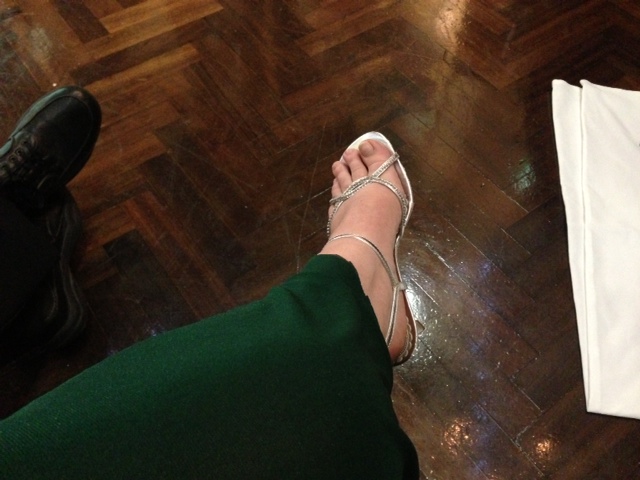
This year I was a judge in the Graphic Novel category and I was…wait for it…the trophy chick. I said to Nicole wouldn’t it be fab if I was your trophy girl instead of some young beautiful thing…and she fell for it. The downside to being the trophy girl is that you get to stand through most of the award ceremony in very uncomfortable high heels and my post may reflect some of that pain and maybe a photo of sore feet.sore feet

So the venue at University House turned into a charming venue for the awards ceremony. First there was the cocktail party where we all got to mingle (but not sufficiently for me to get around to everyone I knew or meet new people. Sorry Thoraiya I didn’t even get to say hello properly). I managed to get a glass of bubbly in before the fun began (because I was a dutiful person who went to rehearse with the presentation).

So a few snaps from the cocktail party. Alan Baxter and the lovely Rochelle Fernandez. Alan has a trilogy coming out with Harper Voyager, coming July. I have a book coming out with Harper Impulse under Dani Kristoff (http://danikristoff.wordpress.com for details). BTW I wasn’t out to take photos as Cat Sparks and Mr Fitzgerald were doing that.

Alan Baxter and Rochelle Fernandez

Alan Baxter and Rochelle Fernandez


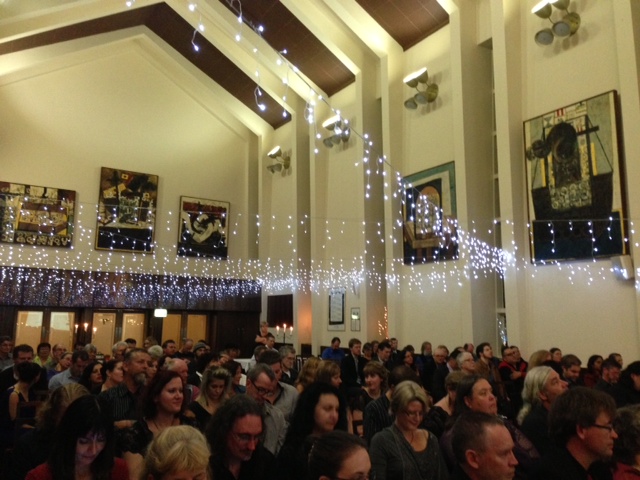
So here is the room, the Great Hall at University House done up with lights.

University House, Great Hall with lights for the Aurealis Awards Ceremony

University House, Great Hall with lights for the Aurealis Awards Ceremony

Here is a piccie of the candelabra that was next to me. They were placed around the room with real candles. Nice!

Candelabra Great Hall, University House, Canberra

Candelabra Great Hall, University House, Canberra


Then there were the two fabulous MCs, Sean Williams and Simon Brown who were very funny and who created fantastic tales of intergalactic woe and time spinning tales about the presenters.

Sean Williams and Simon Brown, Masters of Ceremonies Aurealis Awards

Sean Williams and Simon Brown, Masters of Ceremonies Aurealis Awards

And so there were a few surprises in the winnings. Having been a judge I know how close it is to decide the winners so if you were short listed you are amazing to be there.

The ceremony went off without a hitch. (As trophy girl I did not drop anything or confuse the names, even though I didn’t have my glasses on-that’s because Nicole Murphy is so organised).

Some of the winners


Ally (Allyse Near) with her two awards- a tie for Young Adult and for Horror novel. Fairytales for Wilde Girls (Oh no. Not a good photo!)

Allyse Near, Aurealis Awards April 2014

Allyse Near, Aurealis Awards April 2014


Joanne Anderton, best collection for The Bone Chime Song and other stories

Joanne Anderton, Aurealis Awards April 2014

Joanne Anderton, Aurealis Awards April 2014


Kaaron Warren best SF short story, Air, Water and the Grove.

Kaaron Warren, Aurealis Awards 2014

Kaaron Warren, Aurealis Awards 2014


Jackie Ryan-tie for best graphic  novel

Jackie Ryan, Aurealis Awards, April 2014

Jackie Ryan, Aurealis Awards, April 2014


Mitchell Hogan for best fantasy novel, The Crucible of Souls. This was a wow moment for me. It was self-published and his thank you speech included editors I knew and I realised I’d been down a similar road to him with my own fantasy novel (and got nowhere). It opened my eyes quite wide. Well done you, Mitchell. Fabulous.

Mitchell Hogan, Aurealis Awards, April 2014

Mitchell Hogan, Aurealis Awards, April 2014


A photo of Liz Grzyb-who tied for best and anthology for the Year’s Best (with Talie Helene). The awards are in the boxes.

Liz Grzyb, Aurealis Awards, April 2014

Liz Grzyb, Aurealis Awards, April 2014


A shot of the wonderful Nicole Murphy looking on at the end of the ceremony. The mastermind behind the flawless awards ceremony.

Nicole Murphy, Aurealis Awards, April 2014

Nicole Murphy, Aurealis Awards, April 2014


Now for some of the crowd, Keri Arthur and gang.

Leife Shallcross, David Versace, Keri Arthur and  Rob Porteous. Aurealis Awards, April 2014

Leife Shallcross, David Versace, Keri Arthur and Rob Porteous. Aurealis Awards, April 2014


Liz’s fab shoes, which I snapped later at the after party. They are  Fluevogs. Want! That’s it from me. Don’t forget to come along next time.

Liz Grzyb's shoes, Fluevogs

Liz Grzyb’s shoes, Fluevogs


Read Full Post »

One of my favourite people in the world is Glenda Larke. Not only is she a wonderful, knowledgeable and interesting person, she is an exceptional author. I’m so pleased her next book is out (or coming out) that I thought it would be a good idea to interview her.

Your new novel is coming out, Lascar’s Dagger. Can you tell us a bit about it?

It’s the first book in a trilogy, The Forsaken Lands.

It is set in a fictional world, evocative of our 17th to 19th centuries when the expansion of the Dutch and British East India Companies led to colonial wars and aggressive expansion. The wealth of Asia fed the prosperity of Europe at the expense of Asian freedom.

In my fictional world, a lascar arrives from the East with a magical dagger — and nothing is quite the same again…Image

Glenda, tell us a bit about yourself (where you live, how long you’ve been writing, previous publications etc)

I’ve spend most of my adult life abroad: Malaysia including Borneo, Austria, Tunisia–but now I’ve returned to Australia to live, not too far from where I was born. I started to write fiction when I was a kid, but my first published work was all photo-journalism articles (travel and nature). My first novel was accepted for publication when I was 52.

Since then I’ve had three trilogies and a standalone published. The standalone, Havenstar, was the first published, and — weirdly — has garnered the most passionately enthusiastic reviews and the least negative ones, yet has sold the least copies.

Glenda, what do you find so attractive about the fantasy genre? In what ways do you find it fulfilling?

It enables a writer to explore all facets of humanity with greater ease than any other genre. For example, within the pages of The Lascar’s Dagger, a reader will find cultural misunderstandings and irrational prejudice; the tragedy of arranged marriage; the greyer areas of murder and piracy; misuse of inherited power; religious compassion and spirituality alongside evil, sanctimonious self-righteousness; sacrifice, bravery and honour; battles and … Well, you get the picture. In a fantasy, anything can happen. The secret is to make it believable.

Have you had any feedback from readers about your fantasy worlds and if so what have they said?

Each of my trilogies is very different from the next. The Isles of Glory is more of a kick-ass swords-and-scorcery. With intelligent, aquatic aliens.

The Mirage Makers is really a story about an individual stolen from her culture and family, rather as children of Australia’s stolen generation were, and how she exacts her revenge — and the cost involved. All with mirages.

The third trilogy, called either the Watergivers or the Stormlord trilogy,  is about the preciousness of water and understanding what it takes to live in a desert nation and survive. With magic. And pedes and ziggers…

Some readers have loved them all; others have favourites. As I said above, everybody raved about Havenstar. Probably the least popular of all was the second book of The Mirage Makers. Some people found that very difficult to read because it reminded them of their worst memories of highschool!!

What are you working on at the moment?

Book Two of The Forsaken Lands. Publication is scheduled for January.

What is your writing process? (planner, panster, write every day, write sporadically, writers block etc).

Not much of a planner. Or rather, I plan like mad, then never follow it because I think of better ways to tell the story. I write anytime, anywhere – literally. In the past that has involved sitting on  the floor of crowded Asian airports, or the deck of a fishing boat chugging up the Kinabatangan River, or in a study so untidy I can’t find anything…

I do find that as I grow older, my ability to write for long hours has diminished. Writer’s block? I write anyway, knowing it’s mostly rubbish, throw it out and try again. Until I get it right.

What do you prefer — drafting the story or revising and reworking?

Reworking & revising, because that’s the fun part. That’s when you decide that maybe, just maybe, this particular story is not crap after all.

What part of writing do you find hardest?

Almost everything?

It’s self-torture. Nothing comes easy. You pick yourself up off the floor and try again. And again. The weird thing is that I never thought of myself as a masochist — yet I must be, because I would do it all over again. Every bit. And still believe I enjoyed myself.

What do you plan to work on next?

Book 3.

You write under different names. Does maintaining these identities (blog, twitter and facebook) it take a lot of time? Do you have any tips for those of us who write under more than one name?

Well, I do double up a lot. My webmaster set up a system whereby I can send blog posts on writing/publishing straight to my website. My tweets go straight to Facebook.

Changing my name was at the request of my publisher at the time. They thought Noramly was too difficult for readers to remember. If I were to do it again, I’d start with the name Larke.

There are only two reasons to use different names: 1) because books flopped and a change of identity seems a wise strategy, or 2) because you write several different kinds of books. For example, Melody Silver for romance, Morgan Sheild for fantasy and Mike Storre for military sci-fi.
You can find Glenda on the web

Blog:
http://glendalarke.blogspot.com.au/

Twitter: @glendalarke

Website: www.glendalarke.com

Facebook: The Glenda Larke Page
 http://www.facebook.com/groups/105625628881/


Read Full Post »

« Newer Posts