Feeds:
Posts
Comments

Posts Tagged ‘fantasy’

I’ve taken the plunge, I’ve bitten the bullet, I’m working on book 3 and 4 of the Dragonwine series. Hopefully this is good news for fans of Shatterwing and Skywatcher.

I’ve booked both books in with the editor that means I have to do the work. (Momentum shut down, but they weren’t going to print these anyway as I didn’t sell enough).

Anyway, I thought I’d paste some of the WIP here. Feel free to criticise or comment, or just read and be teased. This is the first two chapters of Deathwings (tentative title) and hopefully it picks up the action and fills in on what happened before in a non-intrusive way. I try to reintroduce the characters but do let me know if you think it’s too much. Notice I start in Danton’s POV. As I love Danton this is a good thing. He had some great scenes in these two books.

Deathwings

Part 1


Prologue


Dust particles shimmer in the light of Margra’s sun, enveloping the world below in a lavender halo. A lump of space rock turns end over end as it plummets, a tail of vicious fire in its wake. Belle Moon’s surface erupts as debris is thrown high as another crater is born. The planet revolves on its axis again. Oblivious.


Like blood, a rich drop of wine is licked from the fingertip


Chapter One

Wings

He was falling.

Air rushed past. Breath stolen. Sharp rocks below. Fear spearing into his lungs, his heart. No breath.

A blur of the world around him.

Gercomo opened his mouth to scream. No air. No sound, his mind white with panic.

His arms and legs flailed. He tried to fly.

It was like swimming against the tide, limbs useless, clumsy. A great, burning surge of blood trammelled every muscle, undoing his human-ness, remaking him, remaking his mind. Dulling it, smashing it, obliterating it. He sucked in a lungful of air snatched from the wind rushing past.

A guttural cry vibrated against his hardened skin. His own fear haloed him. He struggled to maintain height, wrenching his shoulders, clenching his jaws in the effort to crawl through the air, yet he continued to drop.

Throwing his senses out, the world around him spun and slowed and came into conical focus. Valleys and rifts and eroded peaks loomed large beneath him, all jagged with the capacity to rend flesh.

He flapped. Wings moved, halting his plummet.

With a desperate heave, he threw more of his strength into his wings until his muscles burned, the sensation as if the flesh was being ripped from his bones. It wasn’t working. He was falling, still. Slower.

With a last ditch effort, he fought to recall the dance of dragons, remembering how they skimmed thermals and glided above the prison vineyard. Effortlessly they used the membranes on their wings to trap the air and slide. That was what Gercomo was doing wrong. He was fighting against the air instead of working with it. He ceased his struggling and stretched out his arms, no his wings, and air billowed underneath them. The headlong rush to the ground slowed as the wind caught and effortlessly lifted him. A relieved laugh turned to a screech that was alien in his mouth as he soared higher.

He was no longer falling, but he was too tired to stay aloft for long. Already the muscles between his shoulder blades ached.

Beyond the treacherous foothills of the Duggan Ranges, the desert plain stretched out muted pink, mauve and brown. He tilted his body in that direction, the colours of the landscape strange and his vision distorted while he tried to process a greater range of colours and a spectrum of light he’d not experienced before, a fierce violet glow and other alien ripples of energy that radiated and bent as he turned his head from side to side. He wasn’t seeing with his own eyes. It wasn’t the same. These were his eyes now. He had to adapt.

The flat stretches of wasteland gave him an uninterrupted view of the landscape. Yet he could not tell if objects were near or far. At times he thought he could but his brain was having trouble interpreting the new range of images and colours.  Drifting lower, the wind grew precarious and like a cough the air pushed out from under his wings. In a panic, he tried to maintain his height, to stop himself from falling and failed. Instead, the clawed foot he extended to the earth clasped emptiness and he rolled and tumbled. Over and over he went, his bones bending and his tendons twisting. Fear and agony intermingling and robbing him of even a scream. When he finally came to a halt, he lay there stunned, pain shafting through every part of him, while he waited to breathe again.

Gercomo uncurled his claw and then dragged a torn wing from underneath his ungainly, scaled body. Every movement radiated hurt and increased his confusion. He no longer had hands that could touch. All he could do was lick his skin. It was then he noticed his size.

He was puny. What horrible twist of fate was this? To be cursed to exist as a beast, but not a real one, just a semblance of one. Looking down at his body, he knew it was terribly wrong. He was nothing like the huge winged beasts that overflew the vineyard. He was pitiful. What if another dragon found him? They would know he was different, alien. Instinctively he understood the danger. With one wing dragging in the dirt, he scrabbled across the stony ground, scooping loose earth with his claws as he waddled, driven by the need to hide before Margra’s sun set, bleeding the sky of light.

The desert was barren and there was no sign of human habitation. Turning to glance behind, he saw that nothing followed on land or sky. The changes in his body had slowed. He found his sense of smell enhanced. As the light faded, the tortuous jigsaw of his vision settled and honed to a rare acuteness. He could see the warmth of the day’s sun radiating off the sand. Above, the dark purple of the sky was marred only by Shatterwing blinking pinkly above the horizon. Ripples red and violet caressed the sky and the distant horizon. The colours confused him. Why do I see in this strange spectrum?

#

Before dawn, Gercomo found a patch of ground, layered with rough, loose sand. A nudge of his snout revealed it was littered with large, round stones, like a river had once flowed along the plain. Within the soft folds of earth, he found he could wriggle down and cover himself with the sand. Delving deep enough to keep himself safe, he could allow himself to rest. After an hour or so, pale pink sunlight swept over the horizon. Then as the sun climbed higher, the sand began to warm his skin. The pain eased as if the dirt provided healing. And as he lay there his mind began to relax and to warp. The human concerns began to wane, but a few knots of anger did not disappear entirely. He held onto the important things and would not let them fade—anger, envy and lust. They are what defined him, and they melded well with the animal desires surfacing within him. He was hungry, and he was lonely. He never needed another person before but now there was something burning in his blood, something driving like stakes through his brain. He needed kin.

In the late afternoon, Gercomo was rested but the cavernous hunger inside had grown out of proportion. He needed to eat. Needed to move. Simple as that. Thoughts of food, of starvation, swelled up inside him, dominating his mind. What did dragons eat? Was he a dragon or dragon enough to eat raw burden beast? He lifted his head and sniffed. There wasn’t much of anything on the breeze, except dust. He would need to search out prey.

The sand dropped silkily from his scaled hide as he clawed his way out of his resting place. Tentatively, he stretched a wing and tested it. It no longer sang with pain yet it was still tender in places, particularly the elbow joint. Fortunately it functioned. In the growing shadows, he stepped confidently, his strange vision still pink and mauve with flashes of vermillion. He remembered there were other colours in the spectrum of light and that the world wasn’t nearly as contoured as it seemed now. Nearby small stones were so clear and precise and the distant peaks loomed large as if he could breathe onto their slopes. Even these human thoughts of what he’d lost slid to the back of his mind as the need for food dominated.

The sun’s rays began to cool as night shrouded him. In the distance, he heard something, a clink, clink, as if someone was throwing stones against a rock. Perhaps it was an animal, something he could eat. He sniffed, searching for the scent of food.

Gercomo zeroed in on the sound, learning with each step how to control his various body parts. The more he walked the more natural his gait became. He was almost elegant as he slowly stepped toward his prey. Ahead he saw that there was a tumble of boulders, spread in a circle like thrown dice. Further on he could see the mark of flame burning across his vision. Beyond that was a settlement or a dwelling of some kind. But there amid the standing boulders was a boy, tossing stone after stone. Stealthily, Gercomo angled around to get a better view and to see if any adults were about, to see if there were any dragon lances or harpoons. The boy was aiming for a target, a crudely drawn circle on one of the boulders, the outline faint in the dim light emanating from the small fire. Tick, tick the rocks hit against the boulder the boy used as a target.

Gercomo sniffed and realised the boy was the food he smelt. His stomach churned and saliva filled his mouth, dripped off his tongue. He wanted to surge forward and swallow the boy whole. That impulse he held in check by the sound of a woman’s voice. It was distant but growing closer. Hearing the call, the boy shrugged once and kept aiming at the target. He looked about ten years old, maybe younger. Gercomo blinked and saw that the child had a faint violet glow about him as well as the tantalising scent of food. Another cry from the woman and the boy laughed and scooped down to pick up more stones.

As he crept forward, the boy stiffened and turn toward him. A faint squeak of surprise and then open-mouthed the boy stood stock still. Gercomo extended a claw, reaching around the small waist and clasping him tight in his grip. Looking down at the scaly appendage that held him, the child screamed and struggled. Gercomo liked the sound; it made him drool.

The woman’s voice was suddenly closer—after a pause, there was a sharp intake of breath from just outside the ring of boulders. A frantic wail cleaved the night.

Swinging his head round, he saw her jerk as she tried to enter the circle of stones, saw her react at what he was holding in his claws and stop dead, her eyes like large dark holes. When he had her full attention, he bit off the boy’s head and upper torso and swallowed. Next he ate the remainder, enjoying the crunch of bones in his snout, the sharp gnash of his fangs and serrated back teeth as he chomped and chomped and then swallowed. His laugh echoed around him, sounding like a roar.

With a guttural scream, the woman pulled her hair and fell to her knees, lost in a moment of grief. She should have run. It would have made better sport. Gercomo threw his gaze toward the settlement, but no one stirred. She was alone and unprotected. The boy’s life blood filled his stomach with warmth, spreading out and filling his extremities with a tingling sensation that enlivened him. Eating humans was good.

Like a dart he lunged at her and pinioned her against the target her son had painted. She fainted so he let her go. After falling to the ground, she came to, shook her head and began to crawl away. He let her move away at first, seeing that she found hope in that pointless exercise. Then reaching out, he pierced her dress with his index claw and drew her slowly towards him as the cloth fell from her shoulders. With the other claw, he drew a line down her front. The sharp tip cut the skin. A fine red line opened up. The scent of blood teased his hunger and made his pulse throb. A howl like the lonely wind tearing across the plains rose from her mouth. How he wanted to taste her and yet play with her and draw the moment out. This hesitation was invigorating and excruciating, honing his taste buds until he drooled hot saliva across her face and shoulder.

The woman struggled and tried to break free. She turned on her stomach and scrabbled in the dirt on all fours. At his screech, his victim shivered and shrieked. He liked her fear, revelled in it. He flipped her over and her screams became music and then she stopped, her eyes wide and staring with no more than a whimper leaking through her lips.

When she quieted, he played with her some more, exciting that melody once more from her throat. A bite of her arm was a tasty morsel, raising the tune to a new pitch. As he lapped the blood from her wounds with care, savouring each drop, her voice became low and husky. He began again, this time at the legs. Her scream flowed over him, filling him with joy as he lapped the arterial blood gushing into his mouth. As he gulped down a thigh, her voice grew whisper thin. Another bite and there was a visceral grunt and then a low moan as her last breath eased out of her throat. Gercomo didn’t know if she could see his grin, see how happy she had made him. He had found a new source of power—human flesh.


Chapter Two

Vanden’s Fallen


‘We have to do something about the dead,’ Danton said, as he balanced on a flat slab of broken stone in the remains of the observatory’s courtyard. ‘And then there’s the wall to repair.’

Not only was there a breach in the wall where the Inspector’s siege engine had torn through, there was the debris from Danton’s carefully laid explosives that had blown up the entrance to the courtyard. With his empty eye socket covered by a patch, the rebel turned a full circle, nodding slowly. This was where the Inspector had indiscriminately sacrificed so many lives and where the observatory had fought for survival.

His young, rebel companion, Brill, climbed up behind him, feet anchored on two large pieces of rubble. Now that Danton knew Brill better he understood why Salinda helped this young lad, with his vision of hope for the future of humankind.

‘There are so many of them,’ Brill said as his gaze raked the scene. ‘Many of them are on the pyre ready to be burned, but still too many in the rubble.’

Danton tried to smile, but found that he couldn’t muster one. He was tired. Deciding to help the observatory in its fight against the Inspector had ramifications. He found he could not walk away, even though he wanted to do so. Who would have thought his attempt to rescue Salinda would lead him to this place. ‘Yes and they are ripening.’ He brushed the end of his nose with a knuckle and shook his head.

Brill’s head angled in the direction of the elders and the tenders, who were crawling over rocks, peering into crannies to locate the dead with their mouth and noses muffled by cloth. Brill’s mouth turned down at the corners and dual tear trails wormed a path down his dirt stained cheeks. ‘That’s not the only problem. The escaping rebels will take away tales about the technology this place possesses.’ Brill then wiped his nose with his shirt sleeve and sniffed loudly.

Danton thought it was more than sorrow that made his young friend’s eyes water. The dust and the stench were sufficient irritants to make a herd of burden beasts weep. ‘You think the rebels will come back?’ he asked.

Brill’s brows drew together and he shook his head. ‘No, I don’t think so. But it would make interesting information for their superiors.’

‘Damn!’ Danton’s expletive made a few elders look up from their task, dark shadows under their eyes. Acknowledging them with a nod, Danton scratched his beard and then ran his hands through his hair. ‘I didn’t think of that. Who knows what damage such a report could do? It could threaten the future of this place. Wing Dust!’

Different options ran through Danton’s mind. There was no help for it. He could not have hunted down every last rebel and silenced them. Brill and Danton were the only fighting men here and he couldn’t imagine that the observatory would condone wholesale slaughter in any case. Thoughts of escaping rebels clouded his future plans. ‘Our goal is slipping through our fingers.’

‘The wine?’

‘Yes, the wine, meeting up with the rest of the men. I must be dust mad.’ Danton wiped his forehead with a cloth from his pocket and tucked it back into his trousers. ‘Right now we need help to clear this.’

‘Agreed.’ Brill turned away, nodded to one of the elders and jumped across the gap between two chucks of wall. Calling over his shoulder he said, ‘I’ll speak with Elder Wylie. He’s bringing the people back from the caves. I’ll ask if he can bring them here as a priority so we can speed up recovery the dead. And I’ll suggest he start to works for repairing the wall.’

Danton nodded, watching Brill’s figure recede. ‘Check with Salinda’s first. With the Master Elder dead, they have turned to her for leadership. Good idea though about the wall. I may have brought it down, but that doesn’t mean I have to put it back up.’

Brill paused and looked back over his shoulder. ‘Doesn’t Sal want to leave straightaway?’

Danton felt a weight pressing down on his chest and swallowed. Thinking about Salinda was hard. He wanted to stay close to her, but she was with Nils now and that made his feelings redundant, except to him. And there was duty, which was everything to her. It was his duty to recover that wine stash that much was clear. ‘Yes…and so do we.’

#

The subterranean city of Barrahiem seemed more empty than usual as Nils strode through its desolate, dust-filled streets. White homes stood sad and empty, their walls punctured with dark round holes, like the eyes of vermin. The last of his kin, he was alone. He had been in a prison of sleep for over a thousand years. Now he had to face the future alone.

If not for the lure of dragons, his desire for knowledge of this new species that had appeared on Margra, he would never have been inclined to explore the world above, the world of the Sundwellers. He would not have rescued Salinda from that witches pyre, brought her to this secret and sacred place and taken her for a mate. Now he missed her.

A sudden, intense cramp made him falter, made him lean against the balustrade for support. Thus weakened, he found he was seized with a coughing fit, until his throat burned. Struggling for breath, his legs buckled, too weak to stand. When it was over, the pain subsided to a dull ache, one that weighted his footsteps and took the spring out of his step. His bond with Salinda was stretched so taut that it caused him physical and mental pain. Thankfully Salinda did not experience it thus.

Nils understood that his mate’s duty lay elsewhere. The aftermath of the battle and Jalen’s death, left the observatory in a delicate state. Salinda could not turn her back on them. Yet, the bond formed in the deep lake was tangible to him. It stretched out through the Ways to where Salinda was, and it hurt.

Burying himself in research appeared to be the single means to salve the hurt. With his dying breath, Jalen had spoken of Trell of Barr, Nils’ grandsire. The Master Elder had mentioned that he had seen the name in a book. That had intrigued Nils.

In his workroom he found the index markers for his grandsire’s writings. A quick scan of the dates made Nils frown. The dates were within the year he had been interred in the sarcophagus and made to sleep away millennia or more. He read the final entry.

My heart is heavy this day. My favourite grandchild has been placed in the sarcophagus—a prisoner of sleep. It pains me to know that we will never talk again. It pains me to know that the world he will awaken to will be less than it is now. But in my heart I hope that there will be a world for him to enter again.

The child of my heart has always shared my passions. I remember the light in Nils’ eye when he peered through the scopes at Trithorn Peak. I remember the catch of his breath when I told him of the bands of power holding Ruel together. I remember how he touched my hand with his forehead in thanks at the gift of knowledge and experience I had given him. Now I see his face stilled in sleep, as cold as death, caught at the cusp of adulthood.

Barrahiem holds nothing for me now. My kin are mine no more. I turn my back on them, on their ignorance and their fear. They will not heed my warnings, nor will they make any preparations for the inevitable end. I go out into the world above to seek other learned men, Sundwellers who will work with heart and mind to save what they can of Margra. For the failing Ruel will be a global catastrophe that will leave this world shattered. We cannot avert this doom, but we can make something from the ashes.

Nils searched the records again, puzzled. That could not be Trell’s last entry. Did his grandsire truly leave his kin, to dwell above after Nils was interred? That would mean that the observatory possibly held the last writings of his grandsire. No, that could not be allowed. All the knowledge must be kept together in the archives. Then he recollected that the old observatory had been levelled, the present one raised from its remains. He shuddered at the thought of the loss of Trell’s thoughts and deeds from the archives. It was akin to having his grandsire’s existence expunged from the world.

When he reached his abode, he realised there was no reason to put off his departure. All he needed was his shroud and supplies and he would see Salinda again and perhaps look about for Trell’s writings in the ruins of the old observatory.

#

As Laidan considered at the bodies piled on the pyre, there was no emotion. She knew she should feel something but too much had happened, almost being raped and killed.  It was if there was an empty space surrounding her, blocking her from empathising, from feeling sorrow, from feeling anything. The world was too awful. Its evil had slapped her in the face and there was nowhere to hide from it. What was the point anyway, of obeying the rules, doing what you were told, if you only ended up dead? May as well enjoy yourself while you can. That was her new approach to life.

Salinda had her studying mind-numbingly boring texts. They served Laidan well though because the more she read, the more distant that seat of unsettling power and thought, the cadre, came. Thurdon had thrust the cadre into her unprepared mind, making power shine out of her eyes and leaving her incapacitated and in danger of being burned as a witch. Thurdon’s voice had been so loud, so overpowering that she had been grateful when Salinda had been able to quiet it and give her some peace. But Laidan did not want the thing and from what she could tell it did not want her either.

At least, Brill made her feel good. He made her light up, made her feel like she was beautiful and important. If she was patient the task would be completed and then Brill would come to her. She would make him come to her. She would make him promise. Brill always kept his promises.

#

Garan thought that breakfast of cacti porridge, soft bread and some mulled dragonwine would wash the taste of death from his mouth. He was wrong. Everything he ate and everything he touched tasted of rotting corpse. When he closed his eyes, images of the faces, the bodies, the blood, the body parts were always there. He could not shift them from his mind. They appeared in the dark shadowed corners and dwelt in the depths of his dreams. They would plague his mind forever. He would hazard a shooting star that he was not the only one not to sleep last night. Unease and despair was in the air around him, like a sob held in check. The observatory was grieving. They had mourned the Master Elder but now they mourned Vanden’s dead, those who had been sacrificed by the Inspector against the walls of Trithorn Peak.

Even if the observatory’s inhabitants remembered the faces of their dead kin, none were recognisable, not from what he’d seen. Faces smashed, skulls caved in, bodies flat and crushed, gizzards everywhere. Blood like paint staining everything, providing a feast for flies. The observatory’s inhabitants mourned every single death as if it was their own flesh and blood. Such horror was new to them, new to Garan.

As he chewed and swallowed his breakfast without tasting it, he became lost in his nightmarish thoughts until startled by Salinda sitting down next to him. With his sleep starved gaze he gaped at her. She, too, looked like she passed a restless night. Lines at the corners of her mouth cut worry into her face. She’d been helping the elders restore some order after the attack, working long hours. The refectory doors swung open and Danton and Brill walked in. He thought Laidan might with them but she was nowhere to be seen.

Salinda looked at Danton and Garan followed the path of her gaze. He had never seen the one-eyed rebel look so grim. The smile was forced and his gaze haunted as he joined them at the table. Garan’s mood plummeted. Danton, who had helped him face the worse moment in his life, the death of a friend by his own power, was now succumbing to the misery surrounding them. Something had to give.

Salinda’s hand started to move across the table, and paused before she reached over to squeeze Danton’s hand. Instead, she wished him a pleasant morning. The look they shared with each other spoke volumes. Garan thought the rebel might cry.

Brill appeared in better spirits. Pointedly ignoring Garan, he began chatting to Salinda.

‘How are you feeling now?’ Brill asked her. ‘Rested?’

‘I am feeling more rested, thank you, Brill. And you?’

Garan was about to stand up to fetch more food, but he hesitated. Salinda’s question brought a blush to Brill’s face. Danton avoided Garan’s gaze by twirling an empty cup around in his hand, apparently absorbed in this action. What was going on now? Surely Brill had not been dallying with Laidan? Why Brill must be exhausted from all the heavy work. Garan glanced at Brill’s hands loosely clasped in front of him. The younger man had not bothered to get a meal yet. Brill’s fingers were cut and grazed and most of the fingernails broken. He had not been shirking.

Danton stood up. ‘Come on, Garan. Let’s get some of that cacti porridge. The day is young yet.’

Salinda rubbed her hand over her face as if that would wipe away fatigue, frustration and numerous other ills. Just then, the door flung open. ‘My lady,’ said that familiar croaky voice of Elder Wylie as he ran toward her breathlessly. ‘Forgive me…disturbing your breakfast. You must come…come to the gallery and see…’ Behind him strode Elder Titina, her longer legs keeping pace with the old elder. She looked thinner than the last time he had seen her. Garan recollected that she had been in the caves supervising the partial evacuation and then fell ill. Titina’s brows furrowed a vee in between her eyebrows and fatigue increased the wrinkles around her eyes and mouth. With a brief nod to him, she kept her gaze on Elder Wylie and Salinda.

Salinda stood up straight away, shifting her robe out of her way to follow. Garan hastened after them. The anxiety in the old elder’s voice was acute. Elder Titina followed close behind, her steps unhurried but efficient. Once out the doors, Garan heard people whispering in the corridors. It was like the rush of wind in an empty cave, echoing and amplifying. Something had excited the inhabitants of the observatory. The slap of boots on stone warned him that Danton had followed behind.

Salinda took the steps two at a time. Elder Wylie followed as best he could. Once out on the gallery, the old man led them round to the Klester Valley side. A glimpse behind showed that the rest of the party still followed. As Garan came up behind Salinda and Elder Wylie, he didn’t understand what he was seeing. Then the sound filtered through and that drew his gaze. Beyond the pile of corpses stacked for the funeral pyre was a line of women with stooped shoulders accompanied by ragged, barefoot children. Garan could hear them wailing.

Salinda stood stock still. ‘Oh no!’

Read Full Post »

Yesterday, just by happenstance, the ability to lose myself in a story and the loss of my university access cards, I finished drafting Book Three of the Silverlands, Ungiven Land. 8,000 words yesterday. I was knackered. I haven’t pulled one of those in ages. (A massage, hot pack,  hot shower, more hot pack was required to recuperate).

It’s not finished per se. I have to tidy the draft up a bit before sending to beta readers. There is probably a few talking heads and some scenes that need to be moved around plus other tweaking. I was fairly pumping out the words and the scenes unraveled in my head. I get all excited near the end and I plough through. I think I read in the same way. Also, I lost track of time. Didn’t eat dinner. Didn’t prepare dinner. Looked up and Matthew was home.

But damn. I got the story out. I did it. I finished my first trilogy. (picture me hands in the air, dancing on the spot) I have written in series format before say for the Love and Space Pirates series (I want to write another one) and under Dani Kristoff I’ve finished the third book in the Spellbound in Sydney series. But a trilogy is a whole new ball game. You start out thinking what’s going into those three books that make up the ONE story and time and lack of note taking can seriously derail that.

As an aspiring writer, I had lots of advice about whether to write the whole series or just the first book. The prevailing advice was don’t invest in a series you haven’t sold. So I devoted myself to a number of first books in series hoping to sell them. Lucky for me I also did writers’ retreats where I could devote myself to writing for two weeks. And in the past I had drafted second books or parts of books. I have 153,000 words of the second book (or second two books) in the Dragon Wine series btw.

That may be good advice, on the other hand, if you haven’t got notes and it’s a big complex story and you do sell the first book, the pressure would be immense. I’m not a fan of working on one book for ten years. I’d rather work on ten books over ten years. It’s all learning and I love ideas and exploring story and genre. If I had my time again, maybe I would have at least drafted the remainder of the trilogies I worked on while it was all fresh in my head and concentrated on selling the first one. It would have made this year easier.

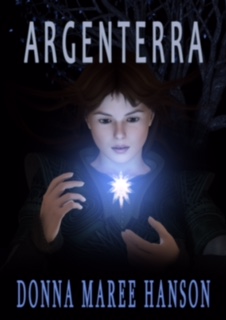
You may recall that The Silverlands Trilogy is my self-publishing/indie publishing investment. Argenterra came out in late April. That book had been revised and edited etc many times over many years. Basically, the crafting of a load of crap into something worth reading over 15 years. I hope so!

Book Two was drafted but probably only ever a tidied draft. It was a much better draft than Argenterra was originally as I had progressed as a writer. No one had read it except me. I’m about to do a final revision, tweak and polish before sending it for an edit. You might ask why I haven’t already done this. Well, I was working on book three. I had thought I had 50,000 words of the third book written. Gah! I did but the words were shit. They had to be rewritten and most of it chucked out. I was in despair. Somewhere around 70,000 words the draft felt like it was coming together. Now at 121,000 words I’m pretty pleased. It’s done. The story works…well for now .Beta readers may bash me in the head.

This probably doesn’t answer the question. Why work on book three when two was waiting for a revision? Because finishing book three allowed me to work out all the kinks and to see if it was going to work before I went back to book two. I could still change things in book two before I set them in concrete by publishing it. Rescue a character who had sunk beyond redemption, for example. Set up things in book two that I had brought to a head in book three. I guess it’s a form of cheating. But hey, it worked. This is probably why I’m advocating writing the whole series in one go. Why I wish I had. But my best advice is just write what you want, how you want. I figure this book three is better than any I envisaged say ten years ago. Totally much better. I’m a better writer than I was. Ideas just smashed together well this time.

This week and maybe part of the next I’ll be tidying it up ready for beta readers. Then I’ll be back on book two, Oathbound.Now I’m ready to push forward. I believe the next two books will come out pretty close together. I have the covers. I just need the edit. I do my own laying out and book packaging. The cover layout I get help with. Technically I could do that I just have to buy Photoshop!

Then I guess I’ll get serious about marketing. My main goal so far has been to get reviews of Argenterra while I’m working on the other books. Reviews will help me if I want to do some paid promotion, such as Book Bub. If you read Argenterra and liked it please leave a review somewhere. It helps!

What have I learnt so far? I already knew writing well is hard work. Self-publishing/indie publishing is hard work if you want to do it well, but it has bells on. I’ve been stressed. I’ve had sleepless nights. I’ve invested my capital in my indie publishing gig. I have not spent time in promoting or whatever magic these successful indie writers do. My hat goes off to them. But I will when I get these books out.

The other thing successful indie writers do is they keep writing and keep producing. It sounds exhausting. I mean I do that too, but it’s driven by what stories interest me and my own creative practice. Maybe I should be more business like in my approach.

three-books


Buy link for Argenterra, Book One-Silverlands

Print copy from Book Depository here

Amazon.com Here

Amazon.com.au Here

Kobo Here

ibooks Here

Print (Amazon.com) Here.

Print elsewhere. Available from Createspace and Ingram Sparks.

Read Full Post »

It is still very early days in my hybrid/self-publishing venture for the Silverlands series. Book one is out and my main focus is on gaining reviews for the book. Why is this important? Bookbub. When I have all three books out I want to submit to Bookbub. You need reviews for that. Good reviews. So far so good. I don’t have a lot of reviews but what I have I’m very pleased with. There is a lot of retweeting of a review prefaced with How Not To Write Distopian YA. I thought that rather amusing. I wasn’t writing dystopian YA, but epic fantasy with a YA feel. Yet it might have some dystopian elements, of course. My main sin is a cliffhanger ending. Apparently cliffhangers are to cause people to buy the rest of the series. Hell everyone wants their readers to buy the next book. Mine wasn’t for that purpose. I started Argenterra when I was a newbie. I’ve thought long and hard how to move the ending…before the cliffhanger….after the cliffhanger…and nothing seemed to work. To top it all off, book two has a cliffhanger too. I guess I have to own that I’m evil.

My woes! Would you believe I have had the most difficult time with book 2? Firstly, I have to revise it a little and polish it before it gets edited. That’s sort of sitting there while I finish book three. Book three is totally rocking btw. However, I need to finish the draft before I go back to book two so I can align some things. Issues with agency, pulling back in some places so I can redeem a character in book three. The usual stuff.

The cover and the name of book two has been a real issue. I believe this problem crops up for authors in traditional publishing. I know I had to face it with Dragon Wine. Changing the name of the book (s). For example, in my original thinking there were three books in the Moon Fall Trilogy, Dragon Wine, Dragon Wing and Dragon Wane. Then Momentum took Dragon Wine. The editor wanted to split the book, call the series Dragon wine and I had to come up with two names for the first two parts. That was hard work and eventually I came up with Shatterwing and Skywatcher. It’s going to be a real bugger with Dragon Wing when I get around to publishing that. If I publish it in two parts what the hell and I going to call them. Barrahiem and Deathwings??? Your guess is as good as mine.

So back to the Silverlands…Book Two was called The Crystal Gate. Getting the cover together for this was proving to be hard. We tried a couple of combos but they weren’t working, particularly as I wanted the series’ covers to have some consistent feel across them. I’ve been stressed. I’ve been anxious. I’ve had sleepless nights. Then I realized I had to change the name of book two and think up a new concept for the cover. I tossed and turned and then it came to be: Book Two should be called Oathbound. That way I could have Sophy on the cover and used symbolism to denote the chaos of the oaths have brought round in the story, not just for Sophy but for others.

Yet I was so stressed because I was mucking the artist around. I like to be very straight, say what I want so all this indecision was like killing me. I know it’s a bit silly, but the responsibility for this is all mine. The cover, the content, the marketing…and I want it to be good, not crap…not just another ebook flung into the ether…I’m proud of this production. So there’s the woe. It is really tough.

I consulted with the lovely Aiki, who had beta read book two. She totally agreed with Oathbound being the best name for the book. I think I gave her a sleepless night. She’s arty, you know, not like me. She came up with the idea of binding or chains. You can find out about Aiki here. She’s multi talented and an author of an amazing SF YA story that’s coming out soon. Also she has been so supportive. High five, Aiki.

So anyway, I bit the bullet and emailed the lovely Les Petersen. I sent him my horrible sketch, some photos of my model with different expressions and he sent me this like within an hour or so.

Oathbound

I think this is amazing. I love it so much. It was just what I was picturing. Thank you Les for not sending the hit men after me.

Now I’m going to show you book one and two together. Les added the subtitle to book one (somehow I forgot that originally). Anyway, let me know what you think.


I should add that the cover for Book three is going well. Book three is called, Ungiven Land. I believe Sophy has a sword!

So if you are interested in checking out Argenterra. Here are the buy links. It’s available in ebook from your favourite ebook retailer.

Print copy from Book Depository here

Amazon.com Here

Amazon.com.au Here

Kobo Here

ibooks Here

Print (Amazon.com) Here.

Time to go back to work on the PhD. It’s creative project work today.


Read Full Post »

I’ve done a series of blog interviews on the topic of beta readers previously. Recently though, I’ve had some thoughts on the timing, or better still at what stage of your drafting/writing/revising process it works best. This was sparked by receiving some excellent feedback on a work in progress.

Not everyone uses a beta reader, but if you look in the author comments or acknowledgements in your favourite books you will see people who  have been thanked, usually as first reader etc. For myself, I need beta readers like I need air. God forbid that a published work of mine was raw and that my first feedback was from a reviewer or a bunch of readers. Thankfully, mostly everything except my blog posts have had a reader, editor etc before being published. Even my Indie published fantasy, Argenterra, had beta readers and an editor before being published. I also beta read for author friends. Not all of them return the favour them being busy with contracted deadlines etc, but I get something out of it. I get to read their books before everyone else and sometimes I get a present of a nice shiny book! I also learn!

I have also used the services of a manuscript appraisal service when I first started out, also I have workshopped a novel with Envision (a fantastic program that no longer exists), that was Argenterra BTW! I also won a Longlines Fellowship to Varuna Writers’ House for Dragon Wine back in 2006 and part of that was feedback and also sharing with other writers there. For Dragon Wine I used the services of a continuity editor which was really useful too.

The ideas and the words are my own but feedback help shape ideas, perspectives etc which are all valuable. Even reading your book aloud to yourself will pick up stuff. Really! Read it to someone else and then heaps of things will jump out at you even when you’ve proofed and polished the text within an inch of its life.

Maybe because I’m an extroverted thinker that beta reader comments work for me. I need a sounding board and I work fairly quickly too, which means I can’t play with one story for ten years with no fertiliser from other people. I usually have several novels or short stories going.

An important consideration in having a beta reader is to have someone who gets what you are doing, who has some interest, sympathy, knowledge, way of thinking etc that gels. Your mum is probably not the best person. Even your kids…although mine usually pick up typos etc after the fact. You need some distance, someone you can trust to be honest and helpful at the same time. More importantly, you need to be ready for feedback. You need to be able to accept criticism because that’s what it is all about. If you want a beta reader to say “OMG! This is the best book on the planet ever!” Give it to your mum. Not that it is not great to get positive feedback, it is…

So it is hard to get good beta readers. If you write a lot it is even harder to share the work around them. Also, you need to return the favour, unless you are paying for a service. If you are paying for a service expect a detailed report and expect to pay upwards of $500 (more these days). Remember you want to be a beta reader that your reader buddies can respect. This means you have to give feedback on things like structure, character, pacing, setting etc too. Your beta reader doesn’t have to be another writer. A reader who likes the genre you write in can be very helpful. I mean they are a sample of your audience right? Your feedback might be a lengthy document, an annotated MS, an email or even just a conversation. It all goes into the mix.

Also different readers have different strengths. You might get a reader who is instinctively good with pacing. Another with character development. So having more than one is helpful. I was going to say essential but we can’t have everything.

I have trusted beta readers for a range of stories. I probably have one who reads anything I write and I read hers. I believe we trust each other, although we have different perspectives.

Timing! Finally I get to the point. This is interesting. The timing varies for me. I might send my MS off just before I send it to submission, when I think it’s fairly polished, but not finally polished just to check that it’s not fatally flawed. Or I might send a tidied up first draft. I never send a story with a gaping hole in it (unless I didn’t see it). I may have a few x in place of names, but usually the story is fully formed. At a minimum a tidied first draft. My older work needs a few drafts before they are ready for beta readers. I’m finding that with The Crystal Gate, the sequel to Argenterra. The third installment is an incomplete rough draft and a nightmare!

You see, Argenterra has been worked on over many years, had many revisions, cut backs etc. The sequel has sat in the hard drive minding its own business and stagnating. Essentially it is a tidied first draft, maybe a tidier second draft. More recent work for me means that the first drafts are much better. I used to be a panster! Now I straddle the fence and plan a bit. Older drafts can be a lot of work, especially if you didn’t make notes!

So the minimum I believe is a tidy, good first draft, where you have  a full story etc and there is something to comment on. I sent The Crystal Gate for a beta read and it’s a tidy second draft. Why?

I have trouble listening to the little voice in my head that says things like “You’ve said that twice now. Maybe cut that.” or “You’ve written the action but what is the character feeling? What is the character’s emotional journey?” Or “That’s all well and good but could there be too much going on in that scene?” But because I’m focussed on my end goal of getting through the revision I don’t stop to deal with those things. I need a second opinion. (Insert LAZY here). I need a kick up the bum. I need to know what’s working and what’s not before I invest too much, before I make a wrong decision. This is where beta reading comments come in. I got some this morning. Some were the kick in the pants stuff-the stuff where I should know better but didn’t. Other comments point out flaws I didn’t notice or thought I could get away with, others highlighted aspects that I hadn’t thought of at all. I know that in addressing these comments I’m going to make the work better. I don’t have to agree with everything that my beta reader says. I’m going to wait for the other beta reader’s comments before working on the MS again.

Essentially the comments have filled me up with enthusiasm, ideas and identified trouble areas where I need to do more thinking. I love this.

I think I would be less likely to be accepting of feedback if I had polished the story to the nth degree and thought it was amazing and gorgeous and nothing could be improved. Nothing could be worse that having someone say-this is fatally flawed, you need to restructure this. You might take that from an editor maybe if you could see their vision. So far I haven’t had to restructure anything majorly at all. For this reason, I think getting feedback on a good draft is better than a polished draft you have no brain power to accept feedback. It can be done. I’ve worked with someone who had been edited and a reader picked up something which meant it had to be edited again and the issue addressed.

Of course, the timing is individual. Some people I know won’t let me read for them until they think their MS is perfect. Naturally enough I don’t get to read for them very often at all.

Now I wrote this post because I’m working on a rough draft of The Ungiven Land, Silverlands book 3. It’s hard work even thinking about this story so procrastination helps. This blog post is brought to you by procrastination!


Read Full Post »

Having your book in print, in physical form, is the best feeling ever! No doubt about it.

Print on Demand (PoD) services are fantastic (if you get the right ones) because with digital publishing technology you can do small print runs (one book) and the books are fairly economical to produce. No longer do you have to do an offset print run (old-style) and have a garage full of unsold books to get a price per unit down to a manageable level. With a print book you can wave it about and say look at me. You can do a book launch, sell books, and do book signings. You can take your book on holiday and photograph it in picturesque places. You can give copies to people. You can sell them. That’s the up side!

The best place for a book is in a book shop. This is because people go to book shops to buy books. They go to browse and if that shiny god of inspiration is shining on your book and your browser, you may get yourself a sale. Baring that, having reviews, word of mouth etc may get a person going into the book store to actually buy your book. Other venues for sales include conventions, but that can result in no sales, a few sales or heaps of sales, depending on a number things, including the size and the book buying inclination of the attendees. On line book stores are fab too. My own experience has been that I go to them when I know what I want and I need it now. On line is not a good place for browsing, unless you have promo! A flag waving promo that says buy me because I’m a must read before you die Alas, those promos cost big biccies.

There’s nothing stopping PoD books being in book stores. Nothing, nothing except a small thing.

Book stores traditionally get a cut from the sale of the book, usually a discount on the Recommended Retail Price (RRP) and this discount can be 40 to 45 percent (sometimes more, maybe less but not so in my experience unless the bookstore owners are awesome and treat you like a star). That’s not so bad is it? I mean I can do that. I have done that given the standard discount on my books to book stores. I’ve got to pay a percentage to the distributor too, lets say 10 to 15 percent. Okay  I’m cool with that. Bring it on! Buy my books in wonderful, awesome bookstores!

Here’s the catch. When bookstores buy from distributors and mainstream publishers they usually have a six months sales and return condition on the purchase. That is, if the books don’t sell they can send them back. This is a risk management set up so that the bookstore doesn’t have the risk of non sales.  There is, of course, firm sale options where bookstores might get a bigger discount if they take a number of books but if they don’t sell they are stuck with them. The risk is on the book seller then.

With PoD, I know with my supplier, I can opt for accepting returns, but I have no idea how that would work. In principle, with POD the book comes into being because of the order so what happens if it is no longer wanted? The options are the book gets destroyed and the purchaser gets a refund on the cost of the book (not the postage) or it gets returned to the distributor and the returnee pays the postage. After this I don’t know what happens. Can it be resold? Dunno! So I’ve opted for no returns.

So in this way, despite  allowing a discount on my books that are comparable to traditional publishers, I am most likely locked out of bookstores, unless I approach them myself and even supply them from my supply of books. My book is not competitive because it can’t be returned (it might be noncompetitive for other reasons too, like no promo, no rep, no sales history etc). The other downside which works against bricks and mortar bookstores supplying/ordering/selling POD titles, is that if they order one book they have to pay postage (usually that would have be passed on to the buyer indirectly or directly). If they ordered five or ten then it would be cheaper but they aren’t going to do that because they can’t return them. If you as a book buyer are lucky enough to have a bookstore that will order in PoD titles then stick to them. Thank them. Send them Christmas cards or seasons greetings because they are awesome. Online it’s a bit different because you expect to pay postage (or not) depending on the store.

The upshot of this is that PoDs are not going to get you heaps of sales through bookstores. They are lovely to have. (I’m going to be selling my pretties at Supanova in Sydney in June!) but we are still small biccies, unless we become big biccies.

I ask myself why I have priced my books to allow bookshops to get the 40 percent and the distributor their percentage. I should race over to my set up page and change it to the minimum, but maybe I’m optimistic that some bookstores will either buy my book or supply it to lovely people who order it in and for that, I’d like them to be compensated.

IMG_6085

Cover by Les Petersen

Buy links for Argenterra here.

Read Full Post »

People say it’s easy self-publishing a book, or Indie Publishing as they say these days. It’s not all sunshine a roses and I’m not talking about sales here. I’m talking about getting the files ready and loaded etc.

The proofreading, file formatting and instruction reading and following are very left brain that leave me without a right brain cell to aspire to creativity. I’ve been caught in that vortex for weeks it seems. The difficulty is not in the amount of advice out there or the assistance other Indie publishers provide because that’s so fab. It’s just the tediousness of it. It’s like doing ten tax returns in a row. It’s killing me with my left brain. I can now understand why people pay others to do all that crap for them. They may end up making no money out of their publication (most, I think) but at least they have held onto their creative soul.

I have to go back to the reason why I’m doing this. Argenterra got to acquisitions in Australia but then it didn’t fit the young adult niche here. (just one part of the story) The Australian market is a small.Even the digital publishers are getting thin on the ground. I’ve submitted Argenterra over the years and well I run foul over arguments about whether it is young adult etc.  I always thought it wasn’t, but then on reading it maybe it’s young adult or young adult cross over. Last year I was chatting to Keri Arthur and she recommend I Indie publish. I’ve had titles epublished with traditional publishers and why not try hybrid. I talked to her about the Silverlands Trilogy of which Argenterra is the first. I could get two books up quickly and then polish off the third book. I’m not expecting to do anything earth shattering here, but it is certainly an eye opener. The amount of control you have as an Indie publisher is like a drug. You get to make all the decisions but you have to do the work.

There are various ways to get your book out there these days. When I had a small press it wasn’t so easy. There was no Amazon.com.au and people without US bank accounts couldn’t list their books on Amazon.com. Ebooks were not a thing. It was PDF and maybe just the beginning of ebooks in the world. Having that small press experience has been good, but not having the tools I used to have was pretty ordinary. I used to own Creative Suite now I’m reduced to Word.

It’s hard. I whinge a lot you may have noticed.

I’m not even talking about the stigma of self-publishing here or the difficulties in promoting a book.

The process for formatting an ebook is pretty straightforward. But anything that requires discipline and attention to detail can be tedious for me. I can do it but I don’t/can’t do creative stuff round the same time.I had a author friend proofread for me after I laid out the book. In Word this entails formatting with titles so that you can do a table of contents. For an ebook you don’t have to worry about page numbers or headers or footers. I used Calibre to covert my epub. But for Amazon, you only need to the Word file. Most of the other places do the conversion from Word for you too.

It was formatting the print version that life became more complicated. Headers and footers and page numbers. I did a proofread and found a few little things which I changed in the ebook too. Unfortunately, using preorder on Amazon meant I couldn’t change the file. Eep! Lesson number one. Do your own proof before uploading the file. I was able to do it after it became live. Second is don’t underestimate how long it can take to proofread your book properly. (I printed the book out to do my proofs) Then research, ask around what is the best way forward. I chose Createspace for US Amazon.com and Ingram Sparks for rest of the world. (I’ll put a link below as to why). Then I got into problems with the paging. I was either missing a page or having two blanks when trying to get the odd number pages to fall on the right hand side. That took a whole night to fix. Needless to say that I have matured emotionally over the last two weeks. (I you believe that then you’ll believe anything.)

The cover was another issue. I had a pro cover done but it was not the wrap required for a print version and the file sent to me was a PDF and you need specialist software to put the cover together. Having exhausted my $ I had to beg help from the lovely Rebekah Turner. We had to do two covers-one for Createspace and one for Ingram Sparks. But I’ve been told you can use the Createspace one for Ingrams. If I had brains I could have used Publisher I suppose.

Today everything is loaded. Because I wanted Createspace to do the Amazon.com I loaded the book there first and then did Ingrams once it was showing on the Amazon listing. This is because Ingram will list it on Amazon if it’s not there already. (See blog link below to understand why.)

Listing the ebook. I could have used Smashwords, but I wanted to some control over key accounts; Amazon, ibooks, Kobo. Amazon was the easiest even with the tax declarations. Kobo was pretty simple and ibooks was complicated. First thing to know about ibooks is that you need a Mac to upload your content. That information would have been useful and would have saved me three nights of wrangling. I’ve used Ingram to distribute the ebook elsewhere.

Many thanks to Patty Jansen for answering near hysterical emails with aplomb. Also thanks to Ainslie Paton for help with book blurb (a whole day back and forth), Rebekah Turner for cover wrangling and Aiki Flinthart for proofreading, moral support and information.

Why am I doing this? Why don’t I forget about this book or this series?

The publishing industry is in a state of flux, particularly here in Australia. I don’t believe we can rely on the book industry to be the gate keepers they once were. Publishers are not loyal to their authors anymore. If you’re not a best seller then you’re out. Heaps of mid-listers have lost their publishers, not because they aren’t good writers with great books, but because they aren’t making the big $$$. Being a new author is even harder. Your book doesn’t sell the expected number your chance is gone. If you don’t have the sales then it’s darn hard to get another publisher.

Why Argenterra? I love this story. I’ve almost written a trilogy and what a waste it if never sees the light of day. I’ve revised and rewritten this story many times because I believed in it. Now it’s time for me to see if others like it too. I love the characters in this book. Sophy and Oakheart are my personal faves but there’s Lillia too.

After 15 years, I’m going to give self-publishing a try.

IMG_6085

Cover by Les Petersen

Here is the link I mentioned above. Here

Read Full Post »

I get so annoyed at myself. I have these great ideas for blog posts and then it’s so hard to get to the computer and all those wonderful ideas leak out of my head. Pfft! Gone.

Originally I thought I’d be writing a post a day on the PhD and wouldn’t that be fun. But hey, the PhD makes me busier than I was before so no way. I could write a post a day on the PhD but then you’d all explode in flames!

The Phd research (feminism in popular romance fiction ) so interesting in almost all aspects. The difficult part is settling in to a new place, new regime and a new focus. I’m loving the reading, the mind expanding study of feminism and philosophy (for the methodology), the ideas for my creative work and the reading of romances. I wish I could fit much more into my day. It’s addictive. The physical body and mind though has to have a break. I can assure you I’m pretty good at taking breaks.

I took a week off to go to Contact in Brisbane over Easter. I was even on a panel or two, I had a table for hats for a day, sold a few and hung out with people. Met new people too. The Hotel Jen in Brisbane was amazing. I ate at the hotel because the menu and prices were so good. The room was lovely and the service good. The Contact program was well designed. The downside was that not that many people came. Not as many as you’d expect to a national convention. For that I feel bad for the Brisbane organisers. They deserved better support.

Here is some pics from Contact. I really wasn’t drinking all the time.

IMG_6100

Me, Deb Kelly and Keri Arthur.

IMG_6095

That’s us again.

My good friend, Glenda Larke, asked me to give her acceptance speech if she won an award. Well she did! She won the inaugural Sara Douglass award for a series. Here’s the trophy. I nearly cried I was so happy for her.

IMG_6091

A pic of my hat table.

IMG_6107

Sitting around to say good bye. with Keri Arthur and Louise Katz and Gillian Polack at the back.

IMG_6103

Random pic of Brisbane. I went to by swimmers for my trip to the Gold Coast.

Now I’m back at Uni and working pretty hard. In fact, I’m on lunch break, getting ready to attend a workshop on being a better PhD researcher! This makes me laugh, but I’m doing it anyway.

In other news, I’m publishing a book. Argenterra, Silverlands book 1. It’s a story I’ve worked on since about six months after I started writing. This book has been with me to Envision in Brisbane back in 2003. I was planning to throw it in the bin, but my tutor Louise Cusack said not to do that. It’s grown so much since then as I have as a writer so it holds a special place in my heart. It’s the first fantasy I wrote. It’s light and bright but had some darkness there too. I’m doing the Indie publishing thing. So I’ve had a cover done by the brilliant Les Petersen, an edit done and a great proof too. It will soon be ready to go. Just need to get the blurb right. Lucky, there are great writer friends out there who help. So stay tuned. The ebook will be out by the end of the month with POD for June and Supanova in Sydney!

IMG_6085

On a more personal note, it’s odd but the busier I am the more productive I tend to be. I’ve been suffering a bit with the spine, but I’ve been taking the meds and today I’m feeling the best I have in two weeks. Yay! Yesterday, in a bid to keep fit and take a break during the day, I walked down the road to the pool, where I walked in the water for half an hour and came back. It was such a lovely day that I was happy and content.


Read Full Post »

Phew! What an amazing ride! A big thank you to my many hosts. I could not have done it without you. Thank you for the amazing array of questions and article topics. I count 24 separate posts!!!! The blog tour took place from 16 December 2015 to 8 January 2016. The draw for the books will take place on 15 January. You are welcome to leave a comment here to be in the draw. Meanwhile I’ll be trawling through social media shares etc and blog comments to compile the draw list.

Below I list and link blog posts from the blog tour. If you press the link it will open a new page in your browser.  If you are planning one of these blog tours be prepared for a lot of work and a little bit of organisation. I love how this whole process was so collegiate–other writers helping other writers! I don’t think I’ve ever pushed myself so hard and talked about so many things.

  1. Amanda Bridgeman over in Perth. You should check out her SF Aurora series. This post was an excerpt from Shatterwing. A nice way to ease me into the flow. Here.
  2. Alan Baxter in the ‘Gong, who asked me to talk about the inspiration to the world building for Dragon Wine. Here.
  3. With Matthew over on Smash Dragons. I believe Matthew is in Bathurst. I wrote a short article on what makes fantasy dark. Here.
  4. Alis Franklin also from Canberra asked me for five pieces of advice to the younger writer me. Here.
  5. This one was fun! Matthew Farrer my partner and I in conversation where I’m trying to get him to host me on his blog. The Dweeb and the Dweebette. Here.
  6. This in-depth interview is two-pronged. Ian McHugh (Canberra)  interviewed me and it appeared on his blog and the Canberra Speculative Fiction Guild’s (CSFG blog). Ian did an amazing job, a follow up to his in-depth interview last year. Here and Here.
  7. Over in Canada with Liz Munro,  West Coast Book Reviews, who asked me some quick quirky questions and has been a great supporter since she review both Dragon Wine books. Liz is a spec fic author too. Here.
  8. Glenda Larke in Western Australia. If you haven’t read Glenda then you should right now! Glenda interviewed me with some probing questions. Here.
  9.  David McDonald (Melbourne) included me in his Paying for our Passion series. Here
  10. A Christmas post by me. Here.
  11. Keith Stevenson, also from the ‘Gong, asked me a few questions about the inspiration behind the world and story of Dragon Wine. Here.
  12. Fellow Canberran, Chris Andrews asked me to talk about my darkest hour (writing). Here.
  13. Sydneysider, Joanne Anderton, asked me about my work life balance or lack there of. Here.
  14. Patty Jansen, also from Sydney, asked me to talk about romance in speculative fiction. Here.
  15. Leife Shallcross, fellow Canberran, asked me about my research habits or my own personal research rabbit hole. Here.
  16. Dawn Meredith who is a fellow CSFGer, but lives in the Blue Mountains, let me talk about how reading helps my writing. Here.
  17. Me again for my New Year’s Post. Here.
  18. Romance author, Maggie Mundy, had me talking about romance in Dragon Wine. Now I consider Dragon Wine to be unromantic because it’s dark and nasty, but I did find that I had two love triangles. Who knew?  Here.
  19. Allan Walsh from Queensland had me talk about world building. Here.
  20. DL Richardson had me over for a wonderful and fun coffee chat. Such a fab idea. Love it! Here.
  21. Kim Cleary had me on her blog to talk about why sweet little ol’ me wrote such a nasty story. Here.
  22. Nalini from Dark Matter Ezine had me over to talk about Female Heroes. I’d like to extend this blog post at a latter time as I was quite knackered when I wrote it and there’s so much more to say. Here.
  23. Last stop was MJ Oliver, currently resident in Indonesia, where I talk about how writing is not all about the writing. You know that promo stuff. Here.
  24. This probably went out first. It was an article in Scott Robinson’s newsletter- some writing advice . His website is here.  I’ll put the text of the article here. Writing in the zone. One of the best things about writing is finding the zone. I used to call it the zen zone-the frame of mind where I’m into the story, I’m creating stuff and I’m getting a buzz. Often I’d only get into the zone on a writing retreat. The peak time for the zen zone would be Wednesday of week two. These days I can’t rely on retreats to get me into the zen zone. I need the portacot type of zen zone. One I can assemble and set up and use anytime.I think that is doable, but finding out how to do that requires some self reflection and understanding of what inspires one to write.

    I don’t think I have met a writer who hasn’t had a crisis of faith in their writing, or their writing career. This can be brought about from lack of success in getting anything published, or lack of achievement in finishing the novel or even after being published and having that novel they have worked on for ten years not selling. All of these things can be detrimental to the mind set of putting your head down, believing in yourself and writing.

    Now I don’t have a one size fits all solution to this. I have some suggestions for finding out how to tap into your own zen zone, mostly from my experiences.

    1. Don’t buy into the self-doubt talk down.

    This is where you obsess about not being good enough. For example, you’ve just read the best book ever and you feel that it’s all over, you’ll never be that good and why should you even try. Bollocks. There’s always going to be someone, no matter how good you are, that’s done something more interesting, more popular or award winning than you. It’s not about them it’s about you. Writing what you love, what you enjoy and doing it to the best of your ability. Don’t listen to that voice in your head that tells you to give up. Not if you really want to succeed. If you’re not the best you can be yet, then keep at it, keep practicing. You’ll get there if you really want it.

    1. Figure out how you work best.

    I heard an interview with a writer recently who studied when she was the most productive. Although she was a morning person, she found she actually wrote more at certain times in the afternoon. Some people like writing to music. Or they have to be in a certain space in a certain chair. Others like writing in coffee shops. The thing is to actually think about what contributes to writing well for you. If you stop writing and spend all your time on the internet then think about leaving your phone off, and disconnecting from the internet. If you watch tv instead of writing, think about not watching television at all. Whatever distracts you or makes you feel out of frame, you need to identify it and address it. That will help you get into the zone.

    1. Be kind to your body.

    As a person who has developed RSI and spinal issues over time then I am all for looking after yourself. Take breaks. Use a timer. Take a walk or do something physical. We weren’t built to be on the computer all day. Writing requires that. Unless, of course, you try dictation software or standing up or both. Whatever you do balance the physical with the mental. That way you can enjoy your zen zone to the max.

    1. Read widely and often.

    Reading teaches and it also opens your mind up to possibilities whether you are reading fiction or non-fiction you are shoving stuff in your head that’s going to come out in your writing either the next week or the next year or five years from now. You can learn from other fiction writers about techniques, taking risks or just opening up your mind to possibilities. This is like fertiliser for the zen zone. You have built up enough fuel to give your zen zone blast off.

    1. Try to do the best you can do.

    My motto here and it’s only recently adapted into my approach: Enough isn’t good enough. I am trying to put some perfection into my writing. Maybe this is because I’m pretty sorted with story and plot and world building, although I think I can do better with characters all around. But I don’t want to be just competent or good, I want to go for more. For me that might be patience and subtlety in my story telling. It might mean one day aspiring to write the literary genre masterpiece. All I know is that writing is a continuum and I want to climb up that line of achievement and explore what I can be as a writer. Seeing a goal also gives meaning to my zen zone. When I’m there it’s so right and good and sigh…I just want to be there always.

And here is the exhausted me!

Exhausted me on 8 January 2016

Exhausted me on 8 January 2016

Read Full Post »

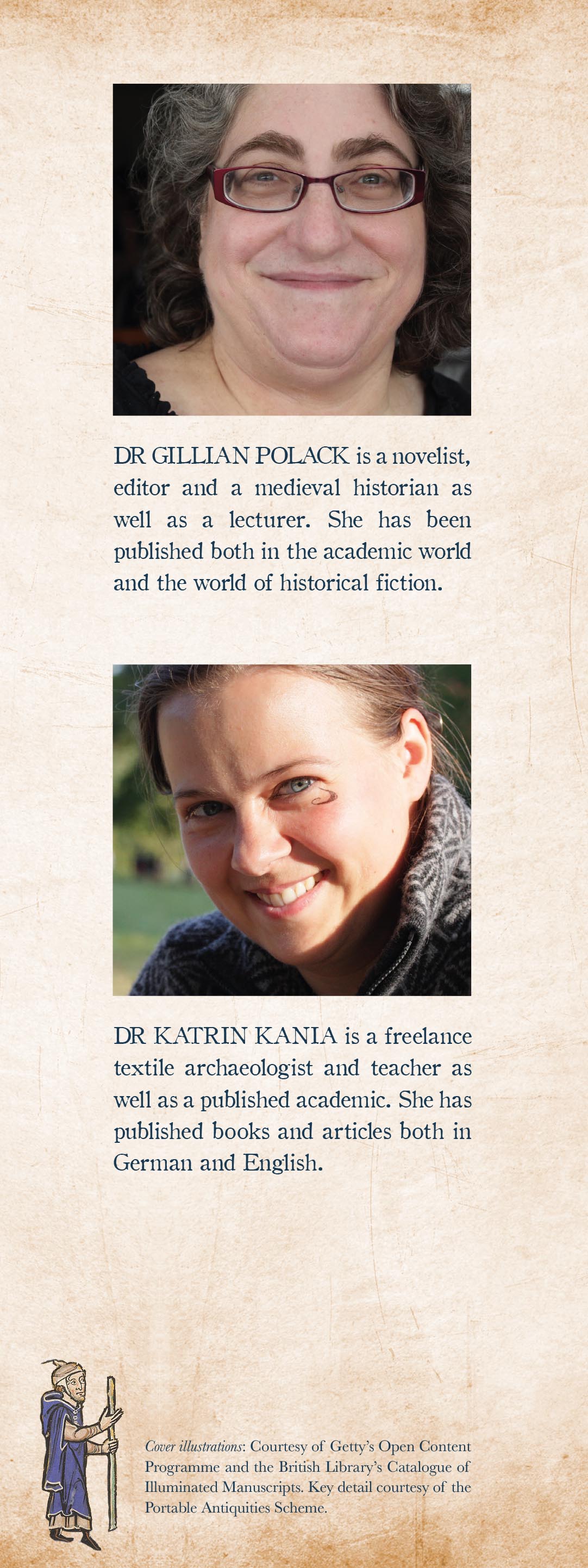
Gillian Polack is the author of many things fiction and non-fiction. She’s also a medieval historian, food history guru and a science fiction PHD, her second! I’m probably not doing her justice.

Anyway, I have Gillian here on my blog today to talk about her fab new book (Co-authored with Katrin Kania): The Middle Ages Unlocked- A guide to life in medieval England, 1050-1300.

Gillian and KatrinThis book is a fab resource for writers who want to write about medieval societies and for lovers of history.

How did you come up with the concept for the book?

I didn’t come up with the concept: my friends did. A group of people on a now-defunct email list said “We so need a book that tells us about the Middle Ages in an easy-to-read way that’s properly researched and can be used by writers.”  The friends were from the UK and US and Canada and Australia. Some of them were writers. Some of them were tired of writers not quite understanding things. They got me involved…

How did you two authors find each other?

In a pub! Seriously, we were introduced to each other by Shana Worthen at the big Medieval Congress in Leeds in 2011. It was an international conference, but it was one for Medievalists, and it always has at least one pub. For the record, I was drinking a rather nice English cider. Shana knew about the Beast and I asked her if she wanted to see it. I whipped out my trusty netbook and Katrin read over her shoulder and somehow ended up being drawn into being co-author! Since then, I have taken to carrying all my work with me, everywhere, just in case I meet someone who needs to share it.

Did it take a long time to develop the scope of the book?

It took years and years. Because writers and the general public said “We need this book” I had a good general concept about what kind of topic would be covered and that the approach needed to be easy to read but go into as much depth as was possible in a general work. We (the various people involved at different stages) played with several approaches and a wide range of subjects. Tamara Mazzei still has a timeline she developed for an earlier iteration, for instance, and I still have a list of plants and their uses. A couple of writer friends tested beta versions for their fiction and I could tell how effective different elements were by how they wrote and what further questions they need to ask. By the time Katrin came on board the topics were mostly settled but it covered both France and England. It focussed on England quite late, because it was a better fit for British publishers, but we refined approaches to the bitter end. The Middle Ages Unlocked wasn’t easy, but it was most definitely worth the effort, as I’ve already seen it being read and used by those same people who asked for it, all those years ago.

How long did it take from the concept to completion?

About fifteen years, all up. I’m still surprised when I see it in bookshops, because it’s had the longest development and most work of any of my books. Given how prone I am to research, this is worrying.

At 384 pages it looks to be quite an undertaking! Did you have to  leave stuff out?

We left out more than we put in.  Several times the amount that went in, in fact. The perfect version (from my point of view) would have been enormous. We followed our publisher’s guidelines, however, for those guidelines were there with much good reason behind them, and we wrote the best possible work that was actually publishable.

How did you go about finding a publisher?

We approached publishers that we had contacts with and that were a really good fit for our project. One of them suggested Amberley, for they felt that Amberley was an even better fit than they were: if ever I meet that editor I will buy her a drink, for she was both generous and correct.

I  notice a lot of writers gave you cover quotes. Do you see the book as a resource for writers only? Did all that bad fantasy drive you to spend years of your life developing this book?

It was first designed for writers, but it’s grown to be a volume that’s for the general public. And bad fantasy had nothing to do with it! I’ve taught history to writers for two decades and so it was quite natural for writers to say to me “Why don’t you pull together a book that presents this to a wider audience?” This means the demand came from writers who wanted more, not writers who were lazy about their world-building. I find this very reassuring.

Initial S: The Lord Appearing to David in the Water; Bute Master (Franco-Flemish, active about 1260 - 1290); Northeastern (illuminated)  France Paris (written)  France; illumination about 1270 - 1280; written about 135 - 1375; Tempera colors, gold, and iron gall ink on parchment; Leaf: 17 x 11.9 cm (6 11/16 x 4 11/16 in.); Ms. 46, fol. 92

Initial S: The Lord Appearing to David in the Water; Bute Master (Franco-Flemish, active about 1260 – 1290); Northeastern (illuminated) France Paris (written) France; illumination about 1270 – 1280; written about 135 – 1375; Tempera colors, gold, and iron gall ink on parchment; Leaf: 17 x 11.9 cm (6 11/16 x 4 11/16 in.); Ms. 46, fol. 92

What was the favourite thing you did in this book?

I was really happy to pull together what was known about dance. I’d been meaning to do this for myself and the book gave me an excuse.

What was the hardest section for you? (I noticed at the Q&A you said there were areas where you had a lot of research and some was more general)

The hardest section as the one that dealt with all the bad things in society. It could have had a lot more detail, but neither Katrin nor I could deal with any more detail about people being hurt!
I guess there are things we will never know about the past.  How does that you make you feel as a historian?

Perfectly normal. Historians are always aware we can’t know everything: it’s part of the job description.  History is an interpretative discipline, not one where absolute knowledge is possible.

Do you have other historical projects in the pipe line or is it fiction for you from now on?

I’m nearly finished a book specifically about how writers use history in their fiction. it will be published next year. And I’m starting work on a novel set in the seventeenth century. I’ve already sifted through hundreds of primary sources (over 800) to sort out how I will  deal with various aspects, but the real work on it will hopefully take place next year. I’m also doing work on other peoples’ writing: there’s an article by me in the next issue of Foundation, for example.

Where can people buy the book?

In Australia, ask your local bookshop to get it in: since it’s only just been released here, most shops don’t know about it yet. Online, almost every shop stocks it. In the UK, try Blackwell’s or ask your local bookshop to get The Middle Ages Unlocked in. In the US, either online shops or wait until October, for it won’t be released in the US until then. If you can’t wait, online shops in the UK will sell it to you.

Easiest way is to buy from Book Depository Link here.

Gillian book cover
Thank you for visiting the blog today, Gillian. Mazel Tov!

Thank you for having me!

Read Full Post »

I’m so happy to be able to bring this interview to you. I met CS Pacat at Supanova. We were on a panel together on our early lives as writers and I was fascinated with her story and I thought you would be too. Hers was a non-traditional story and she has had amazing success. Read on!cat

Thank you so much for agreeing to be interviewed on my blog today. I think your publication story is fascinating so I wanted to share it with others.

When did you first think about being a writer and what did you do?

As long as I can remember, I wanted to write books. I took creative writing classes, but if I’m being honest, they weren’t especially helpful, particularly when it came to teaching fundamental skills like plotting or character creation. I wouldn’t necessarily recommend them for anything other than a place to meet other artists and form a support community, and a way to begin taking yourself seriously as a writer, “I commit to writing”. (A friend once described it brilliantly: In a cooking class, you are taught how to make a soufflé during the lesson. In a creative writing class you’re usually asked to make a soufflé at home without a recipe, then bring it in to class, and then everyone critiques the soufflé. But at no point does anyone ever actually teach you how to make a soufflé.)

What inspired you to write fanfic and when do you start writing original fiction?

I wrote fan fiction throughout my teens and into my early twenties, and I have an enormous respect for fandom as an artistic space. I think what drives the fanfiction writer is a desire to reclaim a text, to explore its themes, in a sense to make it your own. This can be powerful and important, particularly when those reclamations involve queering a heteronormative text, or the insertion of fantasies that until recently have not been given much expression in mainstream works, such as the power fantasies of teen girls. It’s a way of offering alternate narratives and diversifying what can sometimes feel like a narrative monoculture.

I started to write original fiction because I wanted to tell my own stories and to be able to craft the kinds of characters that I love. Captive Prince was my first complete original novel, but I did have a few false starts with original fiction before that, learning the skills that were different to fan fiction.

What made you publish for free on the web and then self-publish?

When I started to write Captive Prince there was nothing that was really like it in the mainstream commercial space. But I knew that online there was a vast community of readers and writers who were reading and creating online in part because they were seeking something that they weren’t finding on commercial bookshelves. It was also an incredibly accessible space with no barrier to entry, and so I started to write Captive Prince, and as I wrote, I posted each chapter to my fiction blog.

Captive Prince ran as a free web serial for several years before I decided to self publish the story. I did it mostly in response to requests from readers for a paperback copy of the books. It was really the support and enthusiasm of the online readership that gave me the confidence to take that step.

What did self-publishing feel like?

Equal parts rewarding and terrifying. There is a very steep learning curve, because as a self-publisher, if you want to produce a high quality book, you essentially have to teach yourself all of the skills, from typesetting to art direction to project management. You have to hire cover artists, editors and proofreaders, while learning how to use InDesign and create layouts for paperbacks, produce ebooks, and so on.

It felt scary to do at the time, but it was also incredibly empowering, because you’re learning everything you need to know about publishing, and it opens up new avenues and gives you control over your own writing.

Did big sales happen all at once or was it gradual? How much of that was due to your previous following from the web?

My online readers were incredibly enthusiastic and supportive, they wanted to buy the self published release, even having already read the free version. As a result of that, Captive Prince shot to the top of Amazon lists within a day or two of being released. It then took a few weeks for the generated word of mouth to spread and create buzz in places like Goodreads, and from there another week or two before the Captive Prince started to garner attention and reviews from mainstream review sites like Dear Author and USA Today. So, in a sense it happened in two “waves”, the first from my online readers, and a second when the book hit the mainstream market. Now that Captive Prince is being published by Penguin, it’s reaching a new audience again.

It must have been amazing to be contacted by an agent wanting to sell your work to a major publisher. Can you tell us a bit about that?

It was incredible, amazing, unbelievable. I was approached by a New York agent basically saying, “I’d like to represent you. I think we can sell your book to a big six publisher in New York.” I didn’t think it was possible but signed with her in the spirit of pure optimism. We ended up with two offers, the most robust of which was from Penguin. Now Captive Prince is being published in multiple countries and translated into multiple languages – it’s been an incredible year.

From your point of view, what are the advantages of self-publishing?

Having been through both processes, self publishing and commercial publishing, I remain a huge advocate for self publishing. I think it offers writers a way to produce a book that wholly represents their best vision of their work. You don’t have to rush or make artistic compromises due to deadlines. You can hire the designers and editors that you most want to work with, devote as much attention to your book as it needs. There are also financial advantages, in that your royalty percentage is much higher. Realistically, a commercial publisher will always be making commercial decisions, which are not always the best decisions for a book artistically.

Conversely, what are the advantages of having a major publisher behind you?

The biggest advantage of a major publisher is legitimacy. Although the perception is changing, there is still a stigma attached to self publishing. A major publisher opens so many doors, and dramatically expands the possibilities for a book, from getting it stocked in major bookstores, to garnering attention from mainstream press.

The other advantage is of course access to world class editorial, and the support of a team. I’ve worked with so many inspiring, talented people at Penguin. Allowing them to support the book frees you as the writer to just spend your time writing, which is a incredible privilege.

Do you have any advice for aspiring writers?

I have two pieces of advice. The first is that to write a book, you have to transform yourself into the person who can write that book. So I’d say figure out what is preventing you from writing, whether it is time, procrastination, or problems with plotting, or coming up with ideas, then dedicate time to solving those problems, making the changes that you need to make.

The second piece of advice is to persevere. Writing a book is difficult and there will be a long period of time where you can’t do it, your writing isn’t working, and the book just isn’t a book yet. Everyone goes through this. And everyone I know who has persevered through this stage has emerged with a manuscript, then gone on to publish it. So hang in there: it will happen.

Blurb
Damen is a warrior hero to his people, and the rightful heir to the throne of Akielos. But when his half brother seizes power, Damen is captured, stripped of his identity, and sent to serve the prince of an enemy nation as a pleasure slave.

Beautiful, manipulative, and deadly, his new master, Prince Laurent, epitomizes the worst of the court at Vere. But in the lethal political web of the Veretian court, nothing is as it seems, and when Damen finds himself caught up in a play for the throne, he must work together with Laurent to survive and save his country.

For Damen, there is just one rule: never, ever reveal his true identity. Because the one man Damen needs is the one man who has more reason to hate him than anyone else…

CS Pacat - book cover - Captive Prince

You can find out more about CS Pacat on her website http://www.cspacat.com

Read Full Post »

« Newer Posts - Older Posts »